South Korea and the United States could see a trade deal as soon as the end of the month, according to Seoul’s top policy lead.
Chief South Korean presidential secretary for policy Kim Yong-beom on Sunday announced that “substantial progress” was made in negotiations toward a trade framework over the weekend. A “significant agreement” was reached during a visit by South Korean trade officials to Washington, he told South Korean media.
Kim maintains that “certain key issues need to be coordinated,” but his outlook is sunnier than before his visit, South Korean outlet MBN reported. The policy chief said the meeting helped increase the likelihood that a full-fledged trade agreement can be reached during the APEC Summit in Seoul later this month, which Trump and other U.S. cabinet members plan to attend.
Related Stories
While officials hashed out the particulars on The Hill, some of South Korea’s most prominent business magnates from companies like Hyundai and Hanwha traveled to the Sunshine State to bend President Donald Trump’s ear on the golf course at Mar-a-Lago. They were joined by executives from Japan and Taiwan, South Korean media reported, in an event that ran at least seven hours.
According to Kim, who alongside other South Korean officials met with Commerce Secretary Howard Lutnick, the structure of a central tenet of the trade deal—a $350 billion investment fund—is still up for debate. The subject was established during negotiations between U.S. and South Korean officials in July. At the time, both sides announced that a deal had been reached but its details hadn’t been finalized.
As it stands, the U.S.-South Korea (KORUS) Free Trade Agreement (FTA), “the second-largest comprehensive U.S. FTA by value, eliminated virtually all tariffs on imports from the other country upon entry into force in 2012,” according to the Library of Congress. On “Liberation Day,” however, Trump slapped the country with 25 percent “reciprocal” tariffs—a figure that was negotiated down to 15 percent during the trade talks over the summer.
While tariffs on trade partners across the world remain the subject of constant discussion and scrutiny both inside and outside government, the administration is reportedly taking quiet steps behind the scenes to mitigate their punishing impact on American companies and shoppers.
According to a report from the Wall Street Journal, the administration in recent weeks has issued orders exempting dozens of products from reciprocal tariffs, and it has dangled the possibility of more exemptions as a reward for countries that broker trade agreements with the U.S. Sources told the news outlet that administration officials are increasingly in favor of exempting products that aren’t produced stateside from tariffs.
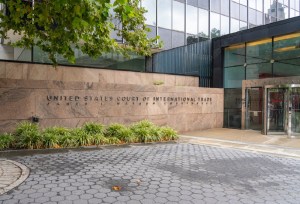
According to the unnamed sources, the exemption strategy is a way for the administration to mitigate impacts to the government if Trump’s International Emergency Economic Powers Act (IEEPA) tariffs are struck down in the Supreme Court next month, and the U.S. Treasury is forced to pay back up to $1 trillion dollars to importers. Both the president and Treasury Secretary Scott Bessent have described that potential scenario as disastrous for the federal government.
With the IEEPA tariffs under siege, Trump has been relying on Section 232 of the Trade Expansion Act of 1962—which empowers the president to take action against certain imports if the Secretary of Commerce deems them a threat to national security—to levy new duties on vehicles, pharmaceuticals, metals and furniture. Friday saw the president impose 25 percent tariffs on trucks and truck parts, along with 10 percent tariffs on buses.
But relief is still in order for some sectors. In September, the administration without fanfare announced exemptions for 45 categories of imported products, including nickel, tin, gold and certain chemical compounds coming to the U.S. from countries that have established trade agreement frameworks with the United States.
“My willingness to reduce the reciprocal tariff to zero percent for a given import or to modify tariffs imposed under section 232 will depend on numerous factors, including the scope and economic value of a trading partner’s commitments to the United States in its agreement on reciprocal trade, the national interests of the United States, the need to deal with the national emergency declared in Executive Order 14257, and the need to reduce or eliminate the threats to national security I have found pursuant to section 232,” Trump wrote at the time.
If trade agreements are reached with other countries, the administration is prepared to exempt a whole other list of imports from tariffs, including many that can’t be grown or produced domestically. Most are related to infrastructure and agriculture along with pharmaceuticals.