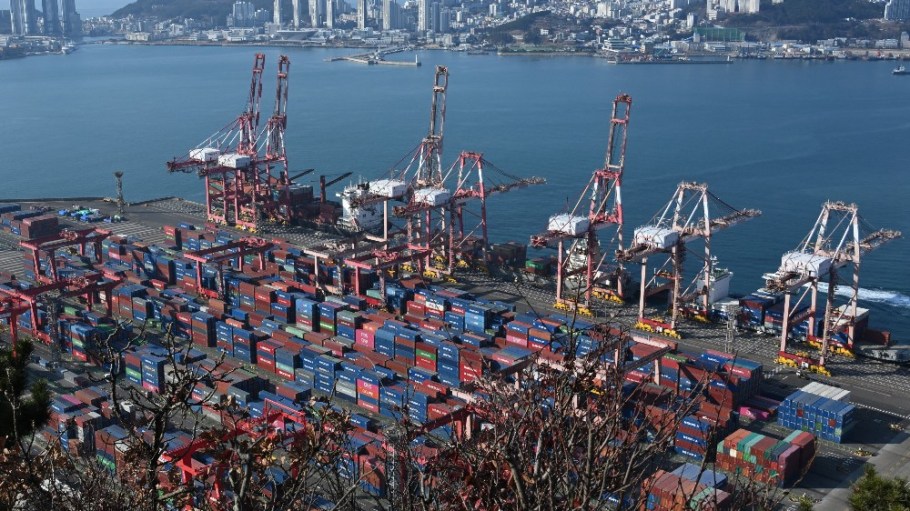
South Korea is looking to stave off new tariffs from the United States by swiftly passing a bill guaranteeing a $350 billion investment in American industry.
Amid renewed tariff friction with trading partners, the U.S. is unlikely to raise duties on South Korea if the country makes good on the commitment, which was a part of a trade agreement framework established last year, according to Industry Minister Kim Jung-kwan. On Sunday, the official told reporters that he met with U.S. Commerce Secretary Howard Lutnick to discuss the future of trade relations between the two countries.
Related Stories
“At a meeting with Lutnick, I explained the special investment bill that is expected to pass at the National Assembly next week. In response, the U.S. side very highly evaluated it and expressed appreciation,” Kim said at the Incheon International Airport following his visit to Washington, D.C., according to the Korea Times.
“If the bill is passed or Korea implements things related to trade negotiations…I’ve heard that there would be no such things like publishing in the Federal Register on tariff hikes,” he added. A parliamentary committee finalized the wording of the bill on Monday, and it is expected to pass on Thursday.
President Donald Trump in January threatened to raise tariffs on Korean-made automotives, lumber and pharmaceuticals from 15 percent to 25 percent due to delays in the legislative process of passing the investment bill.
“South Korea’s Legislature is not living up to its Deal with the United States. President Lee and I reached a Great Deal for both Countries on July 30, 2025, and we reaffirmed these terms while I was in Korea on October 29, 2025. Why hasn’t the Korean Legislature approved it?” Trump wrote on Truth Social at the time.
The deal’s main pillar was the creation of a $350 billion South Korean investment fund for U.S. industry and infrastructure projects, including $150 billion earmarked for instigating a renaissance of the U.S. shipbuilding industry. South Korea ultimately vowed to funnel $200 billion of the $350 billion overall commitment into U.S. projects in installments of up to $20 billion annually.
South Korean Finance Minister Koo-Yun-cheol said in January that the country’s government had plans to begin the payments, but he also indicated with some prescience that a potential Supreme Court ruling on the International Emergency Economic Powers Act (IEEPA) tariffs could throw a wrench into the timeline.
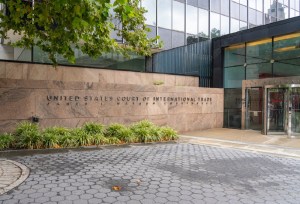
The Supreme Court on Feb. 20 ruled against Trump’s IEEPA tariff authority, invalidating duties on some 90 trading partners under the little-known (and rarely used) trade statute. The administration vowed to reinstate the duties using other authorities, and Trump levied new 10 percent universal baseline tariffs using Section 122 of the Trade Act of 1974. He subsequently—and swiftly—announced plans to up the tariff rate to 15 percent, but that change has not yet been made official.
Meanwhile, Vietnam is rethinking its own import tariffs, specifically on on fuel products, amid supply chain disruptions caused by the Iran conflict, according to the country’s state-run Government Electronic Newspaper.
The country’s Ministry of Industry and Trade said escalating tensions in the Middle East have constricted oil supplies from the area leading to higher prices. Iran initiated a blockade of the Strait of Hormuz, which moves about 13 million barrels of oil each day, forcing ships to divert around the Cape of Good Hope, which has made a marked impact on shipping times and freight costs.
As such, Vietnam is drawing down duties on oil by amending the preferential import tax for gasoline, diesel, and gasoline production raw materials. The tariff rate for unleaded motor gasoline will be reduced from 10 percent to 0 percent, while diesel fuel, fuel oil, aviation fuel and kerosene will be reduced from 7 percent to 0 percent from March 9 through April 30.
Vietnam’s Ministry of Industry and Trade also said Monday that it is considering implementing price stabilization measures for retail gas prices if they continue to increase by 20 percent or more in order to ensure market stability.