Mexico has unveiled yet another slate of tariffs on foreign goods to start the year as the country aims to keep a better eye on products from Asia shipped within its borders—potentially adding another hurdle for Shein and Temu in their penetration of the North American e-commerce market.
The Mexican government’s Tax Administration Service (SAT) slapped 19 percent tariffs on all imported merchandise shipped via couriers from countries without an international trade agreement with Mexico, such as China.
Related Stories
Mexico’s trade agreement partners U.S. and Canada—joint members of the U.S.-Mexico-Canada Agreement (USMCA)—will see a 17 percent duty for products valued between $50 and $117. For products between $1 and $50, the 19 percent tariff will be maintained.
These tariffs went into effect Wednesday.
Previously, countries were not required to pay duties on goods of those low values, according to the SAT.
“With these actions, the SAT reaffirms its commitment to provide the best service to taxpayers in order to comply with their tax obligations, increase revenue, reduce tax evasion and avoidance and combat smuggling,” the agency said in its statement.
The tax authority said the tariffs will strengthen the agency’s battle against “abusive practices,” as Mexico looks to stave off the importation of tax-evading products. The new measures also are timed less than three weeks before U.S. President-elect Donald Trump’s inauguration. Trump has threatened 25 percent tariffs on all goods from both Mexico and Canada, with the soon-to-be 47th president long been critical of the country’s handling of immigration and border protection.
The president-elect has voiced concern over Chinese companies using Mexico as a back door to enter the U.S. market, arguing that it can affect local production and jobs.
Shein and Temu, both of which have supply chains and production capabilities firmly rooted and embedded in China, have leveraged tax-free imports into North America largely by shipping low-value goods directly either to U.S. consumers, or to warehouses set up in Mexico and Canada.
The two e-commerce giants wouldn’t be the only companies that will have to adapt to the new tariffs, as U.S. retail giants that ship low-value goods from China to Mexico like Walmart and Amazon would still have to pay some variation of the tariffs
American lawmakers have sought to reform the Section 321 de minimis provision leveraged by the major online players—which allows foreign shipments worth $800 or less to enter the U.S. market duty free. Lawmakers, law enforcement and U.S. businesses alike have been critical of the provision on the grounds that it is anticompetitive for many U.S.-based e-commerce businesses, and that it could be exploited for drug trafficking into the U.S.
U.S. opinion aside, the Mexican government has had its own recent concerns over the impacts resulting from the flood of Asia-originated goods into its country, leading to additional protectionist trade initiatives.
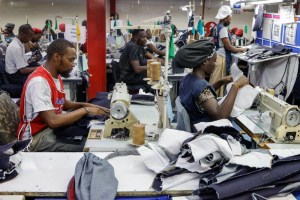
SAT’s announcement came days after Mexican President Claudia Sheinbaum temporarily escalated tariffs on finished clothing products and textiles through April 22 as the government sought to protect the country’s textile manufacturing industry from unfair competition.
Under Sheinbaum’s decree, jackets, dresses and shirts will now have a 35 percent tariff attached, up from the prior 20-to-25 percent range. Additionally, duties on textiles like denim and polyester fibers will increase from a current 10 percent to 15 percent.
Those tariffs will not be levied against the U.S. and Canada.
On top of the tariffs, Sheinbaum’s decree restricted duty-free finished apparel from entering the country if it was intended to be re-exported to the U.S. through Mexico’s IMMEX import program.
The IMMEX program was initially designed to enable foreign companies to operate and manufacture in Mexico with low-tax structures and reduced labor costs. But Mexico’s economy minister Marcelo Ebrard said when the decree was announced Dec. 19 that the program was being abused by bad actors who were importing finished goods under the guise of raw materials to then export to the U.S.
The sector experienced a loss of over 79,000 jobs and saw a 4.8 percent contract in its gross domestic product contribution, amounting to a loss of 1.1 billion pesos ($53.6 million).
Closing this loophole has already had a significant impact on U.S.-based apparel businesses that use the program to bring goods into Mexico duty-free, as they have since had to scramble to find alternatives to import merchandise into the U.S.