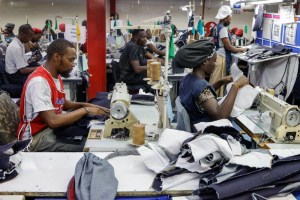
Mexico’s Senate approved a new tariff bill Thursday that includes tariffs as high as 50 percent on 1,463 China-made products like steel, cars and textiles, apparel and footwear.
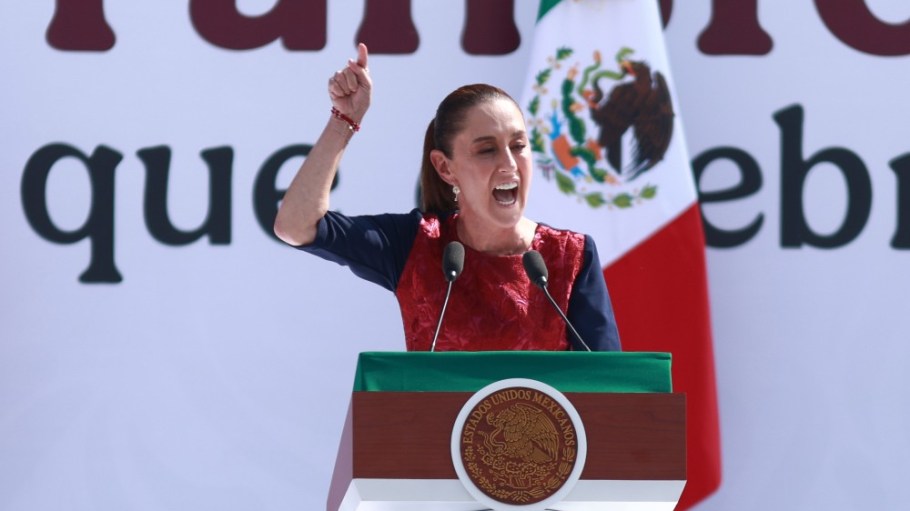
Mexican President Claudia Sheinbaum announced the decision following an endorsement from the Chamber of Deputies and a Senate vote that saw 76 ayes, five nays and 35 abstentions.
“We want Plan Mexico to be fulfilled without causing a problem for the national economy, and within that framework Congress approved these tariffs,” she told reporters, noting that, “They are aimed at countries with which Mexico does not have a trade agreement. It is not about restricting trade between nations.”
Related Stories
Mexico’s government believes the new duties could bring in substantial revenue, to the tune of about $2.8 billion, over the course of the coming year. Sheinbaum’s stated goal has been to shield domestic production from the market impacts of foreign influence, like the deluge of cheap China-made wares that threaten to undermine Mexican makers.
The tariff plan was first proposed in September, and it impacts a number of Asian nations, including South Korea and India. However, Chinese imports into Mexico have nearly doubled over the past 10 years to $130 billion, according to data from the Council on Foreign Relations, making the sourcing superpower the obvious primary target. Mexico exports just under $10 billion to China, and does not currently have a trade treaty with China that would address the imbalance.
“Our interest is not to create conflict with any country. We have a good relationship with China and we respect them,” Sheinbaum said. “The reason for these adjustments to the law has to do with strengthening the national economy. The goal is to keep the dialogue going.”
China’s Ministry of Commerce entered the chat swiftly, decrying the decision and demanding that Mexico’s government “correct its erroneous practices of unilateralism and protectionism as soon as possible.”
“China welcomes countries resolving their differences through trade agreements, but no agreement should be conditioned on harming the development of world trade, nor should it damage China’s legitimate interests,” a spokesperson said.
Sheinbaum’s move is likely timed to coincide with the forthcoming review of the United States-Mexico-Canada Agreement (USMCA) in July of next year.
Last week in Washington, the Office of the U.S. Trade Representative heard testimony from nearly 150 speakers—including trade associations serving the textile and apparel sectors—about the agreement’s efficacy, utilization and perceived shortcomings.
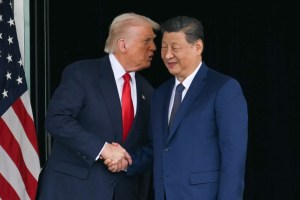
Support for USMCA is widespread, and President Donald Trump once considered it the crown jewel of his first-term trade policy platform. But the president’s tense dealings with both North American partners throughout 2025 have prompted him to threaten removing the U.S. from the treaty altogether. USTR Ambassador Jamieson Greer on reiterated that point during a speaking engagement Wednesday, saying the U.S. could opt to drop out of USMCA and negotiate separate bilateral agreements with Mexico and Canada—a prospect both nations would like to avoid.
A substantial portion of Trump’s ire stems from what he perceives as China’s undue influence on Mexico’s economy. He’s said Mexico hasn’t done enough to discourage the smuggling of fentanyl—developed with China-originating precursor chemicals—into the U.S. market. He’s also said Mexico has been acting as a “backdoor” or stopover for China-made shipments seeking to evade U.S. tariffs.
Sheinbaum has taken these points in stride, maintaining a dialogue with Trump and enacting policy changes that address American concerns. In October, Mexico’s government announced reforms to its Customs Law that it said will enhance enforcement of customs violations like undervaluation, tariff misclassifications and false or incomplete customs entries.
The law also contains changes to Mexico’s Maquiladora, Manufacturing and Export Services Industry (IMMEX) program. Launched in 2006 with the intent of attracting foreign investment in sectors like garment manufacturing, the program has been systematically abused by companies including Asia-owned operations importing inputs and materials into Mexico without respecting the parameters of the program.
“What we want is to recover the textile industry, which has lost a lot, mainly since the pandemic,” Sheinbaum noted Thursday. “Our position is to continue working with the government of China, South Korea and other countries with which we do not have a trade agreement,” she added.
The U.S., for its part, took aim at another Latin American trading partner on Thursday, announcing 15 percent tariffs on Nicaragua for goods not covered by the Dominican Republic-Central America Free Trade Agreement (CAFTA-DR) due to human rights violations.
An investigation conducted by the USTR concluded that the country has engaged in pervasive labor violations, including repression of freedom of association or collective bargaining, undue interference and both forced labor and child labor. As a result, a tiered set of tariff increases will take place over the course of 2026, 2027 and 2028, the agency said.