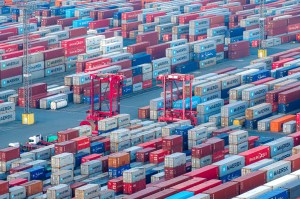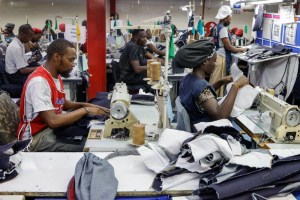
The African Growth and Opportunity Act (AGOA) expired in September, ending a quarter-century old trade preference program that provided 32 sub-Saharan African countries with duty-free access to the United States market on a wide range of products totaling in the thousands.
But with a 43-day government shutdown beginning just days later, AGOA lapsed without plans for a vote on a renewal, leaving the fate of trade with those burgeoning export markets hanging in the balance.
As it turns out, though, one U.S. lawmaker did introduce a bill to extend the program before the news cycle was dominated by the dysfunction gripping Washington.
Related Stories
Senator John Kennedy (R-La.) introduced his plan, “AGOA 2.0,” on Sept. 30, the same day that the program expired, though news about the bill was not released by the Department of Trade, Industry and Competition until Tuesday.
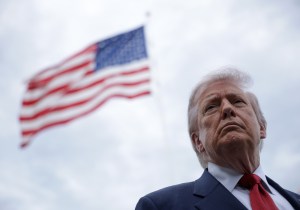
With bipartisan, bicameral support for AGOA, the department said that trade negotiations with African nations remain on the table, with even President Donald Trump advocating for a one-year renewal period.
Kennedy’s bill, however, makes some marked changes to the original, decades-old statute. The AGOA Extension and Bilateral Engagement Act would prioritize countries that support the economic and foreign policy interests of the U.S. for two years—a necessity, he said, given “China’s growing influence in Africa.”
“China is using Africa to expand its influence at America’s expense. We need to rethink our relationships in the region while strengthening trade with African countries that share our values,” Kennedy said.
That was the apparent justification the Senator used to include a targeted axing of South Africa from the agreement. The country has aligned itself too closely with the interests of America’s competitors and adversaries, including China and Russia, he wrote. AGOA 2.0 is so serious about holding South Africa accountable that it contains a provision that would specifically revoke its access to the program.
The country is a founding member of the BRICS Alliance—a trade bloc including, most notably, Brazil, Russia, India and China (the “S” standing for South Africa). Among the collective’s stated goals are economic growth and development, multilateral and symbiotic investment, and support for the New Development Bank and the promotion of more national currencies in global trade.
BRICS has long been a target of Trump’s ire, as the president sees the gang’s goals as threatening to American interests. The group has in the past floated the idea of developing a cross-border payment system, BRICS Pay, which would reduce reliance on the American dollar, for example. The group has collectively accused Washington of committing “tariff blackmail” to “conquer markets.”
Kennedy’s bill aligns itself with Trump’s sentiments toward BRICS and South Africa as a member. Case in point: AGOA 2.0 is very similar to a bill introduced in the House of Representatives in April, with the defining difference being the commitment to kick out South Africa.
Other provisions of the bill include the required formation of a new strategy to negotiate bilateral trade agreements with certain AGOA nations; clearer eligibility criteria about governance, rule of law, human rights, corruption and open markets; and combatting China’s influence in Africa.
Another piece of the bill, called the U.S.-South Africa Bilateral Relations Review Act, would remove South Africa from AGOA. To finalize the decision, the bill calls for a comprehensive review of the U.S.-South Africa trade relationship and sign-off from Trump on the charge that the country has violated U.S. national security interests.
Given the events of the past weekend, the president may well be inclined to lend his support.
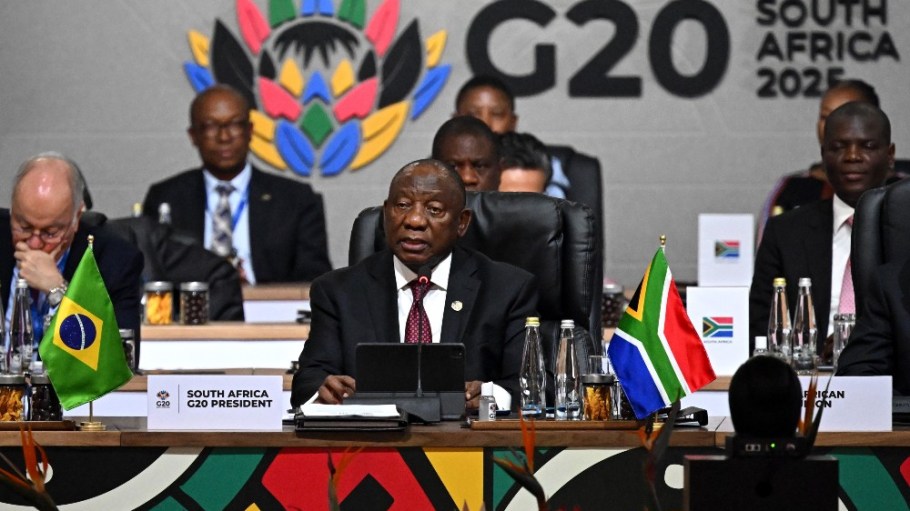
Trump and his cabinet boycotted the G20 Summit held in Johannesburg, South Africa over (among other factors) claims that the country has been persecuting white Afrikaner minorities. Notably, Chinese President Xi Jinping also skipped out on the gathering.
Also, against Washington’s wishes, the G20 leaders moved forward in adopting a declaration to address the climate crisis, global inequality and other issues. The declaration was signed without U.S. input and a spokesperson for South African President Cyril Ramaphosa said it “can’t be renegotiated.”
The White House wasted no time in clapping back, with a spokesperson saying the signing “underscores the fact that [South Africa has] weaponized their G20 presidency to undermine the G20’s founding principles.”
The U.S., which will host the G20 Summit in 2026, saw the ceremonial handing-over of the gavel take place on Tuesday without a representative in attendance. “President Trump looks forward to restoring legitimacy to the G20 in the U.S.’s 2026 host year,” the spokesperson said.