The United States Court of Appeals for the Federal Circuit has rebuffed the Trump administration’s request to delay the implementation of the Supreme Court’s landmark ruling on Feb. 20 for three months.
The Washington, D.C.-based appeals court on Monday denied the federal government’s appeal for a 90-day pause on the ruling invalidating the International Emergency Economic Powers Act (IEEPA) duties. This clears the way for a tariff refund process to continue unimpeded.
The Trump administration made the request “to allow the political branches an opportunity to consider options” with regard to tariff refunds.
Related Stories
“Plaintiffs claim speed is of the essence because they suffer harm from being ‘forced to operate’ without refunds in the interim,” the Trump administration wrote in its motion to stay the Supreme Court mandate. “But a compensable monetary loss is a classic harm that can be remedied by payment of money with appropriate interest, and a plaintiff’s bare desire to be paid immediately is not a basis to demand this Court comply with his every whim.”
Neal Katyal, a former Acting Solicitor General of the United States who argued against the tariffs on behalf of the small business and state plaintiffs in the Supreme Court case, said in his reply to the government’s motion to delay the implementation of the ruling was “plainly unreasonable.”
“The refund issue is straightforward: As Plaintiffs explained in their motion…the government has repeatedly made stipulations guaranteeing payment of refunds, with interest, if the Supreme Court held the IEEPA tariffs unlawful,” he added. The government’s subsequent attempt to stall the mandate only hurts the affected importers, he argued.
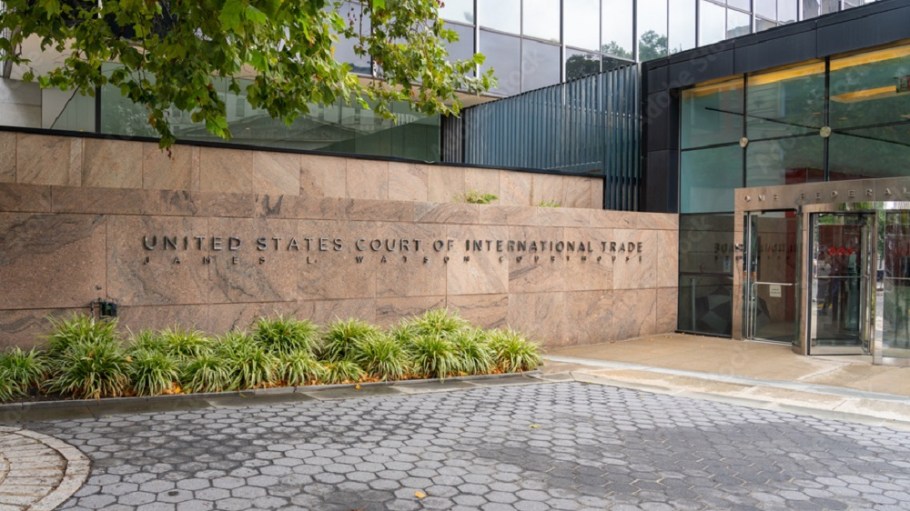
Now that the appeals court has sided with the plaintiffs, the issue of tariff refunds will be sent back to the U.S. Court of International Trade (CIT), which must decide how the convoluted process of issuing refunds worth about $179 billion should proceed. The Supreme Court’s decision offered no guidance on remediation for importers that paid into the IEEPA tariff scheme, though justices questioned both lawyers for the plaintiffs and the defense about what such a process might look like during oral arguments in November.
According to data from the Penn Wharton Budget Model, issuing refunds promptly is imperative to the nation’s fiscal health. The U.S. government stands to rack up nearly $700 million in interest each month that the tariff refunds are delayed.
To date, nearly 900 companies have sued the Trump administration over its tariff policy, and more are scrambling to file suits that they believe will expedite or guarantee their access to duty refunds. Last week, FedEx became the first large U.S. firm to sue the federal government after the Supreme Court decision was announced.
Katyal announced last week that he plans to launch a task force specifically with the goal of fighting for refunds. “We will fight tooth and nail for them if the federal government tries to hold that money back,” he said during an interview with MSNOW’s Morning Joe.
While his most prominent tariff policy has been invalidated, President Donald Trump has given no indication that he plans to back off of his strategy. Hours after the Supreme Court ruling, the White House issued an executive order implementing global 10 percent duties under never-before-used Section 122 of the Trade Act of 1974.
While the legal justification for these new duties—which the president wants to up to 15 percent in the near future—is shaky, Section 122 is just one tool in the administration’s arsenal. The Office of the U.S. Trade Representative and members of the president’s cabinet have touted other statutes as options for leveraging new tariffs.
Section 232 of the Trade Expansion Act of 1962 gives the president the authority to impose higher tariffs on national security grounds, and it’s currently in use to impose global tariffs on steel and aluminum imports to the U.S. Meanwhile, Section 301 of Trade Act of 1974 gives the president the power to impose tariffs or other restrictions against foreign countries that “engage in unjustifiable, unreasonable, or discriminatory trade practices that burden U.S. commerce.”
During his first administration, Trump’s USTR initiated a Section 301 investigation into China that resulted in tariffs on about $380 billion in China-originating imports. Those duties, which cover a wide range of industrial and consumer goods, cover everything from machinery to apparel and footwear products.