The European Union will impose a 3-euro per-parcel fee on small shipments entering the 27-nation trade bloc—a bid to manage a deluge of cheap, China-made wares from e-commerce titans like Shein and Temu.
EU finance ministers set the duty rate Friday with a start date of July 1, 2026. The tax is a stop-gap measure that will remain in place until a permanent solution is reached regarding the elimination of Europe’s de minimis exemption, which applies to shipments worth up to 150 euros. In November, EU nations agreed to sunset de minimis entirely by 2028.
Related Stories
“This temporary measure responds to the fact that such parcels currently enter the EU duty free, leading to unfair competition for EU sellers, health and safety risks for consumers, high levels of fraud and environmental concerns,” the European Commission wrote.
Under the current rule, EU customs estimates that up to 65 percent of small parcels crossing European borders are undervalued—a form of customs fraud. With around 4.6 billion small shipments entering the bloc last year (more than three times the volume seen in 2022), the scale and magnitude of fraudulent activity has become untenable, officials believe.
Now, every small shipment processed by customs will be hit with a flat fee of 3 euros. If more than one category of goods is found in a single shipment, the fee will apply to each of them separately, though multiple items of the same type in a single shipment will only be charged once.
The new duty rate applies to shipments from across the globe, but officials have demonstrated that the primary target of the changes to customs policy is China, as it was responsible for 91 percent of all low-value e-commerce shipments that entered Europe last year. The usual suspects—Shein, Temu, AliExpress and the like—are squarely in the crosshairs of regulators.
France has been at the forefront of the movement to stem the flow of cheap and illicit goods into the EU, with French President Emmanuel Macron going as far as to threaten China with tariffs to rectify the growing trade imbalance between Europe and the sourcing superpower. The EU had a 300-billion-euro ($350 billion) trade deficit with China last year.
Earlier this month, Macron traveled to China and reportedly enjoyed a cordial meeting with President Xi Jinping, but he was firm on the objective of rebalancing the lopsided trade relationship, saying, “I told [China] that if they don’t react, we Europeans will be forced to take strong measures in the coming months.”
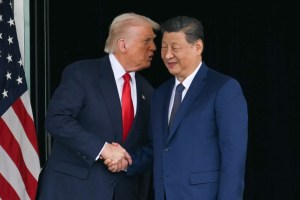
The tariffs levied on China by the United States were both a point of reference for Macron’s plan and a catalyst for it. The leader said that because of President Donald Trump’s hefty 47 percent duties on China, the country is “massively” rerouting shipments once destined for the U.S. to European market. The development has been disruptive and devastating for European businesses, he said.
The EU’s plan to nix de minimis has widespread support across the bloc, though, and it has moved swiftly. Last month, European Commission commissioner for trade and economic security Maros Šefčovič called on the European Commission’s Financial Affairs Council to terminate the exemption as soon as possible.
“European business, particularly retailers, have repeatedly stressed the need to remove this distortion of competition without delay. This is not a technical issue—it is a question of Europe’s capacity to defend its economic interests,” he said.