One hundred and seventy House Democrats and 36 Senators—including a single Republican—are taking a legal swipe at “President Donald Trump’s sweeping and chaotic on-again-off-again tariffs” and voicing their disapproval to the nation’s highest court ahead of oral arguments in November.
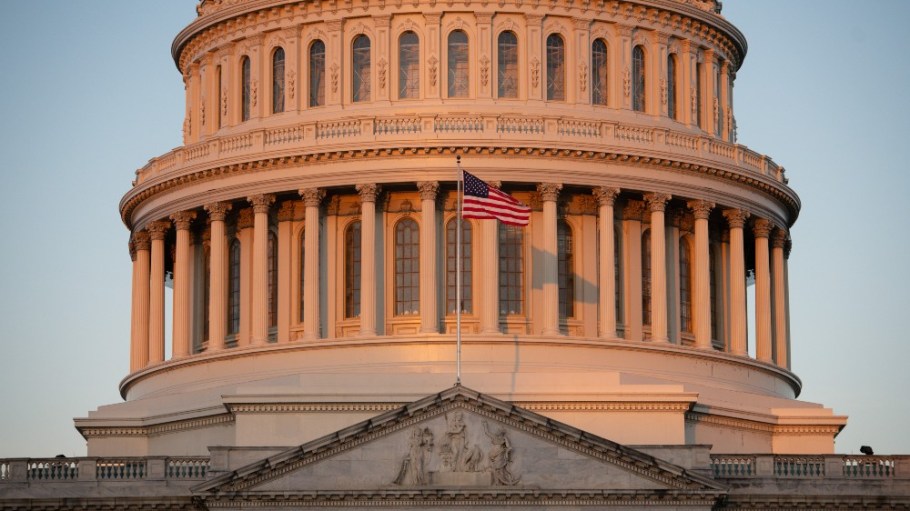
On Friday, the bicameral (and technically bipartisan) collective of lawmakers known as the Litigation Task Force submitted an amicus brief before the Supreme Court arguing on behalf of Congress’s Article I legislative powers. The document reinforces that the International Emergency Economic Powers Act (IEEPA) is not a tariff statute—nor did Congress intend of provide for it to be leveraged as such.
Related Stories
“The Constitution gives Congress, not the President, the authority to impose tariffs, and the President can only raise tariffs if Congress has clearly delegated its authority to him,” the signatories wrote. “Although IEEPA (enacted in 1977) grants the president authority to impose sanctions, block foreign assets, and regulate economic transactions in response to ‘unusual and extraordinary threats’ originating abroad, it is not a tariff statute and has never been used that way.”
Filed by Ranking Member Jamie Raskin and Task Force Chair Joe Neguse, House Democratic Leader Hakeem Jeffries, Ways and Means Ranking Member Richard E. Neal, House Foreign Affairs Ranking Member Gregory Meeks, as well as Senate Foreign Relations Ranking Member Jeanne Shaheen and Senate Finance Ranking Member Ron Wyden, the brief was submitted in the matter of Oregon, et al., v. Trump, et al., the lawsuit brought by 12 States’ Attorneys General earlier this year.
The lawmakers argued that the IEEPA tariffs are hurting American consumers by driving up prices at retail while at the same time undercutting small businesses caught on a rollercoaster of whipsawing policy changes.
“Donald Trump’s attempt to invoke emergency powers to impose sweeping tariffs and start chaotic trade wars was never about national security. It was about usurping Congress’s powers over trade and commerce so he can personally control the U.S. economy, punish and reward private companies, and subject them to his eccentric whims,” Ways and Means Ranking Member Raskin said.
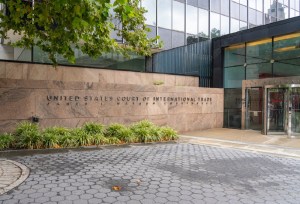
The filing is intended to defend Congress’ legislative power and its singular authority to impose tariffs and regulate commerce, he said, pointing to the two federal court decisions that have already validated that perspective. This spring, a New York Court of International Trade handed down a ruling that Trump had overstepped his presidential authority. The administration quickly appealed the decision, but it was reaffirmed by a Washington, D.C.-based Federal Circuit Court of Appeals.
“Donald Trump and congressional Republicans promised to lower the cost of living on day one. They lied. Instead, prices and inflation are rising and Republicans are unleashing harm on everyday Americans,” House Democratic Leader Jeffries added. “Trump’s unlawful and repeated imposition and then abandonment of his reckless tariffs creates economic uncertainty, and the American people are forced to shoulder the burden.”
Ways and Means Ranking Member Neal criticized the president for continuing to escalate the issue when two lower courts have already found the IEEPA tariffs unlawful. “In a surprise to no one, the president didn’t get what he wanted, and now he wants a new audience. But that doesn’t change what Courts have repeatedly affirmed: Trump does not have the power to unilaterally impose these tariffs under IEEPA,” he said.
Senator Shaheen, Ranking Member of the Senate Foreign Relations Committee, called Trump’s use of emergency powers to impose new duties “an unlawful overreach that hits American families in their wallets and undermines Congress’s constitutional authority.”
She called out the Commander in Chief for circumventing Congress in his bid to impose the tariffs, which she said amount to “the biggest tax increase in modern American history at huge costs to families and businesses.”
“This bipartisan brief makes clear that no president—Republican or Democrat—can sidestep that responsibility. The Supreme Court should affirm what every lower court has already found: these tariffs are illegal, and the American people should not have to pay the price for President Trump’s reckless and self-defeating trade policy,” Shaheen said.
Meanwhile, Senator Lisa Murkowski (R-Alaska) broke with her party in defending Trump’s tariff regime. While the lawmaker did not comment on her decision to participate in the amicus brief, Murkowski has repeatedly criticized tariffs and their impact on Alaskans.
In April, she argued on the Senate floor that Congress should reassert its authority to impose tariffs and take other legislative actions that have, over time, been clawed away by the executive branch.
“In my time here, I have seen a troubling pattern, in both bodies, where the party that controls the White House seems all too comfortable relinquishing authority to the President, and then rubber stamping whatever policies the executive wants enshrined into law,” she said at the time.
“Both Democrats and Republicans in Congress have deferred to the executive to call the shots, in my view, for far too long. Now we use the phrase around here a lot: ‘co-equal branches of government.’ I use it all the time,” she added. “But the reality is, Congress was created in Article One of the Constitution. We’re given far more authority than the executive. All you need to do is look in your handy dandy little pocket constitution. Ours is a lot longer.”
The legislators’ filing comes a week after the seven small businesses and 12 states involved in suing Trump filed their own final briefs to the Supreme Court outlining what they perceive as a land-grab by the administration. The oral arguments in the case will be heard during an 80-minute session on Nov. 5.