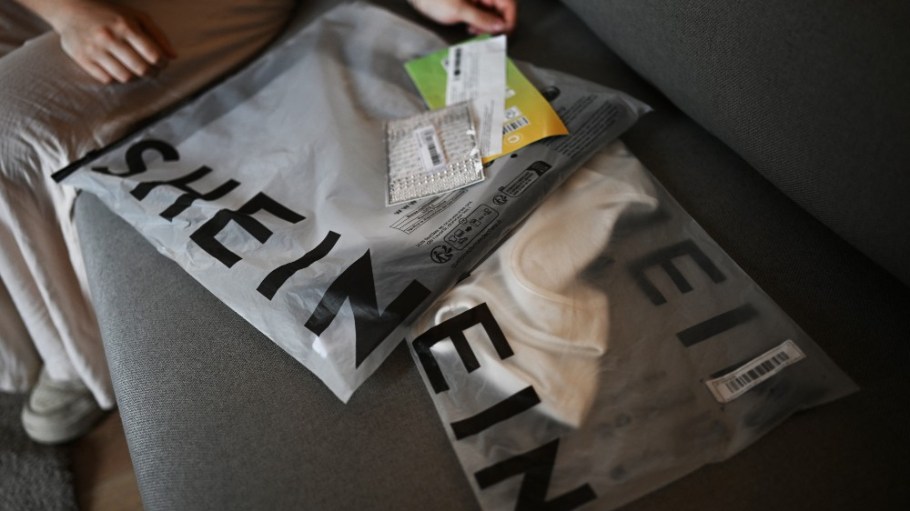
Steals and deals from Temu and Shein just got a whole lot more expensive.
Customs and Border Protection (CBP) on Wednesday issued a Federal Register Notice elucidating the details of President Donald Trump’s weekend executive order that levied 10-percent duties on China-made goods. The directive, which went into effect Feb. 1, also bars shipments subject to the duties from utilizing the de minimis trade exception.
For Chinese e-tailers like Shein and Temu—which account for 30 percent of total de minimis imports, according to Congress’ Select Committee on the Chinese Communist Party—that’s game-changing. De minimis shipments accounted for $54.5 billion worth of U.S. imports in 2023.
Related Stories
Now, direct-to-consumer packages worth less than $800 will be subjected to CBP’s “formal entry” process, meaning that they’ll forgo duty-free treatment and face stringent screening. Formal entry, which usually pertains to shipments worth more than $2,500, also applies to commercial shipments of clothes and textiles no matter the MSRP.
“Without regard to their value, no mail shipments from China will be cleared or released by CBP unless and until formal entry is properly filed,” the Federal Register Notice said.
In order to see their shipments released, importers must file appropriate paperwork and a pay a CBP bond. The Customs Merchandise Processing Fee (MPF) for formal entries is 0.3464 percent of the total value of the imported goods, with a minimum fee of $32.71 and a maximum of $634.62. That’s a pretty steep surcharge for the importer (in this case, the end consumer) to pay, especially when most de minimis shipments are worth $50 or less.
On top of the added cost, filing for formal entry is a headache. Even CBP recommends that importers consider hiring a customs broker to complete the transaction, “[b]ecause filing a formal entry can be complicated.” Importers must identify the correct classification number for the item they’re importing on the Harmonized Tariff Schedule of the United States (HTSUS), which CBP describes as “the size of an unabridged dictionary.” Failure to correctly classify an imported product could result in added fines or delays.
Trump’s tariff announcement sent ripples through the markets, causing Temu’s stock to plummet Tuesday. Late that evening, the U.S. Postal Service (USPS) announced that it would no longer accept U.S.-bound packages from China or Hong Kong—a decision that was reversed by the following morning.
China is not pulling any punches; hours after Trump’s tariffs (and de minimis ban) took effect, Beijing levied its own 10-percent to 15-percent duties on U.S. exports, including agricultural products.
And on Wednesday, China took its fight to the World Trade Organization (WTO), filing a formal complaint that alleged Trump’s 10-percent duties, “as well as the measures with respect to the availability of drawback and duty-free de minimis treatment,” were “imposed on the basis of unfounded and false allegations concerning China.”
China has now requested WTO dispute consultations with the U.S. which would give the nations’ governments an opportunity to discuss the matter and come to a non-litigious resolution. If the matter isn’t resolved in 60 days, China could request adjudication by a WTO panel.