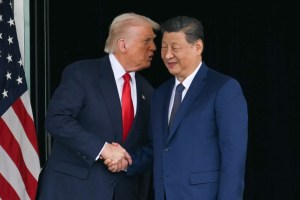
Weeks after the United States Congress approved a bill extending the African Growth and Opportunity Act (AGOA), China’s government has passed its own legislation solidifying trade with 53 African nations.
The China–Africa Development Economic Partnership Agreement (CADEPA)—which extends well beyond the 32 sub-Saharan African countries covered by AGOA—will draw down duties on nearly all African imports into China beginning May 1 (excluding Eswatini, which maintains diplomatic relations with Taiwan and recognizes its sovereignty). The new policy builds upon previous legislation that nixed tariffs for imports from 33 African countries.
Related Stories
As Africa’s most prominent trading partner, bilateral trade with China hit $222 billion between January and August of last year—a jump of more than 15 percent from 2024. Relations between the Asian sourcing superpower and the continent have been bolstered by China’s Belt and Road Initiative, which has spurred investment in Africa’s transportation infrastructure and supported trade growth.
However, there’s a sizable trade imbalance that Beijing said the agreement is poised to address. China’s customs data showed that between January and August 2025, China’s exports to Africa ballooned by 24.7 percent to $140.79 billion. Imports from Africa, by contrast, increased 2.3 percent to $81.25 billion. During the first eight months of last year, Africa’s trade deficit stretched to almost $60 billion.
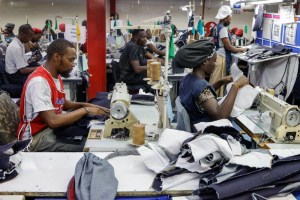
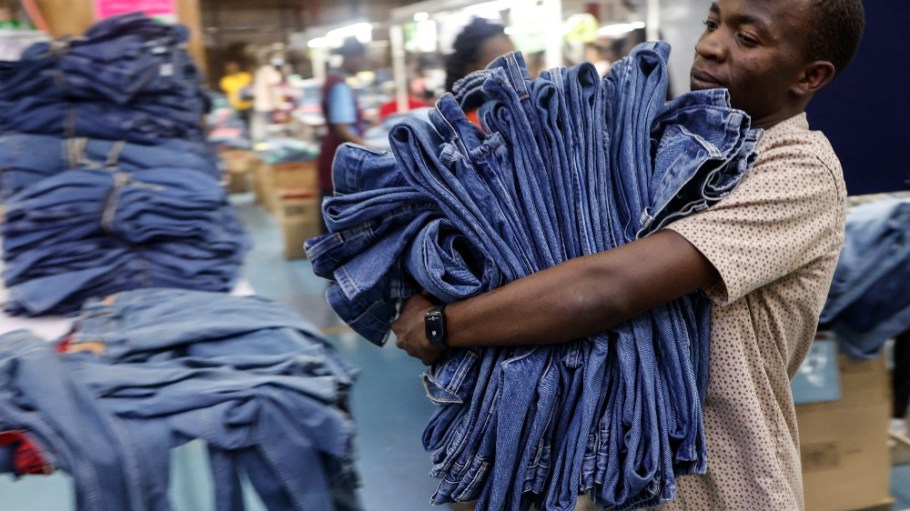
Many African markets are highly reliant on China for essential products like crude oil, metals and minerals. Meanwhile, the continent’s apparel-producing hubs depend on China for certain materials and components that aren’t produced in the region, though some countries have invested in rebuilding and verticalizing their fashion sectors in recent years. Kenya, for example, invested $1.6 million in reopening shuttered garment factories and launching new cotton ginneries in 2023.
Chinese President Xi Jinping sent a congratulatory message to the African Union Summit, which took place on Feb. 14-15, emphasizing the mutual understanding and appetite for cooperation that China has shared with Africa for 70 years since the beginning of diplomatic relations.
Xi spoke about the accelerated global shifts taking place and the growth of the global South in the face of a mercurial international trade landscape. He said China is committed to advancing the interests of both sides as they pursue the goal of modernization, according to China’s Ministry of Foreign Affairs.
“The zero-tariff of African products to China is a good opportunity and a special opportunity for us to increase our exports to China,” Uganda’s minister of state for foreign affairs and international cooperation, Henry Okello Oryem, said, according to Chinese state-run news agency Xinhua.
The sweeping tariff drawdown makes way for individual nations to negotiate bilateral agreements for economic partnership and development, which will further expand market access, Xi said in his statement.
Over the weekend, Kenya and China developed the Early Harvest Arrangement, which would grant duty-free access to Kenyan food and agricultural goods as well as manufactured products. The deal is expected to be finalized in the coming months.
Meanwhile, earlier this month, China and South Africa signed a Framework Agreement on Economic Partnership for Shared Prosperity, which will give the African nation zero-tariff treatment on 100 percent of exports to China.