China is cautioning other nations not to capitulate to the United States as President Donald Trump’s trade wars rage on.
A spokesperson for the China Ministry of Commerce on Monday told media outlets at a press briefing that the U.S. has “abused tariffs on all its trading partners under the banner of so-called ‘reciprocity,’” a pursuit they referred to as “hegemonic politics and unilateral bullying.”
“Appeasement cannot bring peace, and compromise cannot be respected,” they added. “To seek so-called exemptions at the expense of others’ interests for one’s own temporary selfish interests is to seek the skin of a tiger, which will ultimately fail on both ends and harm others without benefiting oneself.”
Related Stories
The news comes several days after Italian Prime Minister Georgia Meloni traveled to Washington with the intent of brokering a deal with the president on Italy’s behalf and smoothing tensions between the U.S. and the European trade bloc more broadly.
While the spokesperson said that China’s government respects the will of other countries to resolve their trade disputes with the U.S. directly, it also believes they should “defend international economic and trade rules and the multilateral trading system.” China filed a complaint with the World Trade Organization, alleging that Washington is flouting the trade body’s rules through the indiscriminate levying of duties and a failure to negotiate in good faith.
The country is undoubtedly seeking to deepen its trade ties with other partners and has been making overtures in recent weeks, with leaders even meeting with officials from Korea and Japan for the first time in five years in the interest of strengthening collaboration. However, the Ministry spokesperson on Monday issued a warning to China trade partners across the globe: any deal that another nation makes with the U.S. to the detriment of China will be met with retaliation.
“If this happens, China will never accept it and will resolutely take countermeasures in a reciprocal manner,” they said.
China has long been the subject of Trump’s ire, inspiring the president to implement punishing Section 301 duties during his first term that raised tariffs on a multitude of items—including apparel and footwear—by up to 25 percent. At the time, Trump cited issues like currency manipulation, forced technology transfer, intellectual property theft and other non-competitive practices as the reason for his attempts to force a de-coupling from the sourcing superpower.
But, in China’s estimation, “No one can remain immune to the impact of unilateralism and protectionism.” Free trade should reign, the spokesperson intimated, and is wholly focused on bolstering its relationships with other trading partners to guard against unfairness perpetuated by Washington.
“China is willing to strengthen solidarity and coordination with all parties, work together to resist unilateral bullying, safeguard its legitimate rights and interests, and defend international fairness and justice,” the spokesperson said.
While its government is signaling an unwillingness to back down (or even engage further in the tit-for-tat escalation of tariffs the Trump administration has engaged in over the past month), there’s strong evidence that the trade war is already taking a toll on the country’s most prominent and lucrative businesses.
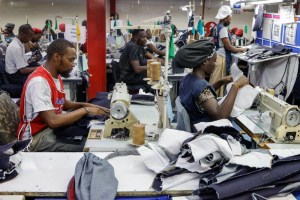
According to a report from Japan-based news outlet Nikkei Asia, a number of garment workshops in Guangzhou, China—which have been collectively nicknamed “Shein Village”—are shuttering as the ultra-fast-fashion e-tailer contends with the loss of business that will come with price hikes and the closure of the de minimis “loophole.” Under the trade provision, hundreds of thousands of small Shein parcels, many worth $50 or less, have been entering the U.S. duty free.
But the machines have sputtered to a stop in recent weeks—and even finished garments lie in piles, unable to be shipped to American shoppers without incurring massive taxes that will enter into force on May 2. One worker at a factory with around 20 employees told Nikkei, “Orders from Shein have fallen this year, and our sales are down by a lot.”
For most U.S. shoppers who frequent Shein’s e-commerce site or shop on its ultra-popular app, a $100 surcharge on a haul of $12 sundresses is an untenable prospect, completely undermining the platform’s appeal. Knowing this, last week, Shein released a statement urging shoppers to get their orders in before the company is forced to raise its prices to account for the double whammy of a 145-percent duty burden and the loss of the de minimis exception.
“Due to recent changes in global trade rules and tariffs, our operating expenses have gone up. To keep offering the products you love without compromising on quality, we will be making price adjustments starting April 25, 2025,” the company said in a notice to consumers.
Notably, though, the price increases imposed by Shein won’t cover the Customs costs—consumers—the importers of record for direct-to-consumer shipments—will foot those bills themselves. Multiple users on Reddit attested to this, having experienced it firsthand during the ultra-brief pause on de minimis shipments from China implemented by the Trump administration in February.
Shein shoppers reported receiving notices from shipping providers like FedEx and DHL alerting them to unpaid Customs duties, and they were directed to pay those fees through a web link in order for their shipments to be released.
“Unfortunately, as an American, we’re very used to ignoring things we don’t like and have this false sense of power over things we actually don’t have control over. This isn’t going to be so simple as looking away and pretending the tariff fee doesn’t exist, or holding onto false hope that your specific package will just barely avoid being taxed,” one user wrote in the Shein subreddit. “Order with the assumption that you WILL be taxed, not that you won’t. Be aware, be prepared, and make the best decision for your finances.”