Beijing seems to be making good on its promise to “fight to the end” in the tariff battle with Washington.
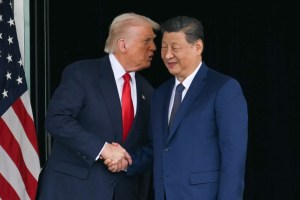
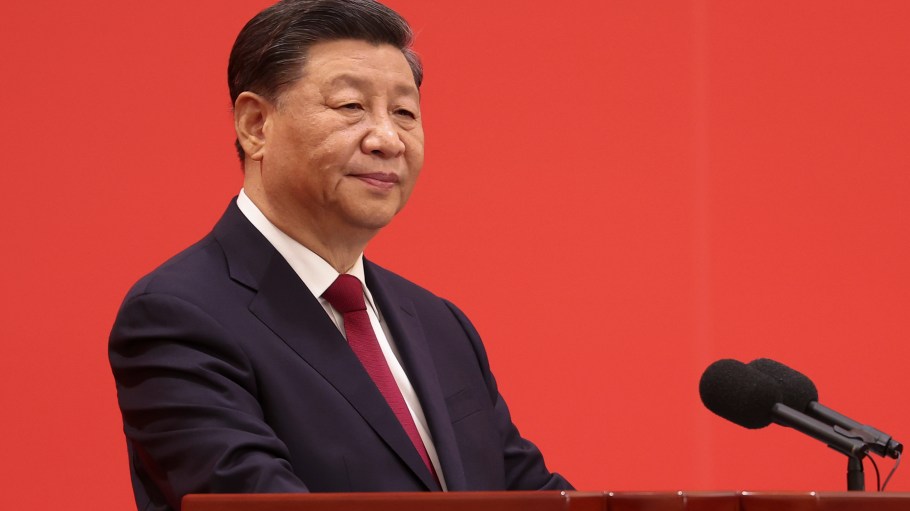
On Friday, Chinese President Xi Jinping hit back at U.S. President Donald Trump’s staggering 145-percent duties on Chinese imports (which he clarified Thursday compounded 125-percent duties announced this week with 20-percent fentanyl-related levies announced previously). As a result, Xi raised duties on goods imported from the U.S. to 125 percent, up from the 84 percent duties China imposed on U.S. goods earlier this week.
Related Stories
China’s Finance Ministry said Trump’s continued tariff increases constitute “bullying” on an international stage.
“The U.S. side’s imposition of excessively high tariffs on China seriously violates international economic and trade rules, runs counter to basic economic principles and common sense and is simply an act of unilateral bullying and coercion,” the ministry said in a statement.
The ministry further noted that the increase to 125-percent tariffs on the U.S. may be its last lash, even if Trump continues to increase tariffs on China.
“Even if the U.S. continues to impose even higher tariffs, it would no longer have any economic significance and would go down as a joke in the history of world economics,” the ministry said in a statement, adding, “If the U.S. continues to play a numbers game with tariffs, China will not respond.”
Still, the ministry reaffirmed its promise that China would continue the fight and noted that Beijing may pursue other retaliation measures.
Jamieson Greer, the U.S. trade representative (USTR), took to Fox News Friday morning to discuss the fallout, and noted that much of the reason the Trump administration has elected to take such draconian measures against China is to “achieve more fair and balanced and reciprocal trade with other nations” by eliminating barriers that could impede U.S. companies.
“The Chinese reaction this morning is not terribly surprising but certainly unfortunate,” Greer said on Fox & Friends. “No one else has retaliated against these reciprocal tariffs, yet China got out ahead and decided to do it, and that’s why they’re in a different category the rest of this point.”
Tensions with China show little promise of easing, with Greer further noting that the administration has a bullish attitude toward moving sourcing away from China.
“We need to diversify from China and be able to source from other countries,” Greer said. “I’m obviously sensitive to the needs of households and what we’re seeing, but we’ve been put in a position—and in a point of emergency, frankly—where if we can only maintain our standard of living by being dependent on China, who is a strategic adversary, that’s a very dangerous position to be in and so, and so we need to accelerate this.”
Trump hasn’t directly weighed in on China’s latest blow, but, as he is prone to do, shared a brief message on Truth Social Friday morning.
“We are doing really well on our TARIFF POLICY. Very exciting for America, and the World!!! It is moving along quickly. DJT,” he wrote.
While the relations between China and the U.S. continue to grow harsher, China is reportedly looking to cozy up with other nations on trade deals. Xi met with Pedro Sanchez, Spain’s prime minister, about linking with the European Union to circumvent economic difficulties that could come about for both nations because of Trump’s tariff policy.
“China and the EU must fulfill their international responsibilities, jointly safeguard the trend of economic globalization and a fair international trade environment, and jointly resist unilateral and intimidating practices,” Xi said during the meeting with Sanchez in Beijing.
Xi, without directly mentioning the U.S., commented during the same meeting that, “There will be no winners in a tariff war, and going against the world will only isolate oneself.”
The Chinese president’s negotiations appear to be far from finished; he has plans to travel to Southeast Asian nations—some of them premier destinations for non-China sourcing—next week. His stops include Vietnam and Cambodia. And though China’s economic interdependence with Vietnam has benefitted both nations, Vietnam’s latest act appears to be an appeal to the U.S.
According to Reuters, Vietnamese officials are considering a crack down on transshipping—that is to say, goods being shipped from China through Vietnam, into the U.S. market—in an effort to appease the Trump administration. Vietnamese officials met with the USTR Wednesday about the tariffs, and, per Reuters, Vietnam is hoping to see its final tariff number land between 22 and 28 percent, down from the 46-percent “retaliatory tariff” the president announced during his “Liberation Day” press conference.
Vietnam’s purported move comes at a time where any distance from America’s biggest foe seems to be a bargaining chip with the Trump administration. Still, the intertwined nature of the Vietnam-China supply chain could be nearly impossible to sever.