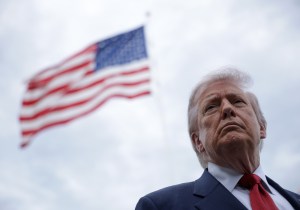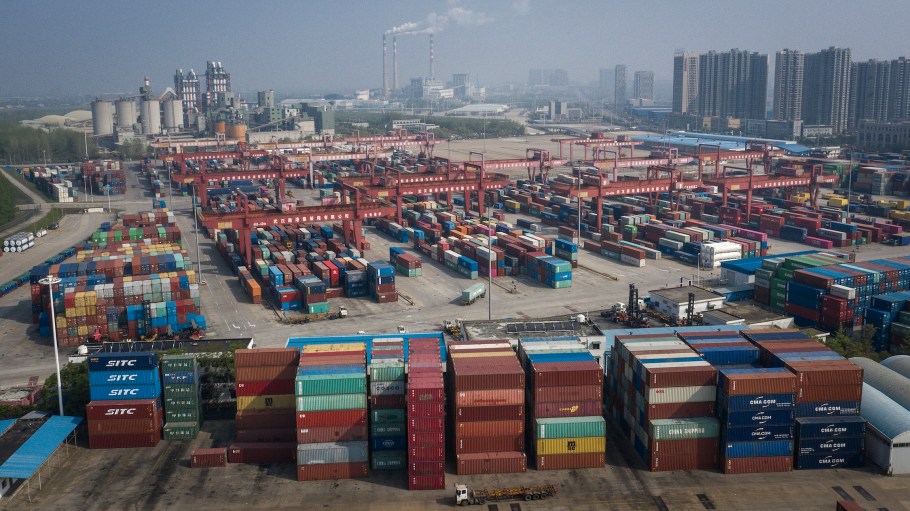
Chinese exports reached record levels in December as companies made a mad dash to get product into the U.S. ahead of President-elect Donald Trump’s return to the White House—and the expected imposition of a new slate of tariffs on goods originating in the country.
Outbound shipments during the month rose 10.7 percent year-on-year to 2.5 trillion yuan ($335.6 billion), according to China’s General Administration of Customs. The numbers are a stark improvement over November’s 6.7 percent annual increase, and surpass the 7.3 percent growth anticipated by a Reuters poll of economists.
Related Stories
According to the government agency, exports to the U.S. jumped 16 percent year over year in December alone. The aggressive increase comes as Trump’s tariff proposals are still not set in stone, with the President-elect saying in November the U.S. would begin charging additional 10-percent duties on China-made goods.
For the full year, China’s exports worldwide grew by 5.9 percent to 25.5 trillion yuan ($3.6 trillion).
“The double-digit rise in December exports…supports our earlier judgment that the threat of tariffs could affect export patterns in the next couple of quarters, with a potential boost in shipments before the introduction of new tariffs, followed by a drop-off,” Barclays analysts said in a note.
December imports into China surprised to the upside with 1 percent growth to 1.7 trillion yuan ($231 billion), the strongest performance since July 2024. Reuters-polled economists expected a 1.5 percent decline.
With exports outpacing imports, China’s trade surplus grew to $104.8 billion in December, and nearly $1 trillion for the year, at $992.2 billion.
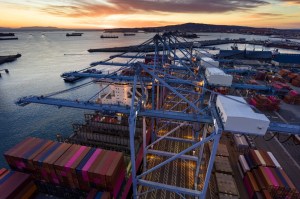
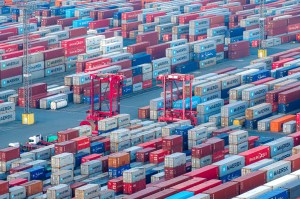
December is anticipated to see a massive flow of cargo into U.S. seaports as retailers and brands continue to front-load ahead of the tariffs. The monthly Global Port Tracker from the National Retail Federation and maritime trade consultancy Hackett Associates projects December at 2.24 million 20-foot equivalent units (TEUs), up 19.2 percent year over year.
That report also expects a 10 percent-TEU bump in January.
With President-elect Trump’s inauguration on Jan. 20, the stakes for Chinese exports are likely to be higher not just into the U.S., but into countries like Mexico, which is slapping tariffs of its own on goods like textiles. The country’s new presidential administration modified its IMMEX trade program so that finished apparel goods could no longer enter Mexico tax-free.
The tensions between the U.S. and China, and the possible bumpy road in global trade that could result from it, has logistics giants like CMA CGM, DHL and Kuehne + Nagel redeploying Chinese staff across different regions of the world.
According to a report from the Financial Times, the three European third-party logistics and freight forwarding titans are transferring more Mandarin-speaking sales and customer service employees to Europe, southeast Asia and Latin America to better serve Chinese client businesses that aren’t as versed in operating in the markets.
These moves come as production hubs such as Vietnam and Thailand are attracting Chinese manufacturers amid the “China plus one” diversification push that had already began permeating through U.S. supply chains in recent years.
As China awaits the presidential transition, the Biden administration reportedly concluded a months-long investigation into the country’s maritime, logistics and shipbuilding practices, finding that China uses unfair policies and practices to expand these industries.
U.S. Trade Representative (USTR) Katherine Tai launched the probe in April at the request of the United Steelworkers and four other U.S. unions, who claimed that China gave its domestic shipbuilding industry unfair advantages by mandating the purchase and use of Chinese ships by Chinese state-owned shipping enterprises and state-owned oil companies.
USTR will release its findings later this week, days before President Joe Biden leaves office, said Reuters.
According to the report, the probe concluded that China used financial support and built barriers for foreign firms to help give its shipbuilding and maritime industry an advantage. Reuters said China coerced foreign businesses to share sensitive technology with Chinese firms, all while committing intellectual property theft.
China has denied any wrongdoing throughout the investigation.
Under Section 301 of the Trade Act of 1974, the U.S. can penalize foreign countries that engage in acts that are “unjustifiable” or “unreasonable,” or burden U.S. commerce. Trump used Section 301 to impose billions of dollars in tariffs of Chinese imports in his first go-around as president, after a USTR investigation found China was misappropriating U.S. intellectual property and coercing the transfer of U.S. technology to Chinese firms.
The reported completion of that probe would follow the Pentagon’s recent blacklisting of Chinese container shipping giant Cosco Shipping, which the U.S. Department of Defense now designates as a Chinese military company.
While the blacklist does not carry specific penalties, it discourages U.S. businesses and other Western companies from working with the carrier and its subsidiaries, such as Orient Overseas Container Line (OOCL).