World leaders gathered virtually at the BRICS Summit on Monday to tighten ties between the 10-country trade bloc amid a perceived alienation by the United States.
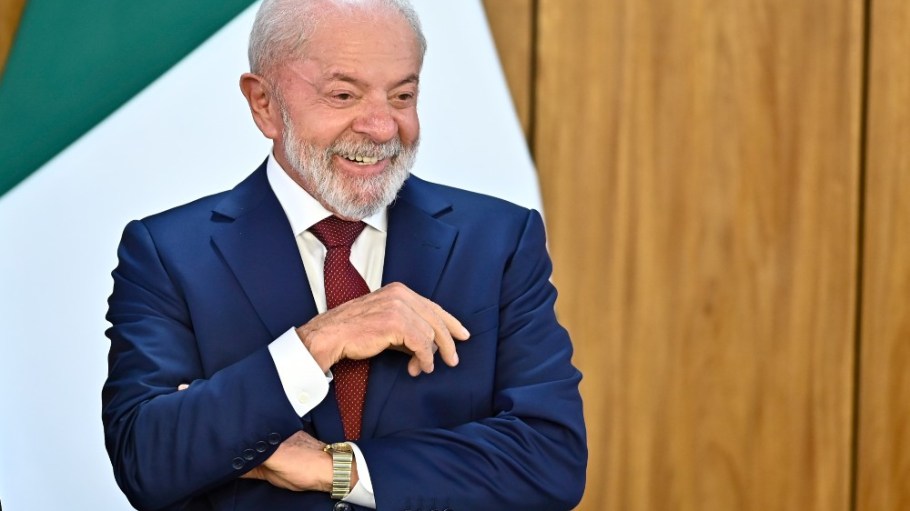
Brazilian president and BRICS Alliance chair Luiz Inácio Lula da Silva went on the offensive, saying that “tariff blackmail has been normalized as a tool to conquer markets and to interfere in our domestic issues.”
Brazil currently faces 50 percent duties on imports to the U.S. market—a sky-high rate apparently driven by President Donald Trump’s frustration at the treatment of former ally and Brazilian leader Jair Bolsonaro, who awaits trial for allegedly plotting a coup to stay in office after losing the 2022 election to Lula.
Related Stories
According to the leader, who was sworn into office in January 2023, the U.S. has not only threatened the South American country’s economy, but encroached on its national sovereignty. The American administration has parked warships in the Caribbean Sea in a bid to tackle drug trafficking, culminating in a deadly attack on a Venezuelan vessel last week.
The presence of armed forces in the region remains a major source of “tension,” Lula said, accusing the U.S. of enacting a “new unilateralism strategy.”
“A peaceful solution for controversies is now being replaced by belligerent conduct without any support of international law,” he said.
Lula, along with his BRICS counterparts, pointed out the bloc’s growing influence on international trade; BRICS members now account for 40 percent of global gross domestic product (GDP) and 20 percent of worldwide trade—not to mention about half of the planet’s population.
Chinese President Xi Jinping echoed Lula’s concerns, referring to the U.S. obliquely as “some country” that has initiated a spate of trade wars that threaten the global economy. Xi conveyed a message that America’s protectionist leanings are simultaneously futile and disruptive.
“Economic globalization is an irresistible trend of history. Countries cannot thrive without an international environment of open cooperation,” he said. Again stopping short of invoking the U.S. by name, he said that “no country can afford to retreat to self-imposed isolation.”
Recent data shows that China has suffered mightily under the Trump tariff doctrine; August saw the country’s exports to the U.S. market contract by more than 33 percent.
“No matter how the international landscape may evolve, we must stay committed to building an open global economy,” he added. “We should uphold the multilateral trading system with the World Trade Organization at its core and oppose all forms of protectionism.”
Indian Prime Minister Narendra Modi skipped the summit but the country’s interests were represented by External Affairs Minister S. Jaishankar, who forcefully called for a resolution to trade conflicts—and not just with the U.S.
“Where India is concerned, some of our biggest deficits are with BRICS partners and we have been pressing for expeditious solutions,” he said—a likely reference to the large and growing trade deficit with China.
“Trade patterns and market access are today prominent issues in the global economic discourse. The world requires constructive and cooperative approaches to promote trade that is sustainable. Increasing barriers and complicating transactions will not help. Neither would the linking of trade measures to non-trade matters,” Jaishankar said, according to New Delhi-based news outlet NDTV World.
Trump hit India with two waves of 25 percent tariffs that took hold in August, citing the country’s trade deficit with the U.S. as well as its continued purchasing of Russian oil. The American president has been seeking, thus far unsuccessfully, to broker an end to the Ukraine conflict, and is icing out any trade partner that appears to be lending support to Russia.
But as India and nations throughout the developing world contend with economic instability and a scarcity of vital resources, “The world as a collective is seeking a stable and predictable environment for trade and investment,” Jaishankar said. “At the same time, it is imperative that economic practices are fair, transparent and to everyone’s benefit.”
“When there are multiple disruptions, our objective should be to proof it against such shocks. That means creating more resilient, reliable, redundant and shorter supply chains,” he added.