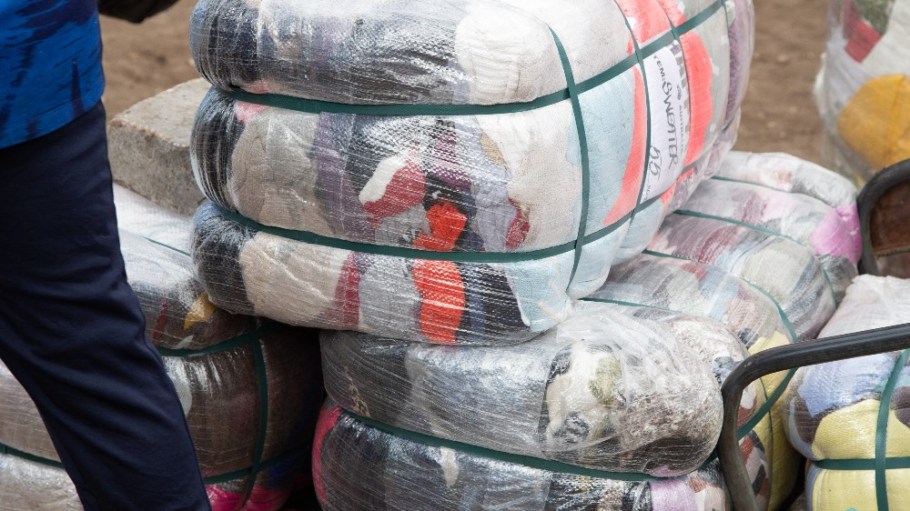
A recently brokered deal between the United States and El Salvador contains illuminating language about the textile circular economy.
The Agreement on Reciprocal Trade (ART), signed by the two countries last week, includes a provision confirming that used clothing and textiles classified under HS 6309 qualify for preferential treatment under the Central America–Dominican Republic Free Trade Agreement (CAFTA-DR).
The Secondary Materials and Recycled Textiles Association (SMART) applauded the Office of the U.S. Trade Representative (USTR) for the clarification, which it said will remove “a longstanding barrier to legitimate secondhand exports.”
Related Stories
According to the group, which lobbies on behalf of the American reuse and recycling industry, SMART members that have been importing secondhand apparel into El Salvador for the past year have faced inconsistent treatment by local trade authorities, some of which said that the used garments don’t meet the rules of origin requirements to qualify for CAFTA-DR. This uncertainty has created an unsustainable barrier to the trade of secondhand apparel goods, SMART said.
The group worked with USTR and the Department of Commerce to elucidate the importance of textile and apparel reuse and secondhand commerce, stating that the industry needs a “workable framework” to succeed. SMART lobbied on behalf of the clarification within the context of trade negotiations with countries like El Salvador. The group has been advocating for such clarifications to be included in trade agreements with other Latin American nations, too.
Now, the agreement reflects that secondhand apparel from entering El Salvador qualifies for preferential treatment based on its export origin—the U.S.—regardless of where it was originally produced. According to SMART, this development supersedes prior rules that were both impractical and not conducive to the growth of the reuse market.
“This outcome represents a meaningful step forward for our members and for the broader circular economy,” said Jessica Franken, vice president of government and external affairs at SMART. “We are grateful to the Administration and U.S. trade officials for their willingness to engage with our industry and deliver a solution that supports responsible reuse, recycling, and legitimate global trade.”
El Salvador, which is a part of the CAFTA-DR agreement, sees duty-free benefits for its domestically produced apparel and textiles being sold into the U.S. market. Under the recently signed ART, the Trump administration agreed to remove the 10 percent “reciprocal” tariffs the country faced on products that can’t be grown or mined sufficiently in the U.S. The agreement specifically mentioned textile and apparel covered by CAFTA-DR as being exempt from those duties.
In turn, El Salvador agreed to draw down non-tariff barriers and streamline regulatory requirements for American products like pharmaceuticals, medical devices and agricultural goods.