Reju may be young, but the rookie recycler is certainly thinking about the end.
The Paris-based textile-to-textile recycling firm’s tête-à-tête with end-of-life textiles saver Nouvelles Fibres Textiles (NFT) will see the two French firms collaborate on the sourcing and recycling of textile waste as the country begins building out a circular ecosystem.
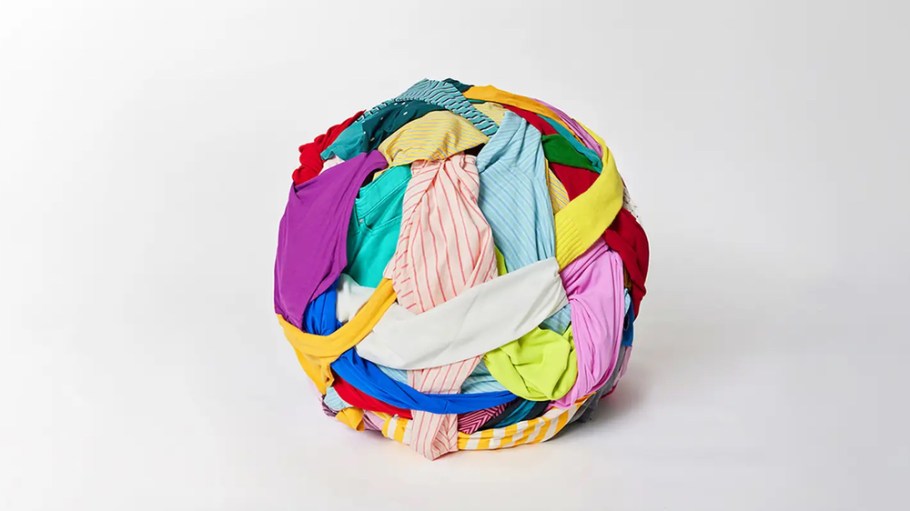
The collaboration leverages NFT’s advanced sorting technology and Reju’s innovative regeneration process. NFT will supply Reju with the secondary raw materials (derived from used and unused textile waste) that Reju will recycle and turn into regenerated polyester.
Related Stories
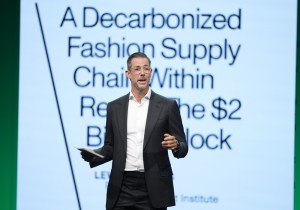
“Reju and Nouvelles Fibres Textiles are using innovation and collaboration to accelerate the transition to a circular textile ecosystem,” said Patrik Frisk, CEO of Reju. “This valuable partnership demonstrates our collective commitment to addressing the problem of textile waste and developing new ways to use the resources we have within local supply chains.”
The duo will work on expanding the collection and processing infrastructure for apparel and textile wastes from post-consumer and post-industrial sources. In doing so, the partnership will (ideally) yield recycled materials with 100 percent traceability.
It’s good timing, considering the EU is preparing to mandate the separate collection of textile waste through the Waste Framework Directive (WFD). Under this rapidly approaching mandate, EU member states must establish separate collection systems for used textiles.
“With the collection of textile waste mandatory in the European Union starting in 2025, it is imperative we have scalable systems and partnerships to process what is collected and keep it from landfills or incineration,” Frisk said. “Together, Reju and NFT are building the technology and infrastructure to regenerate and reuse materials across industries and change the way we use our resources.”
The Technip Energies-owned company is developing the infrastructure necessary to bolster the region’s textile waste-based regenerative fiber production, beginning with polyester. The resulting end product—Reju Polyester—is expected to have a 50 percent lower carbon footprint than virgin polyester and the capability to be “regenerated infinitely,” Reju said.
The textile waste (supplied by NFT) will be processed at Reju’s inaugural demonstration plant, the Regeneration Hub Zero in Frankfurt, Germany—plus any future regeneration hub(s) in Europe. That plant is expected to come online next year to enable Reju PET production.
Meanwhile, NFT and its partners (chiefly Andritz and Pellenc ST) opened a “unique” semi-industrial site and research center last November. For context, NFT is the brainchild of more-than-a-century-old French-heritage Jacquard weaver Les Tissages de Charlieu Groupe (LTC), and clothing collection specialist Synergies TLC (a part of the EU’s White Cycle Project). The textile recyclers became operational in mid-2023, effectively becoming the first industrial plant in France for the automated sorting and recycling of textile waste.
That Amplepuis, France-based facility opened in partnership with the aforementioned Andritz and Pellenc ST: a textile recycling machinery and processes pro and a waste sorting specialist, respectively. The plant’s pilot line combines Pellenc ST’s automated sorting tech with Andrtiz’s tearing lines to automatically sort garments by color and composition—serving both the post-industrial and post-consumer waste markets.
“After six years of research and collaborative work, Nouvelles Fibres Textiles is now ready to collaborate with professionals who need to recycle their textiles,” NFT’s co-directors Eric Boël and Etienne Wiroth said in a statement.
“We have an innovative turnkey solution that transforms heterogeneous end-of-life textile streams into high-quality homogeneous raw materials while ensuring their traceability. Our partnership with Reju paves the way for the permindustry: a circular, more local, less carbon-intensive and more collaborative industry—essentially, an industry that does good.”