As the de facto closure of the Strait of Hormuz continues to send oil and gas prices skyrocketing, fast fashion companies reliant on cheap synthetic fibers could be squeezed like never before.
Polyester is the dominant material in the apparel industry, accounting for nearly 60 percent of global fiber production. Footwear, too, is hardly immune. Roughly 60-75 percent of materials in modern shoes are derived from petrochemicals, according to a recent Footwear Distributors and Retailers of America analysis.
Related Stories
Just last week, Teijin Frontier, a key subsidiary of Japan’s Teijin Group, implemented an “emergency” sales price revision, raising prices on filament and staple fibers, spun yarns and nonwoven fabrics by at least 20 percent and textiles by 15 to 25 percent. At the beginning of April, Eastman hiked prices for all polyester and copolyester products by 25 cents per kilogram, citing the “extreme cost escalation” of oil-derived raw materials, energy and logistics.
Coats Bangladesh, a leading industrial sewing thread manufacturer, announced a 15.5 percent price increase effective April 15 due to “rapid escalation in oil-derived feedstock costs” and higher transportation expenses. Coim U.S.A., which specializes in polyurethanes, polyesters and specialty resins, likewise instituted price jumps this month to offset raw material cost increases.
As a result, the FDRA projects that a $20 FOB price for sneakers in February 2026 could rise to $20.30 FOB by mid- to late-summer for fall/winter retail, while the American Apparel & Footwear Association estimates that each garment could also cost 10-15 cents more to produce.
The surge has given natural fibers a competitive edge, at least for now. On Tuesday, previously sleepy cotton futures hit a two-year high of 81 cents per pound, up more than 20 percent since the United States and Israel attacked Iran in February. The increase has everything to do with the price of Brent crude, now surpassing $100 per barrel.
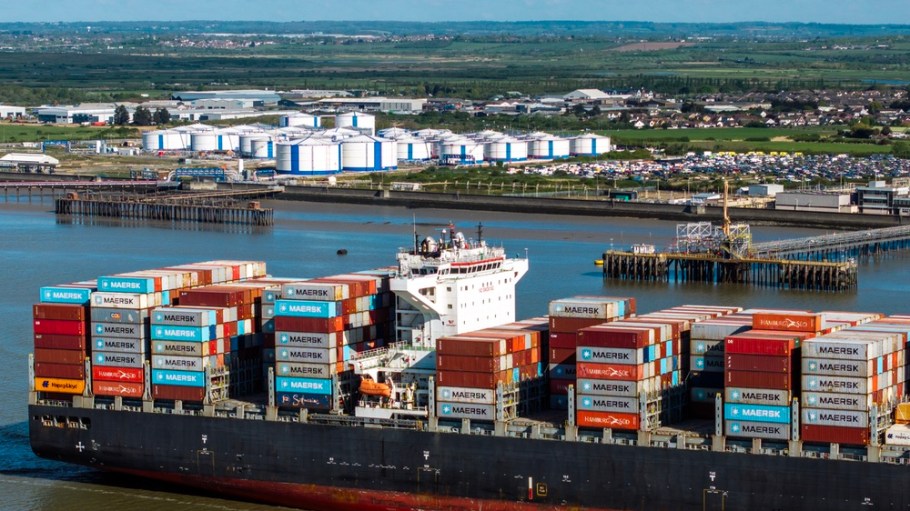
Meanwhile, production timelines are also getting pushed back due to logistical bottlenecks tied to the Iran war forcing shipments around the Cape of Good Hope, adding 15-20 days to transit times and 25-30 percent to shipping costs.
For brands like Shein, which employs polyester in up to 80 percent of its clothing while operating on narrow profit margins and infamously short production timelines, that combination is a “triple whammy” of price increases that will be “dramatic and felt immediately, with limited capacity to absorb them,” said Rachel Kitchin, senior corporate climate campaigner for fashion and IT at Stand.earth, a Toronto environmental nonprofit.
Even turning to recycled feedstocks won’t shield polyester-dependent sportswear purveyors like Adidas and Nike from price shocks for long, she added. Polyester recycling is a power-hungry process, and as high energy costs filter through to rPET manufacturers, those prices will also become more erratic.
Even so, recycled polyester from discarded plastic bottles still comprises only 12 percent of polyester production. Textile-to-textile recycling, while promising, has yet to achieve so-called “circular” polyester at scale.
But while Kitchin expects more designs to shift toward cotton or cotton blends, going au naturel isn’t a cure, she said. Simply put, cotton cannot replace polyester at the rate and volumes fast fashion companies churn out. If anything, attempting this will place unprecedented stress on natural ecosystems that are already on the brink.
“Fossil fuels, and cheap synthetic fibers specifically, underpin the explosion in production volumes that we’ve seen over the last few decades, allowing companies to make drastically more products for less, and organic fibers simply can’t be produced as quickly or at as high volumes,” she said.
There’s also the fact that conventional cotton production is heavily dependent on chemical fertilizers—supplies of which are also affected by the conflict in the Middle East. If the fighting doesn’t ease, farmers’ ability to produce at scale could suffer.
“Fertilizers are not just impacted by oil prices, but also by the fact that nearly half of the world’s traded urea—the most widely used fertilizer—and large volumes of other fertilizers are exported from Gulf countries via the Strait of Hormuz, making global agriculture highly exposed to any disruption there,” said Nusa Urbancic, CEO at the Changing Markets Foundation, a Netherlands-headquartered consumer watchdog.
The pressures could extend beyond materials. Textile production is an energy-intensive business that requires a staggering amount of electricity. Unchecked energy prices could strain textile mills beyond their limits, even leading to closures.
In Bangladesh, where 90 percent of the garment sector’s energy comes from on-site generation, predominantly gas, manufacturers facing the loss of already razor-thin margins may be forced to cut costs wherever possible. That could have knock-on effects for workers if factories must choose between maintaining production and cooling facilities just as the country enters its hottest months, Kitchin said.
Another way fast fashion brands could feel the pinch, according to Urbancic: Consumers facing cost-of-living increases are less likely to shell out on non-essentials.
Kitchin said that the businesses best positioned to weather the crisis will be those that “really learn” from it. That means building long-term supplier relationships based on trust, with sufficient margins to absorb volatility while investing in electrification and renewables; shifting away from volatile synthetics toward closed-loop recycled or regeneratively farmed materials less dependent on petrochemicals and fertilizers; and adopting slower production cycles that don’t hinge on bringing new products to market within days or weeks.
What all this ultimately points to is a long-overdue transformation in how clothes are made.
“Zooming out, it’s worth noting that we’re now into the fourth major global shock to supply chains in just six years, and we have to ask how long this kind of instability can be hand-waved away as a short-term hurdle rather than a fundamental flaw,” she said.