Textile-to-textile recycling (T2T) for polyester has struggled to move beyond the pilot stage. A semi-industrial trial conducted in Japan suggests that the barrier may be shifting.
French public body IFP Energies nouvelles (IFPEN) collaborated with its subsidiary technology firm, Axens, and JEPLAN—a portmanteau for Japan Environment Planning—to validate a viable T2T route for polyester at a semi-industrial scale. The trio reported their “Rewind” process proved the practicality of large-scale circular polyester production from post-consumer waste.
Related Stories
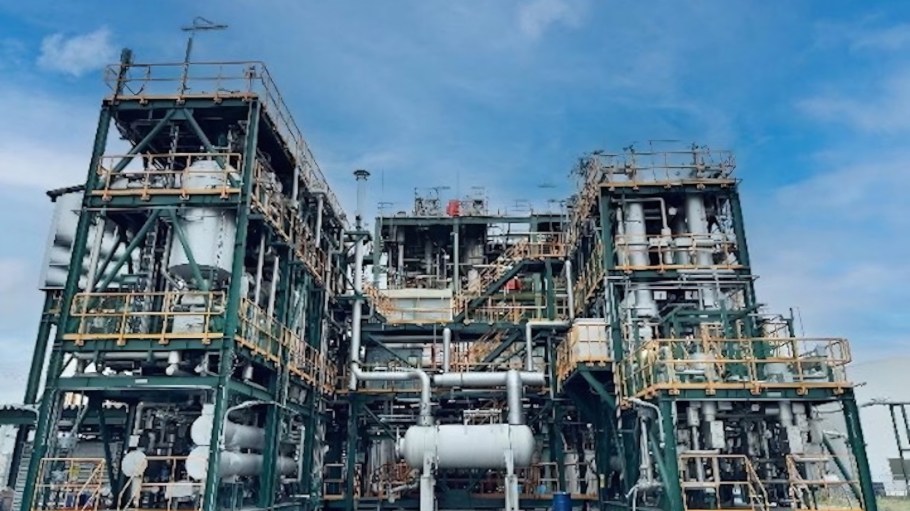
The process entailed a trial at JEPLAN’s Kitakyushu Hibikinada Pilot plant. It produced tens of tons of bis (2-hydroxyethyl) terephthalate (BHET)—the primary monomer for polyethylene terephthalate (PET)—from polyester-rich textiles collected and sorted in France. In turn, the validation produced tens of tons of BHET, which will soon be converted into polyester yarns and fabrics for garments.
The partners called the “Rewind” process one of the first of its kind at an industrially relevant scale—demonstrating that the technology works in an environment that mimics a commercial plant.
“By hosting the Rewind PET semi-industrial demonstrator at our Kitakyushu site, we are demonstrating in practice that this technology can be integrated into a real industrial environment, with its complex constraints and waste streams,” said Masaki Takao, CEO of JEPLAN. “This breakthrough opens up new possibilities for the market to develop fibers and fabrics incorporating a very high percentage of recycled material, without compromising on performance or sustainability.”
The Japanese circular-economy firm, founded in 2007, develops and deploys PET chemical-recycling tech to produce high-quality recycled materials. The Kawasaki City-based company’s chemical recycling plant includes demonstration and semi-industrial units for testing and scaling said technologies. For reference, roughly 60 percent of global textile production relies on polyester and other synthetic fibers. Still, less than 1 percent of the fibers produced today are actually derived from “genuine textiles recycled into textiles,” per the partners, referencing Textile Exchange’s Materials Market Report.
“Science, engineering and operational expertise come together to demonstrate the performance of the Rewind PET process developed by the partners,” said Quentin Debuisschert, CEO of Axens. “Thus, demonstrating the robustness, stability and reproducibility of a cutting-edge recycling technology specifically designed to promote the circularity of textile polyester.”
The French state-owned research organization IFPEN focuses on the energy transition, sustainable mobility and the environment. While IFPEN itself is a public body, it commercializes innovations through its main subsidiary, Axens. Operating as a globally commercial company, Axens can then sell catalyst products and technology licenses developed from IFPEN’s research.
“With Rewind PET, IFPEN is realizing more than 10 years of research to put chemical recycling at the service of an ambitious circular economy, according to the public body’s chief executive,” said Pierre-Franck Chevet, president and CEO of IFPEN. “Our work has enabled the production of a high-purity recycled monomer that can be directly reintroduced into the most demanding applications, such as textiles. This is an important step.”