Reju is deepening its local roots in France as it advances plans to commercialize textile-to-textile recycling for polyester.
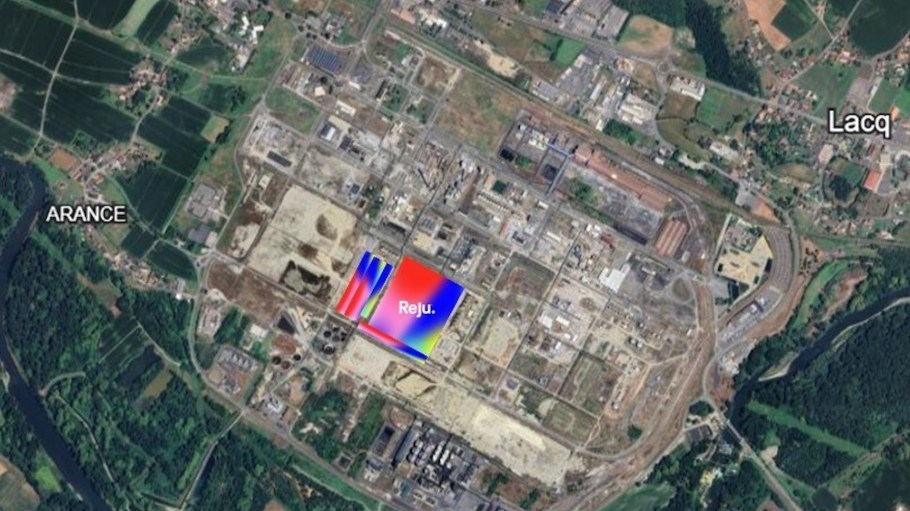
The Paris-based regeneration firm said it has selected the Lacq Basin, in France’s Pyrénées-Atlantiques region, as the site of its first industrial-scale regeneration hub in the country.
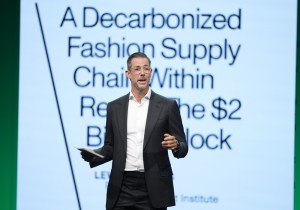
Chief executive officer Patrik Frisk said the Lacq project is intended to move textile-to-textile recycling beyond pilots and toward industrial deployment. “This French Regeneration Hub builds on our strategy to industrialize a circular post-consumer textile-to-textile model,” he said, adding that France’s circular-economy framework makes it a strategic market for scaling the company’s technology.
Related Stories
Reju positioned the project as part of its broader push to industrialize chemical recycling for apparel as Europe tightens circularity and traceability requirements.
Owned by French engineering firm Technip Energies, Reju uses proprietary recycling technology co-developed with IBM Research to recover, regenerate and recirculate textile waste, starting with polyester. The company is also active in European industry groups focused on recycling infrastructure and standards, including ReHubs and Petcore, as it seeks to build a textile-to-textile supply chain aligned with EU policy.
The Lacq site was selected with support from Chemparc, a development agency backed by the French state and local authorities, including the Nouvelle-Aquitaine region and the Lacq-Orthez community. The basin is a long-standing industrial hub that grew around the 1951 discovery of a large, high-pressure sour natural gas field in southwestern France.
The proposed plant is designed to process post-consumer textiles sourced from national waste streams using Reju’s depolymerization process to produce regenerated BHET (rBHET), a polyester intermediate that can be repolymerized into new PET suitable for textile applications.
If approved, the Lacq hub would support an estimated 80 direct jobs and more than 300 indirect roles, according to the company, and would plug into Reju’s growing network of regeneration sites. That footprint includes its operational Regeneration Hub Zero in Frankfurt, a previously announced site in Chemelot, Sittard-Geleen in the Netherlands, and a planned U.S. hub at Eastman Business Park in upstate New York.
Granted, the project still needs final approval (see: investment decision) from Technip Energies. But if it moves forward, the facility will be built on the Induslacq industrial platform, which focuses on chemical and energy production and supports local industry.
Owned by TotalEnergies, the Induslacq platform sits within a long-established chemicals and energy corridor—a factor Chemparc cited in backing the site selection. Public authorities at the national and regional level have also supported the project, framing it as part of France’s effort to anchor low-carbon, circular industrial activity domestically.
“This decision underscores the attractiveness of our industrial basin and illustrates the role of our Public Interest Group as a catalyst for this attractiveness,” Audrey Le-Bars, CEO of Chemparc. “Chemparc is committed to continuing its support with diligence and energy for the success of this industrial project in the Lacq Basin.”
The announcement comes just weeks after Reju named Rochester, New York, as the location of its first U.S. commercial-scale regeneration hub. That $390 million facility is expected to come online by 2029 as the second of Reju’s planned “megafactories” to begin construction.
The company’s first industrial-scale project, announced last May, is slated to start operations in 2027 at Chemelot Industrial Park in the Dutch city of Sittard. Reju also operates a demonstration facility in Frankfurt, Germany, with capacity to produce roughly 1,000 metric tons of BHET annually.