American consumers generate 17 million tons of textile waste a year, according to an EPA estimation in 2018, with 66 percent buried and 19 percent burned; 14.7 percent is recovered. But how the United States’ secondhand clothing exports move through the value chain in transit to Guatemala is actually a net-positive for Central America’s largest economy—and its “impoverished population,” a recent report found.
Commissioned by the Atlanta-based clothing wholesaler Garson & Shaw, the report—a “study of trade, distribution and local impact,” per the title—explored how Guatemala’s secondhand clothing (SHC) sector plays a “critical role” in supporting the country’s economy.
Related Stories
“As domestic resale markets in the U.S. continue to develop, the export of SHC functions as a complementary channel that supports the extended use of garments beyond the domestic market,” reads the “Secondhand Clothing Imports from the United States to Guatemala” report. “Guatemala has become a prominent destination for such exports, where SHC contributes to meeting consumer demand for affordable apparel, stimulates economic activity in local markets, and provides livelihood opportunities.
The findings, conducted by consultancy group Full Cycle Resource (FCR), suggest the “thriving” reuse marketplaces reduce how much of the United States’ textile waste gets burned and/or buried while also promoting local entrepreneurship and circularity to overall keep capital flowing through credential clothing.

“This report is significant because it shifts the conversation from waste to opportunity; it offers concrete evidence that global reuse systems are not only environmentally beneficial but also economically and socially valuable,” said Lisa Jepsen, CEO of Garson & Shaw. “It highlights the need to integrate international reuse into U.S. waste and circular economy policy.”
In 2023, Guatemala imported nearly 290 pounds of SHC under Harmonized System (HS) code 6309—a globally recognized classification for trade in used textiles and clothing—which represented 57 percent of total clothing import volume. Almost all of it—specifically, 98.6 percent—originated from the United States, the secondhand supplier found.
“Given the high level of market concentration, any analysis of quality and waste within Guatemala’s SHC sector is largely indicative of the characteristics of United States exports under HS code 6309,” the report reads. “The continued dominance of secondhand clothing, particularly in terms of affordability and accessibility, reflects its importance for low-income households amid persistent poverty and economic informality.”
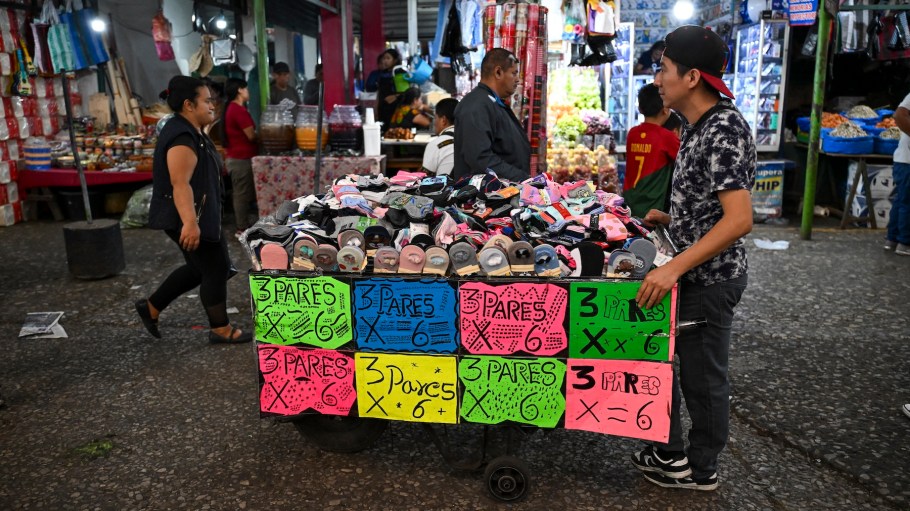
Within Guatemala’s SHC trade are two leading players: the informal market and the formalized one. The former comprises micro-retailers and vendors—also known as pacas—while the latter contains large retail operations, like Megapaca.
Either way, the supply chain starts with importers, who either sell unsorted clothing (known as “rupa cruda” or the aforementioned credential) or sort it for distribution. That clothing is typically sold in three categories: ropa cruda (unsorted), clasificados (sorted clothing) and saldos (secondhand retail pull or retail excess from local markets), the Atlanta supplier said.
“A clear preference exists for importing unsorted clothing bales (ropa cruda), as it allows for local value addition through domestic sorting, pricing, and redistribution across formal and informal channels,” per the report. In turn, it “avoids increased costs and reduced flexibility that would result from pre-sorting in high-wage countries like the United States.”
SHC shipped to Guatemala goes through multiple layers of value extraction by local sorters, retailers and vendors, according to Jennifer Wang, founder of FCR and lead author of the report. FCR specializes in “capturing” the global textile industry’s economic and trade dynamics in an effort to bolster sustainability efforts like transparency and circularity.
“In fact, between 88-92 percent of clothing is sorted for reuse—what we found is that the activity of sorting locally was not only valued but vital,” Wang said. “It adds economic value, creates jobs and ensures clothing can meet the specific needs of local markets.”
Guatemala-based Megapaca—the largest importer and retailer of used clothing in Central America, sourcing primarily from the United States—underscored the importance of the trade.
“Unsorted bales are the backbone of what we do,” said Mario Peña, Megapaca’s co-founder and general manager. “They allow us to create thousands of jobs in our sorting centers and stores, while enabling us to meet demand across diverse markets and income levels.”
For the United States, the report recommended that policymakers should strengthen upstream collection systems and improve donation practices. And preserve the option to import to countries like Guatemala to manage SHC flows in ways that maximize local economic and social benefits.
For Guatemala, the report recommends recognizing SHC as a platform for women’s economic empowerment. The sector surveyed found strong female participation, with nearly 61 percent of traders and about 57 percent of business owners identifying as women—higher than the national average of 27 percent, the supplier of wholesale secondhand clothing found.
“The SHC sector plays a significant role in advancing economic inclusion—particularly for women—by offering accessible pathways to entrepreneurship and income generation in contexts where formal employment opportunities may be limited,” the report reads. “This disparity underscores the SHC sector’s potential as a platform for female entrepreneurship, possibly due to its low entry barrier, flexible working conditions and lower capital requirements.”
Per the United Nations Commodity Trade Statistics Database (UN Comtrade), the European Union (30 percent), China (16 percent) and the United States (15 percent) were the leading exporters of discarded clothing in 2021. Asia (28 percent, predominantly Pakistan), Africa (19 percent, especially Ghana and Kenya) and Latin America (16 percent, mostly Chile and Guatemala) were the leading importers of said waste.
“To build truly circular economies, the Global North must recognize its role in supporting reuse systems that work,” Jepsen said. “By doing so, we can reduce waste at home and contribute meaningfully to sustainability and economic inclusion abroad.”