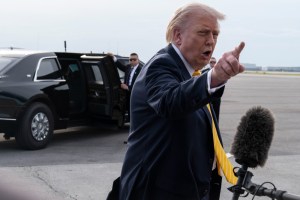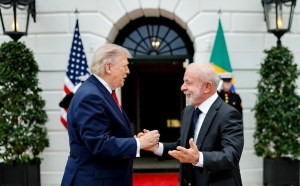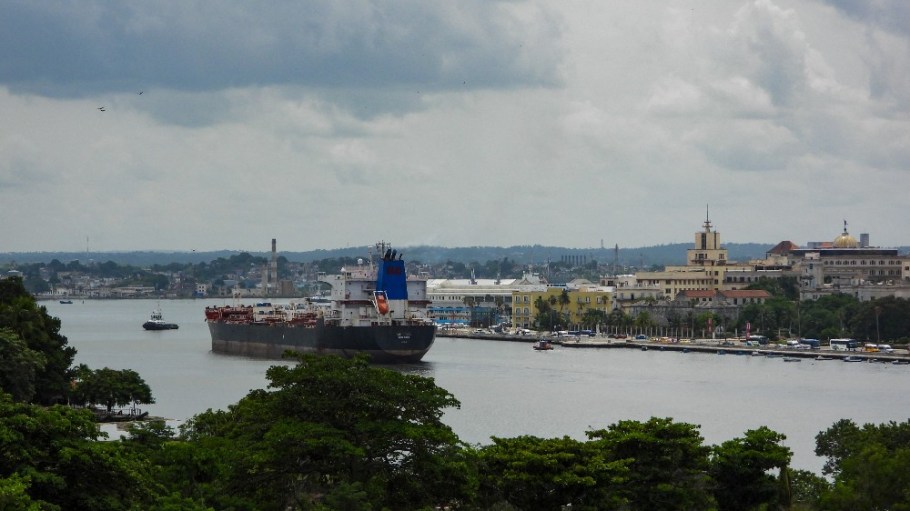
President Donald Trump has declared a national emergency over the actions of Cuba’s government, and is threatening any country that supports the Caribbean nation through the sale of oil with new tariffs.
In an executive order released by the White House on Thursday, the president announced that he has “an imperative duty to protect the national security and foreign policy of this country,” and that he finds “the policies, practices, and actions of the Government of Cuba constitute an unusual and extraordinary threat.”
Related Stories
“The Government of Cuba has taken extraordinary actions that harm and threaten the United States. The regime aligns itself with—and provides support for—numerous hostile countries, transnational terrorist groups, and malign actors adverse to the United States, including the Government of the Russian Federation (Russia), the People’s Republic of China (PRC), the Government of Iran, Hamas, and Hezbollah,” the order said.
Trump said Cuba’s government “supports terrorism and destabilizes the region through migration and violence.” He added that the United States supports Cuban citizens in their aspirations for a democratic society, saying the country “has zero tolerance for the depredations of the communist Cuban regime.”
The order stipulated that an ad valorem duty rate would be imposed on goods imported into the U.S. from other countries that sell or provide oil to Cuba. The president declined to provide a specific tariff rate, writing that Commerce Secretary Howard Lutnick and other cabinet officials have been tasked with making the determinations necessary to implement the order.
In her daily press briefing, Mexican President Claudia Sheinbaum sounded the alarm about what such a strategy could mean for the region.
“The imposition of tariffs on countries that supply oil to Cuba could trigger a far-reaching humanitarian crisis, directly affecting hospitals, food supplies and other basic services for the Cuban people,” she said.
Earlier in the day, Trump Truthed that he’d had a “very productive telephone conversation” with Mexico’s leader, much of it focused on the border, drug trafficking and trade. Praising Sheinbaum as “highly intelligent,” he said he plans to speak with her again soon.
The development leaves Sheinbaum between a rock and a hard place. Mexico, which was shipping 20,000 barrels of oil a day to Cuba between January and September of last year, will be targeted with increased duties should it continue to do so, potentially unraveling the progress won through months of conversations and negotiations between Trump and Sheinbaum. According to data from Pemex, the country has already drastically drawn down its shipments to about 7,000 barrels per day since the fall.
Sheinbaum said Thursday that she’s deputized her top diplomat to reach out to Washington to elucidate the scope of Trump’s plan, and to advocate on behalf of Cuba, which has fallen to its lowest point in decades.
However, Sheinbaum said in her morning meeting, “We don’t want to put our country at risk in terms of tariffs,” adding, “We want to know the scope of the decree and always seek diplomatic channels.”
Cuban President Miguel Diaz-Canel was apoplectic at the announcement, taking to X to express his displeasure. “This new measure demonstrates the fascist, criminal, and genocidal nature of a clique that has hijacked the interests of the American people for purely personal gain,” he wrote.
While Trump fired his shot across the bow at Cuba and its allies, the administration concurrently sought to strengthen ties with another Western Hemisphere trade partner.
On Friday, the White House released a joint statement with the government of Guatemala announcing a framework for an agreement on reciprocal trade very similar to the recently announced pact with El Salvador.
Guatemala will see a lowering of reciprocal tariffs on its U.S.-bound exports that can’t be grown or mined in the U.S.—including products like textiles and apparel that originate under the Dominican Republic-Central America Free Trade Agreement (CAFTA-DR)—in return for drawing non-tariff barriers on American imports, from agricultural products to medical devices and pharmaceuticals.
According to the National Council of Textile Organizations (NCTO), Guatemala represents a key partner in bilateral textile and apparel trade, with $2 billion in such products making their way between the countries each year. In 2024, the integrated co-production network of manufacturers in the U.S. and Guatemala supported $11.3 billion in two-way trade, supporting 470,000 jobs in the U.S. textile industry.
NCTO president and CEO Kim Glas said the group was grateful to the administration for concluding the deal on the heels of the agreement with El Salvador.
“The reciprocal trade agreement with Guatemala marks an important step toward strengthening the U.S. textile supply chain,” she said. “The U.S.–Western Hemisphere textile and apparel supply chain remains a critical strategic alternative to China and other Asian producers.”