What’s the rebel’s latest cause? Their closet, Fashionphile found.
“In a year when fashion became a personal rebellion, Fashionphile delivered what mattered most: authentic ultra-luxury that told stories,” the B Corp-backed reseller reported. “We kept pace with every shift, every hunt, every obsession. The revolution was personal. The results were ours.”
Those results—of polished aesthetics giving way to raw self-expression, per Fashionphile—saw ultra-luxury resale emerge as a “reflection and rejection of the status quo,” the pre-owned re-commerce company said.
Related Stories
“Shoppers used secondhand style to signal taste, individuality and resistance to mass trends,” the report reads, noting status shifts from trend consumption to identity curation. “Resale offered a platform for crafting personal narratives, rather than following seasonal scripts; it was personal expression through purposeful acquisition.”
But how exactly does one rebel using their wardrobe? By buying and selling (and reselling) it, the high-end consignment boutique’s 2025 Ultra Luxury Resale Report suggests.
“Resale is about connection—every handbag, bracelet, or pair of shoes has a story; our job is to make it easy for people to find the ones that matter to them,” said CEO Ben Hemminger. “We’re shaping the future of fashion through meaningful, sustainable consumption and rewriting what luxury means for generations to come.”
On examining the market’s traditional investments throughout the ages, Fashionphile found shoppers using ultra-luxury as a hedge against financial instability—what the exclusive re-commerce partner of Neiman Marcus called “making pre-owned pieces the new blue-chip stocks.”
“As consumers navigated economic uncertainty and rejected homogenized trends, they curated pre-owned pieces that told stories, asserted individuality and challenged traditional notions of luxury consumption,” the report reads. “They rebelled against throwaway fashion culture by using resale to engage with trends meaningfully, buying pieces with history, resale value and personal significance.”
Gen Z, shoppers born 1997–2012, were named the Hermes Hunters, though Millennials took home the title of most Class(ic) Act as the generation born 1981-1996 most frequently searched for Louis Vuitton, Chanel, Gucci, Hermes and Goyard. Gen X—the generation born 1965-1980—were known as the Goyard Years, while Baby Boomers (1946-1964) were dubbed the Louis Lovers.
While Louis Vuitton, Chanel and Hermes maintained domination as the top three brands, there was a dark horse stealing the search bar. All in all, Fashionphile deemed “Goyard for the gold,” given searches for the Parisian trunk-maker spiked 400 percent year-over-year—ultimately rendering the French label as the “most fiercely hunted” designer of the year.
The year’s most fiercely hunted pieces, however, weren’t from the heritage houses, the omnichannel operator found.
The Le Teckel by Alaïa, the Andiamo by Bottega Veneta and the Large N/S Park Tote by The Row were crowned this year’s It Girls, given each purse gained follow rates of 502, 304 and 445 percent, respectively.
Chromatically speaking, Fashionphile clocked a 22.1 percent increase in green bag sales, a 20 percent increase in white bag sales and an 18.4 percent increase in pink bag sales year-over-year, too. The “cherry on top” to cap off the year saw searches for the Louis Vuitton x Murakami collaboration jump 1,119 percent—what Fashionphile said officially cemented its status as the collab of 2025.
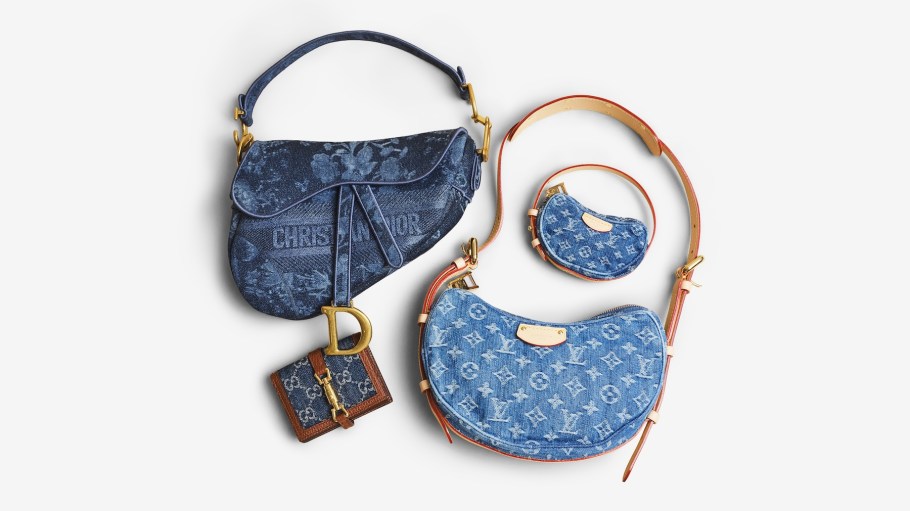
Given “the rise of texture-driven purchases highlighted a focus on how pieces felt as much as they looked,” per Fashionphile, the Nicole Richie partner platform tallied a 23.5 percent increase in denim bag sales year-over-year, a 46.9 percent increase in searches for suede year-over-year and a 64.2 percent increase in lamé styles added to cart year-over-year as well.
“Tactile textures touched us,” the report reads. “We touched them back.”
And Fashionphile’s forecast for the future? Authenticity. The Assouline partner predicted the dress code of 2026 will be human after all.
“Get down and dirty with your designer—or keep it clean, pristine and soft to the touch,” the report reads. “Next year is about getting tactile with textures, loud with metal, and familiar with finds from the past.”