“Archival” and “heritage” have become catch-all adjectives in modern denim marketing. As brands chase the allure of vintage authenticity, these words have been stretched thin—earned by few, borrowed by many. A new exhibition by Kontoor Brands–owned Wrangler is a reminder that the original cowboy brand not only embodies these terms in denim but continues to actively build upon them.
For the first time, Wrangler is unlocking its vault to bring together some of the rarest pieces of its history under one roof for a limited time.
Related Stories
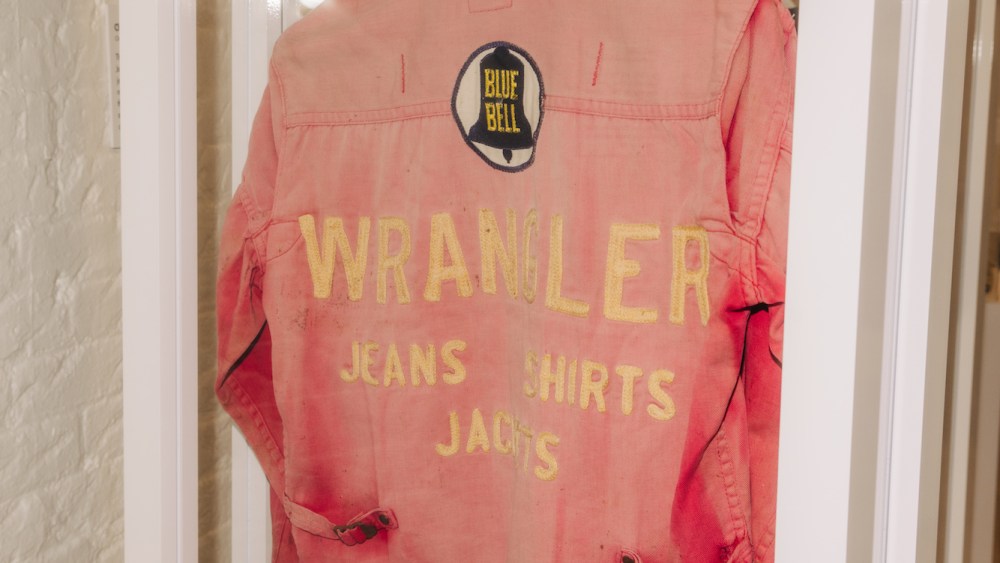
Located at 262 Mott Street in New York City, the Wrangler Archive Gallery displays original 1947 rodeo denim to hard-to-find vintage gems sourced from the brand’s own archives as well as Japanese collector Ric Kanamaru’s private collection.
Last year, Kanamaru published “Wrangler Archives,” a 152-page hardcover book filled with over 200 rare pieces from the Greensboro, N.C.-based brand. The book was the inspiration for the gallery, which remains open through Sunday.
SJ Denim spoke with Vivian Rivetti, vice president of global design for Wrangler and Lee, to discuss the exhibition’s curation and how Wrangler’s vintage legacy continues to evolve.
SJ Denim: What are some standout pieces on display at the Wrangler Archive Gallery?
Vivian Rivetti: The Red Champions Jacket is a very special piece, as only one is made every year for the winner of the Wrangler National Finals Rodeo. The one we have on display here from Ric’s archives dates to the early 1950s, making it one of the rarest of these kinds of jackets. This beautiful jacket also showcases Wrangler’s longstanding connection to rodeo culture—a partnership that endures to this day.
We are also thrilled to showcase early prototypes of our signature Cowboy Cut jeans, spanning from our founding in 1947 to 1949. These early pieces illustrate the brand’s evolution while highlighting design codes that have remained constant to this day. For example, you’ll see an early prototype from 1947 which features a blocked Wrangler Kabel logo, a design that never made it to market at that time. In contrast, you’ll also see the 11MW Cowboy Cut Jeans from 1948, which introduced the inward coil rope logo and the embossed leather patch on the back pocket, both of which we still use today.
And finally, our iconic 13MWZs. The 13MWZ was introduced in the 1960s as a successor to the 11MWs and is still a staple of the business. The gallery features examples from the 1980s all the way to the 2000s. And though they have a certain faded look due to time and wear, what is remarkable is their durability and what has grown to be our iconic denim color which we coin “Wrangler Blue.” This best-selling style is a classic—the OG—that continues to anchor our seasonal collections.
SJ Denim: The gallery features pieces from Japanese collector Ric Kanamaru’s private collection, and his book “Wrangler Archives” served as inspiration for the exhibition. Did the brand contribute to the book in any way?
VR: No, we did not. Until now, we have admired his fascination with and commitment to our brand; and the American denim authenticity admired around the world and especially in Japan.
We are thrilled to be working with him to bring his book to life by displaying his impressive collection in the USA. The gallery, like his book, tells the story of the brand, the rodeo industry, and American culture through hard-to-find clothing.
SJ Denim: How does Wrangler see the role of collectors in preserving and shaping the brand’s legacy?
VR: As an authentic American heritage brand, we have—and feel very fortunate to have—an enthusiastic fanbase. We often hear of families who have for generations now worn and passed down their Wrangler jeans and jackets. We often hear from individuals and families about giving back to the brand their or their loved one’s favorite or adorned Wrangler pieces, affectionately making sure that those cherished items get back “home,” if you will, where it originally came from and will continue to be appreciated [and loved].
So, whether you’re just holding onto your grandfather’s favorite, worn in and lived in Wrangler jeans or are seeking pieces out at a thrift store, we appreciate you. And we know that you are continuing to preserve our brand’s legacy.
SJ Denim: Do you think today’s Wrangler designs are created with future collectors in mind?
VR: Yes and no. We design for the current consumer, but with a 15-year perspective. For us, authenticity means creating pieces that outlast trends. Whether you’re riding horses or running errands, we build our gear to be as relevant and durable a decade from now as it is the day you buy it. We aren’t just making clothes for the season; we’re making staples for a lifetime.
From my perspective, owning Wrangler either in the past, present, or in the future, is owning a piece of history with historical value and can always and should always be considered a collective piece. It’s truly owning a piece of history with a legendary story to tell.
SJ Denim: Looking ahead 10–20 years, how do you expect Wrangler’s vintage significance to evolve?
VR: As you know, shopping, wearing and collecting vintage clothing is so much more popular now, especially among the young consumer. They view newness with skepticism and heritage with reverence. By elevating our archives, we’re able to validate Wrangler as an OG brand—a status that cannot be manufactured by fast-fashion competitors.
We are incredibly happy to see that what we created years ago is having a second life; and we believe in making products today that will stand the test of time, so that our vintage pieces continue to build brand integrity, warranted esteem, and “creds,” and offer a new point of entry for young consumers.