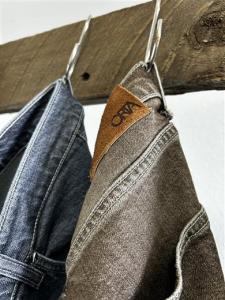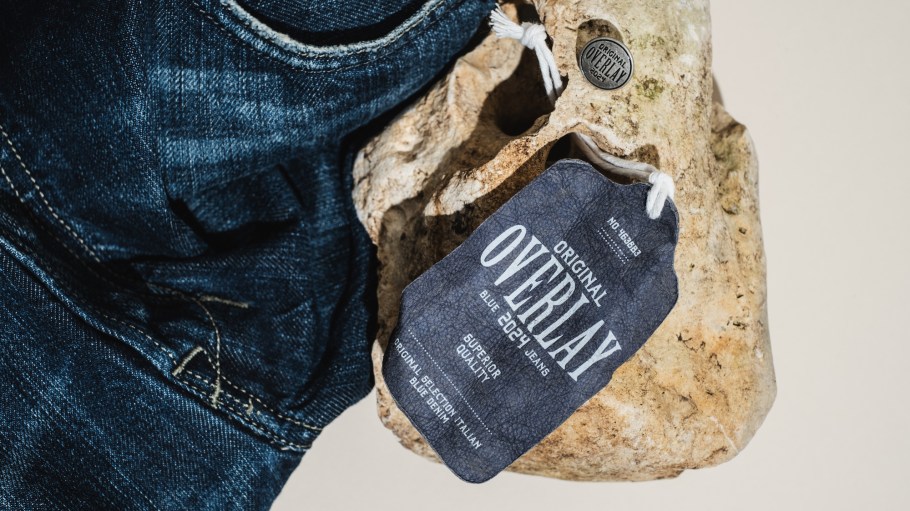
How does a denim brand stand out in a sea of blue? Creative directors and marketers would argue it’s the brand’s DNA and story it communicates through its designs. For visually driven consumers, however, it may come down to a cool button, patch or printed pocket.
Small yet mighty, brands are paying closer attention to trims as they play a key role in a garment’s durability, functionality and aesthetic.
“Clients want trims that complement the denim fabric, contribute to the garment’s style, and align with their brand identity,” said Alessandro Marchesini, head of sales at Cadicagroup SpA. This attention to detail carries into other branding opportunities like low-impact packaging, which he said enriches the customer’s experience.
Related Stories
With denim being an iconic everyday staple that has endured decades of fashion trends and social and economic divides, Andrea Cappa, ACM fashion designer, said what often makes a denim garment unique is the trims. “What customers often ask us is to help make their garment unique or distinctive,” he said. “They turn to us for buttons, rivets and leather labels that can distinguish their product from others or make it recognizable at first glance.”
“Today’s consumers are increasingly attentive to the products they buy, and accessories are no exception; in fact, they can be decisive in their choice,” said Nantas Montonati, head of sales and marketing for Oerlikon Luxury, which acquired coated metal accessories company, Riri, in 2023. When it comes to denim, he said customers look for details that allow a luxury garment to stand out from a commodity product, adding how “that detail can make the end consumer fall in love with it and convince them to make that garment their own.”

Sustainable Solutions
Though trims are a small part of the jeans’ overall production, Laura Ciccarello, Trimco business development manager, U.S., said one sustainable trim can have a large environmental impact for a high-volume brand. “Many major brands we are working with are looking for functional yet sustainable trims. Even mass-market brands that cannot make a 100 percent sustainable trim commitment yet are already starting with a few items, which is a big step in the right direction,” she said.
Trimco’s ProductDNA platform is one way for brands to track their sustainable material usage, sustainability goals, and factory certifications. From supply chain mapping and packaging, the tool collects information allowing brands to support their green claims with data and prepare for digital product passport initiatives. Ciccarello added that ProductDNA reports have “amazed many brands” by showing “how choosing to go sustainable on a single item really adds up over one year.”
Trimco’s sustainable products span labels with CiCLO, an additive to help polyester and nylon break down like natural fibers, to products made with Raddis regenerative cotton and tags printed with Living Ink’s algae ink.
Over the past few years, Ciccarello said there has been a consistent demand for leather alternatives. Trimco offers a variety of re-purposed agriculture waste materials that wash quite nicely, including cactus leather and apple PU, which uses apple pulp that it’s not usable for regular consumption.
“It’s dried up into a powder and then mixed with PU. The raw materials can be pulled from anywhere in the world we have the apple waste. Wherever apples are being pressed for juice, cider, or apple sauce, there are raw materials to make apple PU,” she said.
Though the durability of materials, such as cactus, eggshells, coffee grounds and paper, is lower than leather, Ciccarello said they are still full of potential for denim. “It is difficult but possible, and our collections are full of ideas to solve these challenges,” she said.
“Sustainable trims must withstand denim finishing, washing, and natural wear. Finding materials that balance durability and eco-friendliness is a challenge,” Marchesini said.
Most of Cadica’s trims are designed to align with the principles of circular fashion, but Marchesini said it takes technical expertise, investments in R&D and collaborations with suppliers to make it happen. The Italian company prioritizes materials like organic cotton, recycled polyester and Tencel, and innovative alternatives like Piñatex derived from pineapple fibers. Cadica has also developed programs that allow customers to recycle their material production waste and use it in future collections.
YKK’s mono-material detachable button and rivet are designed specifically for circular systems. “They are designed to be easily removed from the garment at the end of its life to allow for the garment to be recycled. The detached button and rivet can then be recycled back into feedstock for reuse,” said Brian La Plante, senior manager of sustainability for YKK (U.S.A.) Inc. global marketing group.
The circular products align with YKK’s sustainability roadmap, which targets carbon neutrality by 2050. La Plante said the ratio of YKK products using sustainable materials has reached 38 percent of all product sales and the company has set a target in FY2024 to increase the ratio to 51 percent. The firm’s AcroPlating technology, which eliminates harmful substances like cyanide, chromium, and selenium, is also having a positive impact. La Plante said it reduces greenhouse gas emissions by 96 percent, water usage by 66 percent, and electricity consumption by 69 percent compared to conventional methods.
Next, YKK is working on a new version of 3Y denim zipper that will have a lower environmental footprint, particularly regarding water use.
Cost remains the biggest hurdle in scaling sustainability trims, according to Thibault Greuzat, sales manager for Dorlet. “Unfortunately, in the difficult period when consumption is slow, customers are focusing on price. This is really challenging because we keep on trying to promote more sustainable trims but at the same time we need to keep competitive price. Finding the right mix between design, shape and sustainability is really the main challenge today,” he said.
The French company continues to plug away, however, with the Tackat, the first removable button for jeans that can be attached to garment with existing machines. The button can be easily removed when the jean is ready to be recycled, streamlining the recycling process and reducing textile waste.
Oerlikon takes a 360-degree look at sustainability, from materials and processing to product end-of-life. Buttons made from a single material like stainless steel or brass contained up to 50 and 80 percent recycled content, respectively.
“Surface treatments also play a crucial role in the garment’s final sustainability balance,” Montonati said. Oerlikon uses a physical-vapor-deposition technique that “significantly reduces the impact on the environment.”
Working with mostly exclusive “made in Italy” suppliers provide Vivolo with greater efficiency and control over its supply chain. Materials that are GRS, FSC and OekoTex certified are part of the company’s collection. Matteo Vivolo, the company’s chief sales officer, added that its R&D team also researches organic, recycled, recyclable, compostable, vegan, animal-free and solvent-free materials.
“This, however, is only a small part of Vivolo’s commitment to sustainability,” he said, adding that the company was born almost fifty years ago with the idea of recovering waste materials from leather goods and transforming them into new fashion items. The company spreads this circular mindset by collaborating with schools and sponsoring projects dedicated to raising awareness of reuse and recycling.
ACM is focused on the origin of materials and introducing more plant-based products. For the past few seasons, the Italian company has been GRS-certified, which Cappa said guarantees the use of recycled zama and brass products. Additionally, the company’s portfolio spans alternative materials and natural products from certified, bio-based or recycled sourcing to alternatives to leather.”
“The end product is the most visible part, but we believe that from a sustainability perspective, the commitment has to start upstream: from the factory and its processes, the working conditions of the employees, and the relationship with its suppliers,” he said. “So we try to make sure that everything behind the individual collection is consistent with our principles.”
Cotswold Industries recently launched the Product Integrity platform to ensure each of its products is traceable to the fiber level. Currently, the pocketing supplier is a partner of the US Cotton Trust Protocol and uses Unifi’s Repreve branded recycled polyester. The vertically integrated U.S. manufacturer is also on working on projects with several circular fiber companies to introduce more second-life fibers into the eco-system.
“Our customers are looking for value-driven products that combine performance with sustainability,” said James McKinnon, Cotswold Industries CEO. “Cotton traceability and recycled synthetic materials are key to ensuring of our customers’ garments meet the transparency threshold need for the future.”
Eye Candy
Lifestyle trends are influencing trim designs.
For pocketing, McKinnon said performance stretch continues to be important to all garment categories. He added that comfort-driven garments demand innovation in pocketing and interlinings “so that every season is fresh and garments have added value.”
After several season with more authentic or vintage look Greuzat said Dorlet is seeing demand grow for “pure and clear” finish and design. “Designs are less complex. We are focusing on the reading of the logo with fluid design,” he said.
Natural and neutral colorways continue to be in demand as they reinforce the idea that a garment has longevity. Vivolo anticipates a “very tactile” fall and winter season with trends for soft-touch suede, leather and shades of brown and other neutrals.
Brands are becoming more daring with color, however. “I think brands and consumers are looking for some positivity and fashion has the power to paint the world in a better color,” Ciccarello said, adding how Trimco’s vibrant color shifts and gradient effects create fun and fluid looks.
Vintage is dominating ACM’s collections and proposals, Cappa said. “This is also reflected in the choice of accessories and treatments. Among the most sought-after and innovative effects are brushing on shiny galvanics to achieve a vintage yet luxury effect, and dark finishes on wavy surfaces that recall the dirty, through rough and matte effects,” he said.
Bandanas and small foulards in various materials are emerging as popular add-ons with some of Cadica’s major denim customers. “Graphics and [designs] are endless, from iconic and historical artwork to new seasonal capsules,” Marchesini said, adding how the flourishes take a denim outfit from casual to formal.
The influence of quiet luxury lingers. Oerlikon’s forecast for 2025 includes a “strong return of resilient luxury, leaving behind complex moments to reassert itself in its timeless aesthetic that reflects the heritage of the brands,” Montonati said. “Trims are iconic and immediately recognizable through their straightforward and clean design. The color palette is naturally subdued, featuring polished precious metals and minimalist refined shapes.”
Interest in stainless steel is growing, especially as it is recyclable and resistant to oxidation, resulting in a lower environmental impact, he added.
Silver and copper plating finish colors are still among the most preferred from YKK’s clients, along with natural finishes. Where brands often differ is in the surface appearance of metal trims—some opt for softer more burnished finishes while others choose rougher, more distressed looks as if scratched by stone.
“The surface appearance and plating quality are the key criteria for customers when selecting items,” La Plante said. “Customers are shifting from inexpensive trims to higher quality ones that have a premium finish and match their product quality.”
This article is published in Rivet’s Fall 2024 issue. Click here to read more.