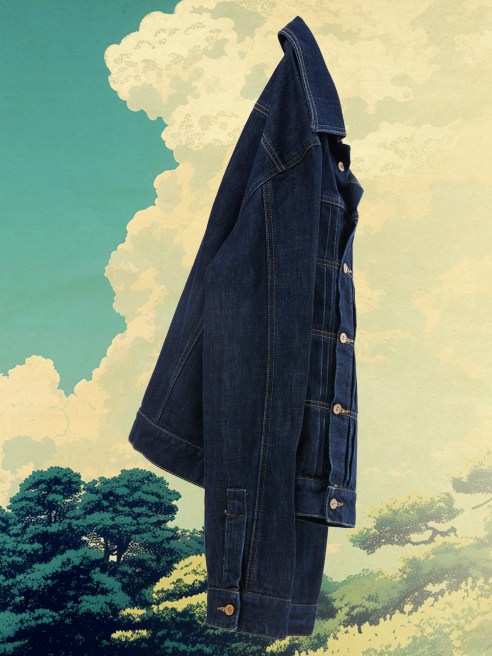
Denim mills are revolutionizing their dye processes for Spring/Summer 2026, focusing on reducing water and chemical usage. Additionally, they’re experimenting with innovative techniques and new dyestuffs to create fresh, eye-catching looks for jeans.
SM Denim uses Indican, a proprietary dye process that utilizes natural fermentation. Indican reduces water and energy consumption by up to 70 percent. Additionally, the mill has developed low-impact washes that utilizes laser and ozone technologies to create distressed and vintage finishes without harsh chemicals or excessive water.
Related Stories
The Uranus Overdye collection is Bossa’s latest dye innovation. The overdye process offers a spectrum of cast colors, creating a one-of-a-kind wash effect. “The versatility of this fabric makes it a true seasonless staple, perfect for year-round wear. It’s not just about aesthetics; it’s about offering designers a fabric that is as dynamic and adaptable as their creative vision,” said Jordan Nodarse, Bossa design consultant.
Siddiqson has made significant advancements in both dyeing and garment washing processes. “Our innovations in indigo dyeing allow for a 30-40 percent reduction in water usage and a 15-20 percent reduction in indigo consumption, boosting sustainability while enhancing color vibrancy,” said Ampelio Dal Lago, Siddiqson’s head of research and development.
The Pakistani mill’s new wash techniques deliver improved results with reduced resource consumption, “maintaining a perfect balance of wash effects and color consistency across a range of denim finishes,” Dal Lago added.
Twin Dragon’s commitment to sustainability is highlighted by its use of liquid indigo dye in denim production—a method that Stephanie Poon, Twin Dragon’s director of marketing and merchandising. Said not only reduces the environmental impact but also enhances the quality of our products.
“Liquid indigo dye is an efficient and eco-friendly alternative to traditional powder indigo. It significantly reduces hazardous discharge waste, minimizing the release of harmful chemicals into water systems during the dyeing process. Additionally, liquid indigo offers better shade stability, ensuring consistent color across batches while using less water and energy,” she said.
When combined with eco-finishing techniques and pre-treated fabrics, these advanced technologies further reduce water consumption and eliminate the need for harsh chemicals in the finishing process. “This synergy between liquid indigo dye and sustainable finishing techniques allows us to produce high-quality denim that not only looks vintage and authentically aged but also leaves a much lighter environmental footprint, supporting our ongoing commitment to more responsible fashion,” she said.
Sapphire Finishing Mills is exploring natural dyeing techniques derived from plant-based sources to achieve earthy, organic tones without synthetic chemicals. “This season, we’re also experimenting with ozone washing, which allows for unique washed-down finishes while reducing water consumption,” said Jaffar Ali, Sapphire Finishing Mills’ manager of digital marketing and communications.
Orta has a collection dyed with Tannin, a natural dyestuff made from acorn shells. The ingredient gives fabrics an earthy tone. This is in addition to Indigo Flow, a dyeing technique developed by Orta’s R&D team that achieves up to 70 percent water saving during dyeing.
Naveena Denim Mills is working on achieving brighter and richer color tones. “As a result, we are creating fabrics that maintain a vibrant appearance, even with lighter washes, while emphasizing the soft touch that enhances overall comfort,” said Berke Aydemir, the mill’s senior general manager of R&D and technical sales.
With Neo Black, Naveena offers a sustainable dye technology that enhances the richness and depth of black tones while minimizing environmental impact. Additionally, the Pakistani mill developed a new orange color within its Colortech line. Aydemir said the color strikes a perfect balance between orange and brown and aligns with current trends.
Maritas Denim addresses the market’s demand for fabrics that do not fade with Darkside, a reactive dye, that maintains its color for up to 20 home laundry washes. The mill is expanding its use of chemical-free coloring by using natural techniques and materials such as clay. Bright colors and new constructions are part of the S/S ’26 range.

Advance Denim is on a mission to develop innovations that have lasting systemic changes to the manufacturing process, according to Mark Ix, Advance Denim director of North American marketing. The new Blue Loop indigo recovery system uses membrane separation technology to remove unused indigo leaving clean water and reusable indigo. Blue Loop has a 98 percent recovery rate resulting in nearly zero wastewater discharge. “Blue Loop adds an unprecedented level of circularity to the indigo dye process,” he said.
Isko offers versatility and creativity with Isko Iconic, a line of rigid and stretch fabrics with different washable finishes. “Oxi and Proxy are color coatings that create a smooth, flat appearance in rinse washes or contrast and depth in heavy washes. The Mirror Finish delivers a glossy, eye-catching look that lasts through light and heavy washes—perfect for the rising Y2K trend. Matrix adds a tint-like effect with an oily touch, giving the fabric a second-hand, resin-washed feel,” said Mirela Slowik, Isko’s category leader.
Soorty is introducing new colors that wash down efficiently and brightly, along with lighter shades. “Our easy wash technology enables quick laundering without the need for heavy treatments, which helps reduce resource consumption,” said Eda Dikmen, Soorty senior marketing and communications manager.
This is in addition to the Pakistani mill’s use of Smart Indigo technology, which cuts down water usage by up to 90 percent, and a new salt-free dyeing process that works in tandem with Soorty’s Zero Waste Water dyeing process. Dikmen said this minimizes the number of tanks required in production and utilizes certified green chemicals, allowing Soorty to significantly reduce its water use and produce wastewater with no residues so it can be easily recycled.
Global Denim in Mexico is testing an improved zero-water discharge dyeing process on both new and existing fabrics, with the goal of creating a more efficient and sustainable method. For bolder colors, the mill is experimenting with new sulfur dyes such as orange to pair with indigo.
“We’ve also acquired new machinery capable of pigment and disperse dyeing, allowing us to dye polyester and plastic-based fibers. This is an exciting development we’re looking forward to testing,” said Anatt Finkler, Global Denim creative director.
Resource-saving dye techniques are part of Vicunha’s collection, including bio-based pigments and no-dye processes that require zero water finishing and less chemicals. A new cast of colors like light gray and aged blues achieve strong laser scores, Kürşad Çakılcıoğlu, product development and sales manager for Vicunha Europe, added.
Spanish mill Evlox is committed to sustainable dye technologies to further reduce its environmental impact. This includes Ice by Evlox, a low impact dyeing method that reduces chemical use by up to 80 percent, water consumption by 65 percent, and energy usage by 25 percent. Similarly, Ice Khol by Evlox is a black dyeing process that lowers chemical use by up to 88 percent, water consumption by 76 percent, and energy usage by 36 percent compared to conventional methods.
Both technologies have been validated through Jeanologia’s EIM score, highlighting their sustainable performance.
Crescent Bahuman introduces Soul Series, a shade family developed with a 100 percent hydrosulfite-free process. Imran Tanveer, Crescent Bahuman, assistant VP, research and development, said the collection “unveils brighter wash downs and superior aesthetics compared to conventional denim fabrications.”
The process aligns with the mill’s sustainability goals by reducing chemicals by 30 percent and water by 45 percent. Additionally, Crescent replaces pumice stones with ceramic stones and finishes garments with cleaner alternatives to potassium permanganate spray.
Tat-Fung’s Downtown collection of blue, black and gray fabrics outperform conventional denim in color fastness, according to Tim Huesemann, the mill’s sales director. The fabrics are infused with functional fibers that add a cool touch and quick-dry, UV protection and thermal regulation benefits. “It’s a versatile collection designed to not only look good but also perform, offering a modern twist on denim that responds to the needs of today’s active, style-conscious market,” he said.