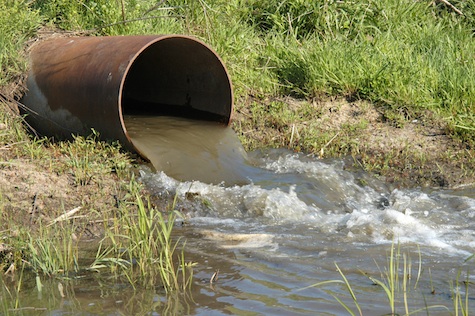
It comes as no surprise to anyone familiar with textile production: Water is the industry’s most important environmental concern.
Water remains essential for key production steps. The risk of environmental harm caused by over-consumption and poorly treated wastewater seems evident. What is often overlooked, however, are the social dimensions. The same water sources that factories discharge into are the ones local communities and workers rely on for drinking, washing and farming. Environmental damage becomes a human impact—felt most by those living closest to production.
Related Stories
This issue reflects a broader global crisis. Worldwide, an estimated 2.2 billion people still lack access to safe drinking water. Global textile production hubs, especially in South and South-East Asia, are disproportionately affected by water scarcity, pollution and recurring floods.
In recent years, various legislative frameworks have emerged globally to strengthen sustainability reporting and human rights and environmental due diligence (HREDD). Nonetheless, it remains to be seen how effective these efforts will be.
Re-Defining Corporate Responsibility
From the EU’s CSRD and CSDDD to emerging regulations in Asia, such as in Thailand, South Korea, and Japan—there is a global movement compelling companies to take greater accountability. Mandatory HREDD requirements serve as an important tool for enforcing baseline due diligence measures, including risk mapping, stakeholder engagement and reporting. However, the global regulatory environment remains inconsistent and uncertain. The EU’s recent Omnibus Proposal, which significantly weakened its prospective due-diligence legislation, exemplifies how political pressure can dilute legislative ambitions around HREDD. Like many civil-society actors, we at drip by drip believe current regulations still fall short of addressing social and environmental water impacts with the urgency required. We are convinced: Regulatory compliance alone cannot address the full scale of water impacts caused by business operations.
Why Compliance Alone Is Not Enough
An anecdotal example from our praxis: A factory passes an audit. The effluent treatment plant (ETP) is running. Documentation is in order. Everyone seems satisfied—except the local communities. After the audit, the ETP is switched off again and untreated wastewater is discharged into nature. Operating costs for the ETP are considered too high and are not factored into buying prices.
To uncover such realities, companies need to be genuinely curious and willing to face uncomfortable truths about their supply chains. This requires looking past surface-level checks and compliance, and engaging more deeply with suppliers and stakeholders.
What Motivates Companies’ Beyond Compliance?
Water sits at the intersection of community wellbeing, environmental health, and biodiversity. Any textile company will be able to identify significant water-related risks in its supply chain. Flooding, water scarcity and pollution, worker, community and ecosystem health impacts – all these are socially, environmentally, and financially significant. They disrupt supply chains, increase operational costs, and threaten long term business viability. Simply relocating production is no sensible solution. To build a sustainable, future-proof business, companies must confront these risks wherever they operate.
Yet, one crucial factor is often missing in discussions on mandatory HREDD: meaningful due diligence is dependent on a company’s inherent motivation. If HREDD is viewed just as a mandatory add-on or additional expense, its potential is limited. To be truly effective, HREDD must be embedded holistically in a company’s culture and sense of responsibility.
Regulation encouraging voluntary action could play a critical role in addressing this issue. However, until comprehensive legislative solutions are found, genuine progress depends on companies proactively taking accountability in an industry built on the exploitation of people and natural resources.
A Water Stewardship Approach
At drip by drip, we foster voluntary action by taking a water stewardship approach. Water challenges in the textile industry are global, urgent, and inseparable from any company’s production. Embracing water stewardship, recognizing water as a shared resource and engaging collectively to protect it, creates lasting value for workers, communities, ecosystems, and businesses alike.
The most impactful water measures are collaborative. We partner with brands, factories, and local organizations to co-create tailored water solutions along supply chains. Each project reflects the local context, aligns with brand values and ESG goals, and is transparent and scalable. Even modest investments in local water solutions can deliver measurable social and environmental benefits. Importantly, these interventions generate verifiable data and tangible outcomes supporting sustainability reporting and HREDD practices.
Our experience shows that a meaningful approach goes beyond mere questions of profitability, and extends beyond production facilities. In Karachi, Pakistan—a major textile production hub—a water, sanitation, and hygiene (WASH) project at a local school dramatically improved daily life. It raised student attendance, improved community health, contributing to long-term structural change.
From the brand partners’ perspective, these initiatives help them advance their sustainability and HREDD efforts with clear, measurable results.
Beyond risk management, profitability, and compliance, HREDD and water stewardship require a deeper commitment. This means of companies recognizing their responsibility to the people and ecosystems impacted by their operations. Meaningful change happens when businesses move beyond compliance, driven by a genuine desire for accountability.
Céline van de Loo is project manager, thought leadership at drip by drip, the world’s first NGO dedicated to tackling fashion’s water footprint. Through locally led projects and strategic partnerships, drip by drip helps brands translate sustainability goals and ESG requirements into measurable, on-the-ground impact. With a background in clothing technology and fashion design, Céline is passionate about science and sustainability communication. At drip by drip she focuses on global water justice, working to connect the fashion industry with meaningful solutions that benefit communities and ecosystems affected by textile production.