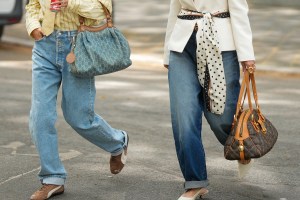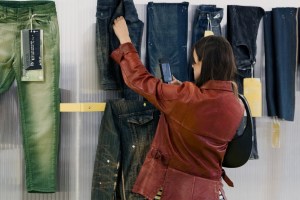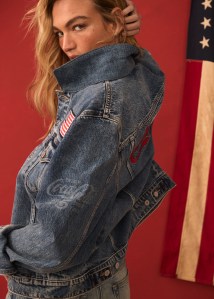
It’s a key fabric in Glenn Martens’ arsenal as he continually redefines Diesel’s denim collections season after season. Etro often uses the technique to tell its lush botanical stories. It fits right in with Versace’s baroque-style motifs, and it has been one of the most coveted and commercial highlights in Louis Vuitton Men’s collections since cultural curator Pharrell Williams took the helm as creative director last summer.
All of fashion’s cool kids are exploring the possibilities of jacquard denim.
Related Stories
Over the past few seasons, trend forecasting firm WGSN has observed an increase in detailed patterns, including distressed and eroded textures, historical florals and damask patterns, geometric quilting and double cloths. “Brands are enriching their collections as jacquard designs move from niche markets to the mainstream, showcasing strong growth potential,” said Nicole Ajimal, WGSN’s fabric and sourcing strategist.

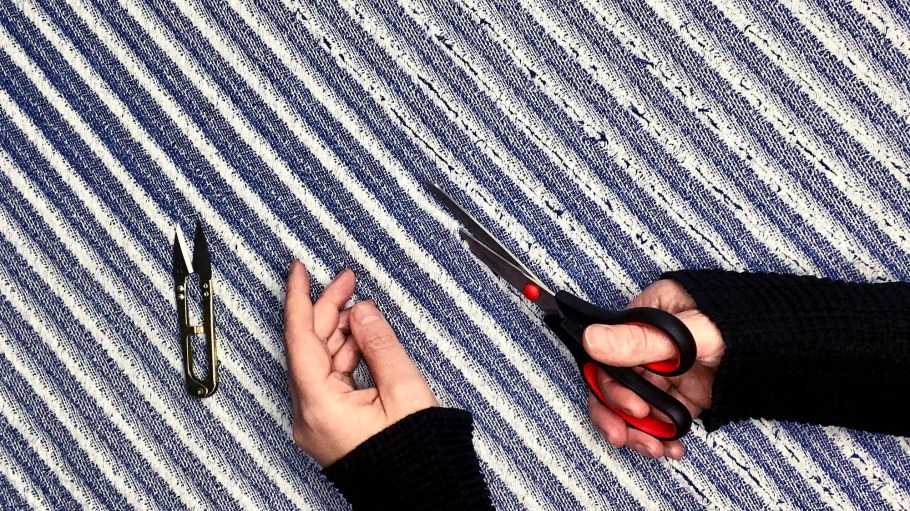
Jacquard denim is a woven fabric that has detailed patterns made directly during the weaving process, not printed or embroidered later, explained Işıl Sena Candan, export sales chief for Kilim Denim. “It’s made on jacquard looms, which control each warp yarn separately. This allows us to create patterns like logos, textures or designs directly into the fabric while still keeping the strength and look of real denim,” she said.
Advance Denim is seeing demand for jacquard grow. “We have had an increased number of requests for jacquard development over the past two to three years. This is mainly due to the resurgence of jacquards in runway shows,” said Mark Ix, director of North America marketing for Advance Denim, adding that the mill has been producing custom jacquard patterns for Vivian Tam’s collections for the past four years.
At Denim Première Vision in May, Kelly Konings, a Swedish textile designer specializing in jacquard weaving and finished product weaving, partnered with Italian fabric manufacturer Gommatex to showcase jacquard denim as a wearable art form. Inspired by traditional “female craft practices,” the collection of tops, bottoms, dresses and footwear used cutting-edge 3D technology to pay homage to artisan traditions.
“As a textile designer, I have always regarded textiles as a narrative of culture, locality, and craftsmanship. Jacquard weaving, with its capability to produce intricate, expressive patterns within the structure of the textile itself, presents an especially rich language of tactile storytelling,” Konings said.
Beyond aesthetic reasons, jacquard aligns with wider narratives in the denim industry. Allowing for visual and textural expressions that go beyond surface embellishment, aligns with a broader industry movement towards craft-informed innovation, Konings said. Additionally, the durability and design-intrinsic nature of jacquard reduce the need for post-production finishes, which can help reduce a garment’s overall environmental footprint.
“Weaving enables the design to be integrated structurally rather than superficially. This reduces the need for additional dyeing, printing, or embroidery processes, which are often chemically and labor-intensive,” she said. “In essence, jacquard allows for ‘design into the fabric,’ minimizing post-production steps. Also, jacquard weaving can be used to upcycle or recontextualize waste yarns or deadstock.”
Modern and traditional
Jacquard weaving has come a long way from its 18th century roots to make opulent French brocade and damask textiles. Today, mills use digital programming to lift individual warp threads, enabling for complex patterns.
Mills are getting increasingly creative with jacquard denim, using the technique not only for intricate patterns but also to add dimension and texture, according to Manon Mangin, Première Vision’s fashion product manager.
Denim weavers have adapted the technique to suit the fabric’s complex finishing process and consumers’ needs. Notable approaches include combining jacquard weaving with stretch yarns to create both visual complexity and comfort, Mangin said. Some mills are also using tonal or reverse effects within the weave structure to simulate vintage or worn-in looks without additional washes.
“Certain finishes, especially those that highlight surface relief and color contrast can enhance the dimensionality of jacquard patterns. These techniques reveal the structural interplay between warp and weft, creating a kind of visual archaeology of the woven structure,” Konings added.
In terms of finishing technologies, said Mangin laser finishing is often applied to enhance or distress jacquard patterns, adding a layered aesthetic. Ozone and e-flow treatments are also being used to soften jacquard denim and give it a more natural, sustainable finish.
“It is completely possible to make sustainable jacquard denim, and this fits very well with the growing need for eco-friendly solutions in fashion,” Sena Candan said, noting the mill already uses organic or recycled cotton and environmentally friendly dyeing and finishing methods for its jacquard fabrics.
The technique also aligns with the industry’s efforts to reduce waste. Ajimal noted that a benefit of jacquard is efficient use of materials, particularly with innovative woven 3D zero-waste garment constructions.
Custom look
While laser technology has revolutionized denim printing and made printed denim more accessible and mainstream, jacquard weaving offers a distinctly elevated, premium alternative—delivering intricate patterns with depth, texture, and timeless craftsmanship that printing simply can’t replicate.
The weaving technique enables creative storytelling brought to life through statement pieces, capsule collections, and collaborations with artisans or artists—breathing new life into this traditionally durable workwear fabric, Ajimal said.
Building on that creative potential, Mangin emphasized jacquard’s ability to elevate denim to a new level:
“Jacquard is a unique way to stand out in an increasingly saturated denim market. As consumers seek more individuality and storytelling in their garments, jacquard allows for intricate, woven-in designs that go beyond traditional prints or surface treatments. It fills a gap between basics and overly decorative pieces—offering depth, craftsmanship, and subtle luxury.”
On a macro level, she said the interest in jacquard aligns with broader trends around texture, tactility, and heritage-inspired design. “There’s a clear shift toward garments that feel more artisanal and expressive, without compromising comfort or wearability,” she said.
Paolo Gnutti, creative director for Isko Luxury by PG, agrees, adding that it’s clear jacquard is becoming a key player in the evolution of modern denim design. “With jacquard, we’re no longer working with just a fabric—we’re working with texture, depth, and storytelling. It allows denim brands to go beyond traditional limits and design pieces that feel luxurious, personal, and truly unique,” he said.
From clean geometric patterns to individualistic elements like lettering, logos, and custom messages, the weaving technique is a key component to the storytelling of his premium collections with Isko. Season after season, he sees designers drawn to the unique possibilities the textile has to offer. “What makes jacquard so special is that it allows for personalization and customization to begin right at the weaving stage. This opens incredible creative freedom, as the fabric itself becomes a medium of expression from the very moment it’s placed on the loom,” Gnutti said.
Advance Denim creates jacquard styles to customers specifications, modifying weight, shade and weave to incorporate their own design or branding. Ix pointed out there can be multiple weave constructions within the same style depending on the pattern. Jacquard has opened endless possibilities for denim designers to customize denim weaves with detailed patterns and even pictures that show detailed patterns and even pictures. “Each jacquard pattern tends to be personal to the designer or brand,” he said.
Both high-end and modern fashion brands are showing interest in jacquard—especially those who like storytelling, customization, and bold pieces, Sena Candan said, noting that jacquard is often used for outerwear, statement jeans, jackets, and sometimes in accessories. “We also see more brands using it in capsule collections or limited editions,” she added.
Nature-inspired designs like flowers and leaves are in demand from Kilim’s clients. Abstract and geometric shapes are also trending. She noted many brands are also using logos or monograms in the fabric, to make their identity part of the design. Vintage and cultural themes are also trending.
Special considerations
Developing jacquard denim often requires more time and collaboration than traditional denim, with a longer lead time and deeper involvement from the design team to ensure their vision is fully realized, Ix explained.
At Kilim, the process begins with a creative discussion, followed by technical development tailored specifically for the jacquard loom. Sena Candan said the mill works closely with designers to ensure the pattern translates beautifully onto the fabric.
“Once the design is approved, production time is similar to other special fabrics, but it needs more planning at the start,” she noted.
This is especially true for custom jacquards. “We do our best to give fast service. We prepare trial samples in about two weeks and send them to our customers as sample meters or hangers,” Sena Candan added. “A big advantage is that we don’t require a minimum order quantity.”
The cost difference between standard denim and jacquard denim can be significant, largely due to differences in production complexity, machinery, and time, Gnutti said. Whereas standard denim is typically woven in a simple twill structure and is relatively fast and cost-effective to produce, especially at scale, the process to make jacquard denim is slower and require more advanced programming and setup. This not only increases production time but also raises labor and maintenance costs, he said.
On average, Gnutti said jacquard denim can cost 30 percent to 100 percent more per meter than standard denim, depending on the complexity of the design, yarn composition and the scale of production. While standard denim might cost around 3 to 7 euros per meter, jacquard denim can range from 6 to 15 euro or more per meter. Ultimately, he said jacquard is seen as a premium fabric, used for adding uniqueness and luxury to denim collections.
“Jacquard denim is certainly more prevalent in certain categories, particularly in premium and designer segments where craftsmanship, innovation, and storytelling are key value drivers. The technique’s complexity and production costs often position it at a higher price point, making it more common in statement pieces, limited editions, or seasonal capsules,” Mangin said.
Despite the higher production costs, many brands are increasingly willing to invest in jacquard for its visual impact, storytelling potential, and ability to stand out, said Sena Candan. Although jacquard remains a niche compared to traditional denim, Kilim sees rapid growth ahead.
“Jacquard gives brands a special way to tell stories or show their identity through the fabric itself,” she said, adding it opens up a wide range of design possibilities and creates a more unique, elevated look—something that’s increasingly valuable in today’s competitive fashion market.
This article was published in SJ Denim’s fall issue. Click here to read more.