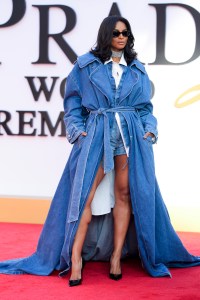
Greta Gerwig’s billion-dollar box-office success brought Barbiecore to the runway. “Emily in Paris” woke online shoppers from their pandemic-induced loungewear habits. And Gen Z’s blueprint for ’90s style is a copy and paste image of Rachel Green from “Friends.”
“Historically, mainstream media, including Hollywood productions, has been a significant force in shaping fashion trends,” said Marshal Davis, managing partner at Ascendly Marketing. “Films and TV shows often serve as a mirror to society, reflecting and even dictating what’s ‘in’ and what’s ‘out.’”
Related Stories
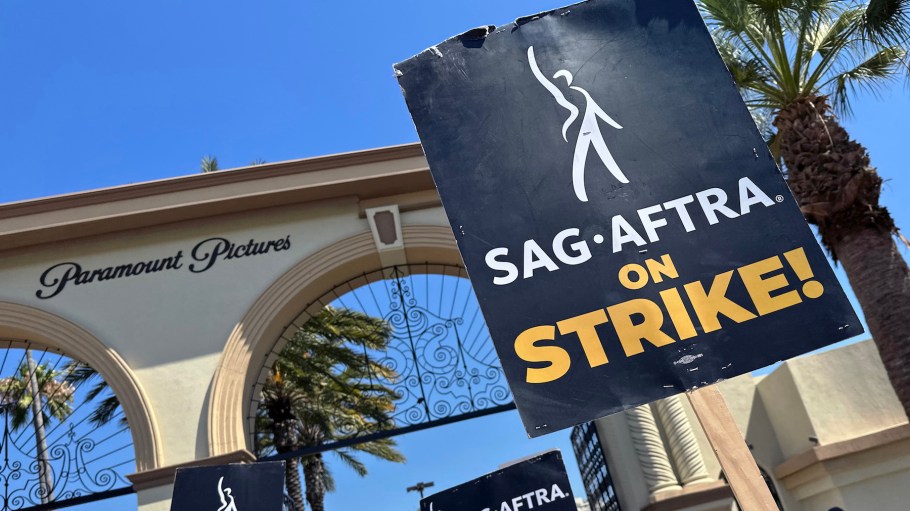
Taking into consideration the ongoing SAG-AFTRA and Writers Guild of America (WGA) strikes and the resulting delays in major movies like “Challengers,” a tennis drama with the debut slot at the Venice International Film Festival that stars Zendaya, and the much-anticipated “Saturday Night Live” writer Julio Torres’ “Problemista,” a void in this influential space is growing.
“Inevitably, we’ll be seeing a slow in content from Hollywood for some time,” said Kendall Becker, director of fashion and editorial strategy at Trendalytics. “I wouldn’t say Hollywood is known for setting trends, but I do think that it’s a powerful vehicle for the trends already in action to reach the masses.”
So, who will fill the abyss in the trendsetting space?
If the WGA strike of 2007 serves as any indication, reality stars will return to the fold of fashion inspiration. However, given the proliferation of reality TV shows currently on air—a roughly 1,163 percent rise in programs since the last walkout, according to data from Statista—no one is likely looking at Netflix’s “Love Is Blind” with the same coveting eyes as MTV’s teen saga “The Hills.”

Regardless, the halt in Hollywood will lead to a boon in user-generated content, Davis said. The question is who will be creating it—and will it carry the same influence?
“Influencers are not just supplementary to the trendsetting process; they are now central to it,” Davis continued. “Their reach, especially among younger demographics, is undeniable. [Now] they’re poised to play an even more pivotal role than before.”
Reprise of the Influencer
Just when you thought the influencer was dead, she’s back.
“The idea of the ‘influencer’ is certainly struggling,” Becker said. “But the power of influence is not.”
The $16.4 billion price tag attached to influencer marketing, according to a recent report by En Tribe, a SaaS marketing platform, remains ever-evolving and relevant—even though 81 percent of surveyed consumers said influencers had either no impact or a negative impact on their perception of a brand, and only 12 percent of those surveyed said they would be inclined to purchase a product promoted by an influencer.
“While Hollywood and major influencers often cater to mass markets, there’s a growing trend of micro-influencers shaping fashion in niche communities,” Davis said. “These influencers may not have the millions of followers, but their word is gospel within their specific circles. The Hollywood strike could push brands to explore these untapped markets more aggressively, recognizing that influence isn’t always about mass reach but targeted impact.”
Where these niche communities have the most success is TikTok, the platform that magnified the trends that ruled the summer including quiet luxury and mermaidcore.
“TikTok moves much quicker than prior of-the-moment platforms and allows for greater ease of conversation and commentary; with that, trends can rise a lot faster––and they can also burn out quicker due to fatigue from such dramatic spikes in interest,” Becker said.
Not everyone is convinced that influencers even create trends, but rather they give them the push needed to gain cultural relevance.
“Mainstream media used to dictate fashion trends, but today’s culture relies on influencers,” said Quynh Mai, founder and CEO of Qulture, a digitally native creative agency. “Influencers, since the rise of Instagram, have played the role of pushing out trends versus inventing them; few are true creators. Influencers, more than fashion models or celebrities, drive fashion trends because their looks are relatable and wearable in the real world.”
Mai goes on to say that even when the strike lifts, influencers may still hold the reins in dictating trends.
“Few fashion trends emerge from TV or film nowadays because filming is done one to two years out,” she said. “Trends emerge more quickly on TikTok and disappear just as quickly.”