Vietnam’s exports to the U.S. skyrocketed in April as President Donald Trump’s tariffs began reshaping trans-Pacific trade patterns—all while more Chinese exports flow into the southeast Asian country.
Shipments to the U.S. jumped 34 percent year over year to $12 billion in the first month of the new duties, which initially were country-specific “reciprocal” tariffs before the Trump administration pushed them back 90 days.
These exports mark a 1.5 percent increase from the $11.8 billion shipped over the Pacific Ocean in March, and represent the largest value recorded after the Covid-19 pandemic, according to Vietnam customs data.
Related Stories
The push out of Vietnam comes ahead of the all-important reciprocal tariff deadline as companies look to bring inventory into the U.S. If a new deal isn’t negotiated by mid-July, the 10-percent baseline duty currently slapped on all Vietnamese goods will expand to 46 percent. The country was among one of the hardest hit by the initial “Liberation Day” tariffs enacted on April 3.
Vietnam is a sourcing and manufacturing hub for many major footwear and apparel companies that sell in the U.S., including Nike, Adidas, Lululemon, Tapestry and On among others. Even Shein, known for its sprawling warehouses throughout China, has been reported to explore a possible supplier shift to Vietnam ahead of the tariffs.
The country generated $44 billion in apparel export revenue throughout 2024, according to the Vietnam Textile and Apparel Association. The association has claimed this positions Vietnam ahead of Bangladesh as the second-largest global garment exporter.
Aside from the tariff-driven inventory barrage, the increase also comes as Vietnam is importing more goods from China, which grew nearly 31 percent during the month to $15 billion.
A portion of Vietnam’s rising exports is alleged to be Chinese goods or materials that were rerouted to circumvent higher tariff rates. The U.S. slapped a 145-percent tariff on most Chinese imports in April, effectively stonewalling a large swath of goods at Chinese ports and leading to a collapse in import bookings out of the country.
Washington has openly accused Chinese companies of using Vietnam as a transshipment hub to skirt the duties. As a result, Vietnam’s trade ministry issued a directive to crack down on the illegal transshipment of goods to the U.S., although the order did not list China or any other countries by name.
Stricter procedures are to be implemented to inspect factories and supervise the release of “Made in Vietnam” labels, “especially for enterprises with a sudden increase in the number of applications for certificates of origin,” the document read by Reuters said.
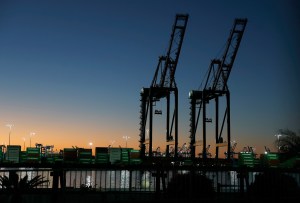
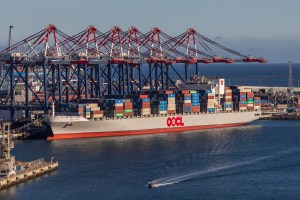
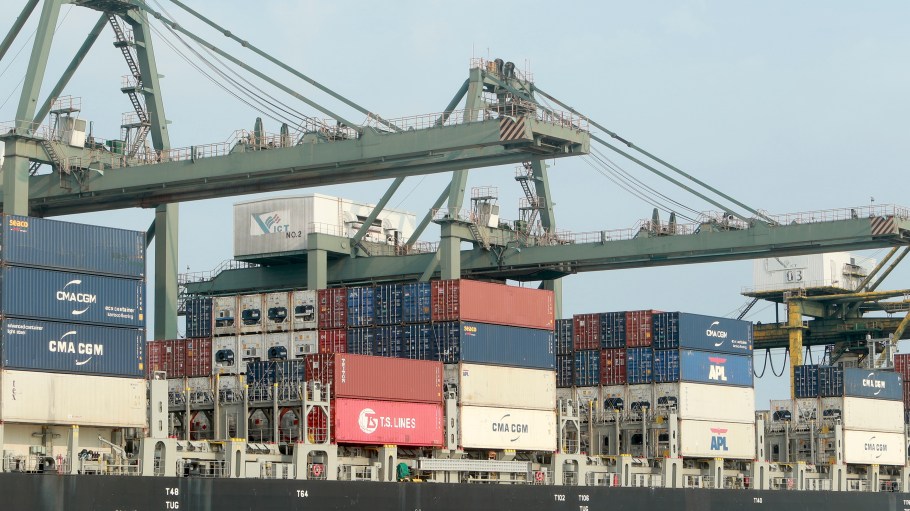
The flood of product out of Vietnam has spurred on more activity at Cai Mep Port, which hosts most U.S.-bound container ships in the country.
Soren Pedersen, vice president at terminal operator SSA Marine, told Reuters 26 container ships at the port were booked for weekly departures to the U.S. in May, “a record high” from an average of 20 to 22.
“Most container terminals are now operating at or near full capacity,” Pedersen said.
The U.S. ran a $123.5 billion trade deficit with Vietnam last year, the third-highest after China and Mexico, according to the U.S. Trade Representative. A stated goal of U.S. Trade Representative Jamieson Greer has been to “improve the trade balance” between both countries as part of the ongoing tariff negotiations.
Rates on Vietnam-to-U.S. trade lane see tariff-driven spike
Vietnam’s onslaught of cargo entering the U.S. throughout April coincided with an uptick in freight rates on the trade lane.
According to data from air and ocean freight benchmarking platform Xeneta, average spot rates for container shipping from Vietnam to the U.S. West Coast surpassed those out of China throughout the month.
Those rates jumped 17 percent from March 16 to April 25, up to $2,774 per 40-foot container, according to Xeneta data. Containers out of China, feeling fewer demand than their Vietnamese counterparts, were $2,457, marking a 10-percent increase for the month.
“Seeing the relationship between these two trades turn on its head is an early indication of the potential for tariffs to shift global trade on its axis,” said Peter Sand, chief analyst at Xeneta, in a statement. “There is a similar story when comparing freight rates into the U.S. West Coast from China and the Southeast Asia region. As shippers stopped or slowed exports from China due to the tariffs, they have accelerated exports from Southeast Asia countries, which has caused the spread in freight rates on these trades to widen.”
Vietnam sought to take advantage of this changing of the guard ahead of the tariffs, with state-owned container shipping line Vietnam Maritime Corp. establishing a goal in January to expand its fleet by 20 percent annually over the next five years. The liner has a fleet of 49 ships.
The Hanoi-based company expects to expand expected annual revenue of $800 million in 2025 all the way to $3 billion within 10 years.