The suspension of docking fees for Chinese ships at U.S. ports for one year officially went into effect Monday amid the recent deescalation of trade tensions between the two countries.
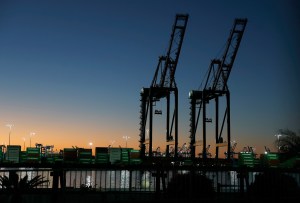
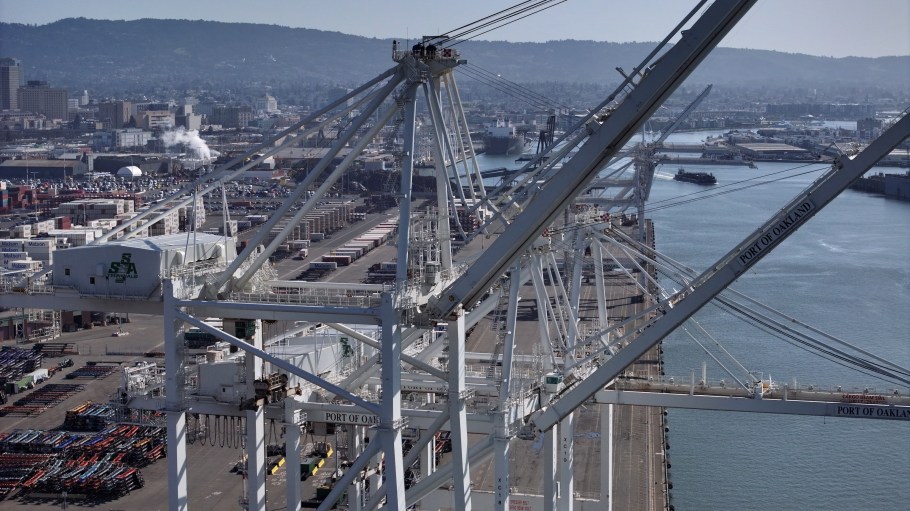
Along with the fees, the U.S. Trade Representative’s (USTR) office also pushed back its tariffs on Chinese ship-to-shore (STS) cranes and other equipment used at ports. Those duties were initially expected to take effect Sunday.
They included tariffs of 100 percent on cranes and intermodal chassis, as well as a new proposed tax of up to 150 percent on certain cargo-handling equipment including rubber tire gantry cranes, rail-mounted gantry cranes, automatic staking cranes and terminal tractors.
Related Stories
The fees had targeted STS cranes that were manufactured, assembled or made using components of Chinese origin, or manufactured anywhere in the world by a company “owned, controlled or substantially influenced” by a Chinese national, according to the USTR.
U.S. ports had long urged the Trump administration to scrap the tariffs, or delay them at minimum, as they would have tacked on billions in added costs for the ports. Instead, ports have recommended incentivizing domestic production of STS cranes by granting tax incentives to U.S. manufacturers.
As part of the suspension of punitive actions, USTR opened a public docket for comments on the matter last Thursday and Friday.
Both the port docking fees and the crane tariffs were initially slapped on Chinese companies due to the results of the USTR’s Section 301 probe, which found that the country had an “unreasonable” dominance of the maritime, shipbuilding and logistics industries.
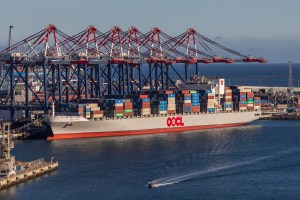
The port fees had been in effect for nearly one month, having been implemented Oct. 14. The charges would have mostly impacted Chinese state-owned Cosco Shipping and its subsidiary Orient Overseas Container Line (OOCL), but the move effectively forced the other major ocean carriers to shift their Chinese-built ships away from rotation into U.S. ports. In the first week alone, the Chinese carriers racked up $43 million in port fees.
In retaliation, China instilled its own port fees on U.S.-built and -flagged ships. Matson, the largest container shipping company in the U.S., has paid $6.4 million in fees to China since the October dues went into effect.
Unions condemn port fee delay as “free pass” for China
The unions who had inspired the USTR’s Section 301 probe in the first place expressed their disappointment in the decision to pause the port fees.
The United Steelworkers, alongside the International Association of Machinists and Aerospace Workers, the International Brotherhood of Boilermakers and the International Brotherhood of Electrical Workers, said the decision gave China a “free pass on its predatory behavior.”
The labor groups have argued that the China’s domestic shipbuilding industry engages in non-market policies and practices that undermine fair competition for foreign competitors.
“After months of strong rhetoric about the need for a comprehensive approach to rebuilding American maritime strength, workers, shipyards and our broader economic and national security interests are once again being sidelined in favor of short-term considerations,” the unions wrote. “Following this retreat, workers who know all too well the boom-and-bust nature of American shipbuilding are again being pushed aside, even as new commercial orders—worth billions of dollars—flow back into Chinese shipyards.”
The easing of the measures occurred after a pivotal meeting between Presidents Donald Trump and Xi Jinping in South Korea, which resulted in the U.S. knocking down its fentanyl-related tariffs on Chinese goods from 20 percent to 10 percent.
China postpones sanctions on South Korean shipbuilder
Following the recent actions, China’s commerce ministry announced Monday that it was pausing sanctions the government placed on the five U.S. subsidiaries of South Korean shipbuilding company Hanwha Group.
Those sanctions will be postponed for one year, said China’s commerce ministry.
Under the sanctions, the subsidiaries would have been banned from working with Chinese interests.
That move, one of many in the back-and-forth between the U.S. and China in their ongoing trade war, came as the South Korean businesses are expected to play a larger role in American shipbuilding.
South Korea recently pledged $150 billion to help the U.S. attempt to restore its shipbuilding industry and close its gap with China. China accounts for 34.8 percent of ships built worldwide, while South Korea has built 30.9 percent, according to Clarksons.