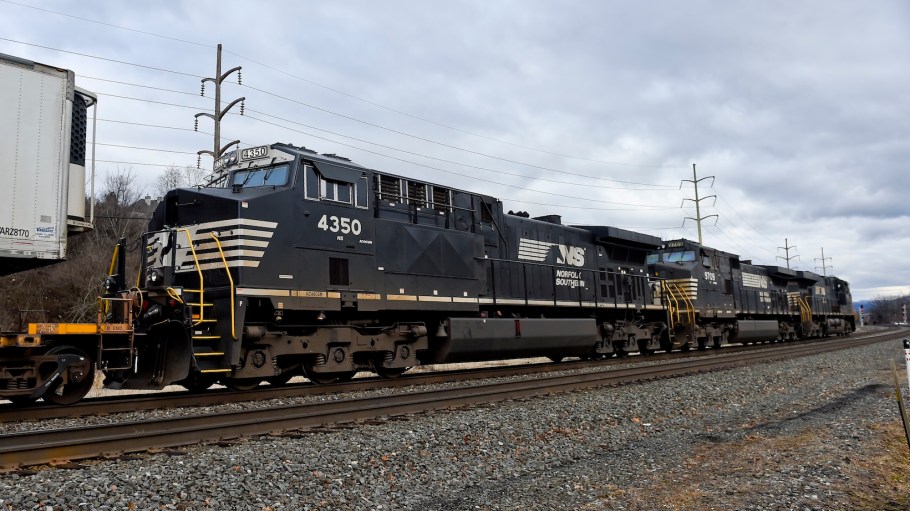
Two railroad companies could be trying to put a deal into loco-“motion.”
Union Pacific and Norfolk Southern have started to examine the possibility of a merger, according to a report from the Wall Street Journal, which cited people familiar with the matter. The outlet noted that Union Pacific is considering buying Norfolk, which is one of its smaller challengers.
Omaha, Neb.-based Union Pacific serves 23 states, in the western part of the country and in the Midwest, with its easternmost destinations including New Orleans, Memphis and Chicago. Atlanta-headquartered Norfolk Southern, meanwhile, serves 22 states, primarily on the East Coast, in the South and in the Midwest.
Related Stories
Connecting Union Pacific’s infrastructure with Norfolk Southern’s infrastructure could see the first modern-day, coast-to-coast cargo rail system in the United States. Both Union Pacific and Norfolk Southern declined to comment on the possibility of a merger.
Earlier this year, Union Pacific CEO Jim Vena said there would be benefits to such a system—primarily that it could alleviate transfer-based bottlenecks in places like Chicago, where West Coast operators and East Coast operators often offload cargo to be transferred to another operator’s network.
While connecting the East Coast to the West Coast could make it easier for retailers and brands to secure shipments—and make consumer delivery times faster—the potential move would likely draw regulatory scrutiny from multiple sources, primarily the Surface Transportation Board. The regulatory burden for merging railroads has historically remained high. The most recent merger between railroads occurred in 2023, when Canadian Pacific acquired Kansas City Southern for $31 billion, creating CPKC railroad, which regulators approved at the time.
Union Pacific and Norfolk’s case may prove a bit different; Union Pacific is the largest Class I railroad operator in the country. The CPKC merger saw the combination of the two smallest North American railroads.
Vena also recognizes the regulatory hurdles that could come with such a merger, if Union Pacific chooses to make a move. The executive reportedly told Trains Magazine this year that a merger resulting in a coast-to-coast cargo rail system could be beneficial for customers and competition.
“Now, on the regulatory front, it’s complicated,” Vena reportedly said.
Norfolk Southern has already faced recent regulatory scrutiny; its derailment in East Palestine, Ohio, in February 2023 has seen it dole out more than $1.4 billion in settlements. It also faces ongoing legal issues; on Wednesday, a group of eight Ohio residents who refused Norfolk’s $600 million settlement filed another lawsuit against the railroad. What’s more, the railroad fired its CEO in fall 2024 and engaged in a clash with activist investor Ancora Holdings last year.
If Union Pacific and Norfolk Southern merge, the parties would need to be able to prove that doing so would strengthen competition and that it would positively influence the public. In the past, other railroads have expressed concern over mergers like these because they argue that competition could be stifled. Shippers have questioned mergers because decreasing the number of railroads in the country could further limit their options for shipping goods.
According to the Wall Street Journal’s sources, the discussions are “early stage” and presently lack promise of going through or being accepted by regulatory bodies. Semafor reported that Union Pacific is working with investment firm Morgan Stanley on the financial considerations of an acquisition.