The Department of Transportation (DOT) plans to revoke the certifications of nearly 3,000 commercial driver’s license (CDL) schools in another salvo in the Trump administration’s continued crackdown on trucking industry compliance.
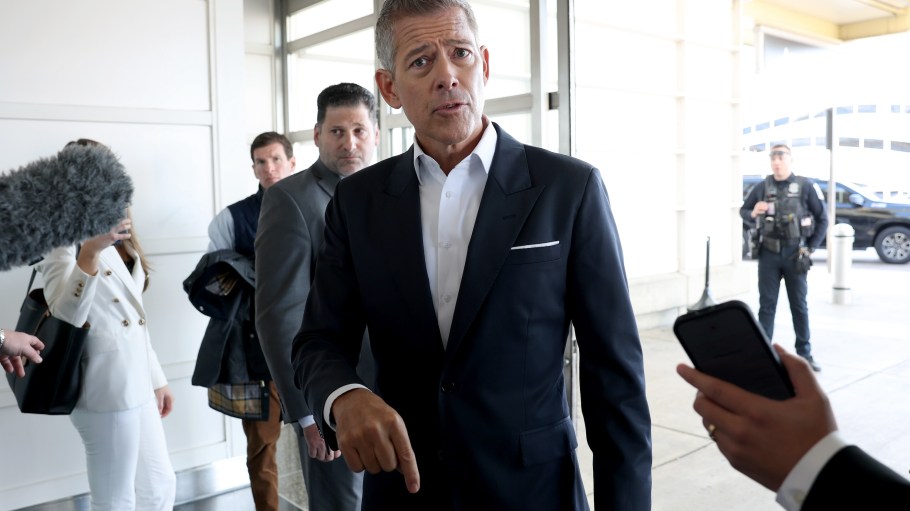
According to a statement from Transportation Secretary Sean Duffy, these trucking schools have 30 days from Monday to provide evidence of compliance to the Federal Motor Carrier Safety Administration (FMCSA) to avoid removal from the agency’s training provider registry.
Related Stories
During that time, all training programs flagged for non-compliance must notify all current and scheduled students that their certification could be revoked.
Upon its review of 16,000 of these programs across the U.S., which grant entry-level driver training to students seeking a CDL, the DOT found that the accused 3,000 schools failed to equip trainees based on several “standards of readiness” outlined by the Trump administration.
“We are reining in illegal and reckless practices that let poorly trained drivers get behind the wheel of semi-trucks and school buses,” said Duffy in the statement.
The department says it removed training providers from the registry for three common reasons. Schools are alleged to have falsified or manipulated training data; and are also accused of neglecting to meet required curriculum standards, facility conditions or instructor qualifications.
Additionally, the DOT is penalizing those that they say fail to maintain accurate, complete documentation or refuse to provide records during federal audits or investigations.
Beyond the 3,000 schools that must prove compliance, another 4,500 CDL training providers were placed on notice due to potential non-compliance, the DOT press release said. This means as many as 44 percent of the schools nationwide could have their CDL-granting capabilities rescinded.
Trucking trade groups like the American Trucking Associations (ATA) and the Owner-Operator Independent Drivers Association (OOIDA) have often called for stronger oversight over roadway safety and the issuance of CDLs, and have largely supported the Trump administration’s industry crackdown.
The approach often coincides with the administration’s hardline immigration policy.
Earlier this year, President Donald Trump signed an executive order aimed at enforcing English-language proficiency for commercial motor drivers. Those laws had already existed, but a 2016 memorandum removed the requirement to place drivers out of service for a violation.
Concerns over the CDL-issuing process gained broader attention after a fatal trucking accident on a Florida highway in August. The licensed truck driver, undocumented Indian national Harjinder Singh, got in a crash that killed three people as he attempted to execute an illegal U-turn.
After a nationwide audit, Duffy and the DOT unveiled in late September that the department would restrict who is eligible for a non-domiciled CDLs and commercial learner’s permits (CLPs).
Upon stripping some 200,000 non-domiciled CDLs, a federal appeals court found in November that the FMCSA likely violated multiple legal requirements in implementing the new ruling.
Many stakeholders argue that it is too easy for someone to attain a CDL, particularly for non-citizens. Critics of the process often refer to substandard training programs that promise a license issue in days as “CDL mills.”
“Training someone to operate an 80,000-pound vehicle is not a weekend hobby. It is a profession built on standards, discipline, and responsibility,” ATA president and CEO Chris Spear said in a Monday statement. “The Trump administration has sent the right message: if you’re running a CDL mill or if you’re issuing certificates to anyone who can fog a mirror, you’re on notice.”
The FMCSA’s emergency action identified six states with licensing patterns that are not consistent with federal regulations: California, Colorado, Pennsylvania, South Dakota, Texas and Washington.
Duffy has threatened to pull a combined $235 million in federal funding from California and Pennsylvania over the issue.
California said it would revoke 17,000 CDLs that were given to immigrants after discovering the expiration dates went past when the drivers were legally allowed to be in the U.S. The state already sent 60-day expiration notices to those impacted.
Pennsylvania has yet to respond to the DOT’s withholding threat.
On Monday, Duffy said he would withhold $30.4 million in federal highway funding from Minnesota upon claims that one-third of the non-domiciled CDLs granted were issued illegally.
The Minnesota Department of Vehicle Services has acknowledged administrative errors in issuing CDLs and has paused issuing them to foreign nationals. They have begun an internal review and plan to submit an action plan.