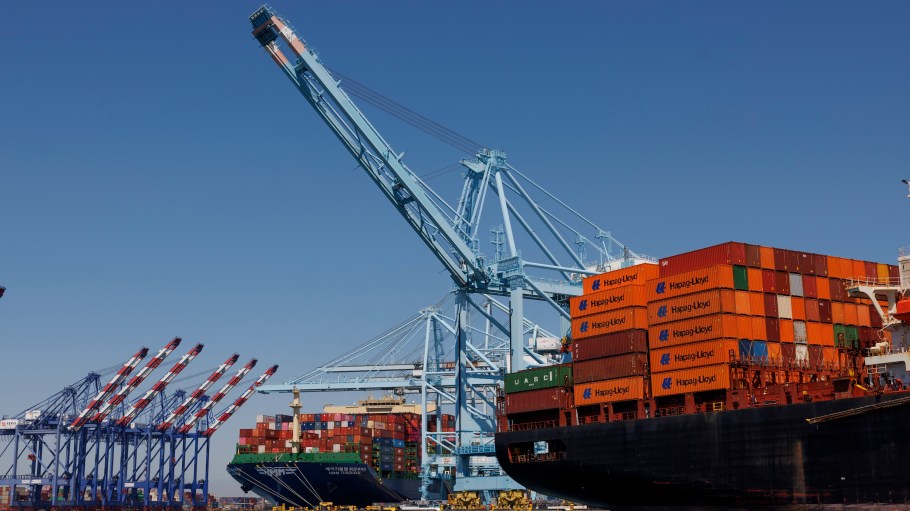
Trans-Pacific ocean spot freight rates have kept their foot on the gas in the wake of a rush of imports from China into the U.S. as trade and tariff uncertainty pervades between the countries.
On Friday, the Shanghai Containerized Freight Index (SCFI) calculated a surge of nearly 31 percent from the week prior out of the Chinese city across all markets, with West Coast-bound spot rates skyrocketing 58 percent to $6,243 per 40-foot equivalent unit (FEU). Rates soared 46 percent to $5,172 per container headed to the East Coast.
Related Stories
The weekly 30.6 level gain to 2,072.71 points represents the second-largest individual gain tracked by the index, following the final week of December 2023 as ocean carriers began avoiding the Red Sea en masse.
Abercrombie & Fitch is one apparel retailer that has already baked in higher freight costs for their second quarter, chief financial officer Robert Ball said in a Wednesday earnings call.
All the major indices that monitor ocean freight rates have indicated significant jumps to close out May, with the SCFI showing the highest increases.
According to Drewry’s World Container Index (WCI) posted Thursday, freight rates from Shanghai to Los Angeles leapt 17 percent to $3,738 per FEU in the past week and 38 percent since May 8. Spot rates to New York have risen 14 percent in the past week to $5,172 per container, and have accelerated 42 percent in the past three weeks.
These numbers buoyed the overall WCI to 10 percent growth to $2,508 per container, marking the first double-digit rise in the composite index since last July.
For Freightos, Asia-to-U.S. West Coast prices increased 13 percent to $2,788 per FEU, according to data revealed on Wednesday. The Freightos Baltic Index (FBX) bucked the trend of the other benchmarks, with Asia-to-U.S. East Coast prices seeing a bigger jump than their West Coast counterpart. Spot freight rates per container increased 20 percent to $4,223.
“Surging demand and these restrictions on capacity from out of place vessels and port congestion [at Chinese ports] are putting significant upward pressure on container rates,” said Judah Levine, head of research at Freightos, in Wednesday’s weekly update. “Rates are at their highest level since late February, and GRIs announced through mid-June could push prices up thousands of dollars more if demand stays elevated and congestion remains an issue.”
Ongoing front-loading of imports will lead to big increases in spot rates on June 1, according to data from Xeneta.
“Average spot rates will rise at least 18 percent from the Far East to U.S. West Coast and 14 percent into the U.S. East Coast,” said Emily Stausbøll, senior shipping analyst at Xeneta. “Data is being received from shippers paying far higher rates than this, so the market has the potential to increase even more dramatically in early June.”
While a June spike could be in order, the combination of importers’ front-loading and ocean carriers moving more shipping capacity to the trans-Pacific trade lane could be what slows rates down in the second half of 2025.
Drewry’s Container Forecaster expects the supply-demand balance to weaken again in the latter six months, which would cause spot rates to decline again for the back half. But the volatility and timing of rate changes will depend on the outcome of the ongoing legal challenges to President Donald Trump’s tariffs and on possible capacity changes related to the introduction of the U.S. port docking fees on Chinese ships, which are uncertain.
Xeneta’s Stausbøll projects a longer-term decline in the third quarter as well, particularly when the expected period of front-loading ends.
“While tariffs are lower, they are still higher than they were previously, so there is every likelihood this will subdue consumer demand,” Stausbøll said in a May 21 blog post. “Once shippers have built up inventories, they will not continue to front-load imports. Demand will therefore ease and carriers will once again be struggling to fill their ships. This means the traditional Q3 peak season will arrive earlier in 2025, but it should not take too long for spot rates to soften and continue the downward trend seen during Q1.”
Currently, the base tariff rate on the majority of Chinese products is 30 percent after the U.S. and China entered into a 90-day tariff rollback. The agreement lowered the tariff rate from 145 percent for U.S. importers until Aug. 14.