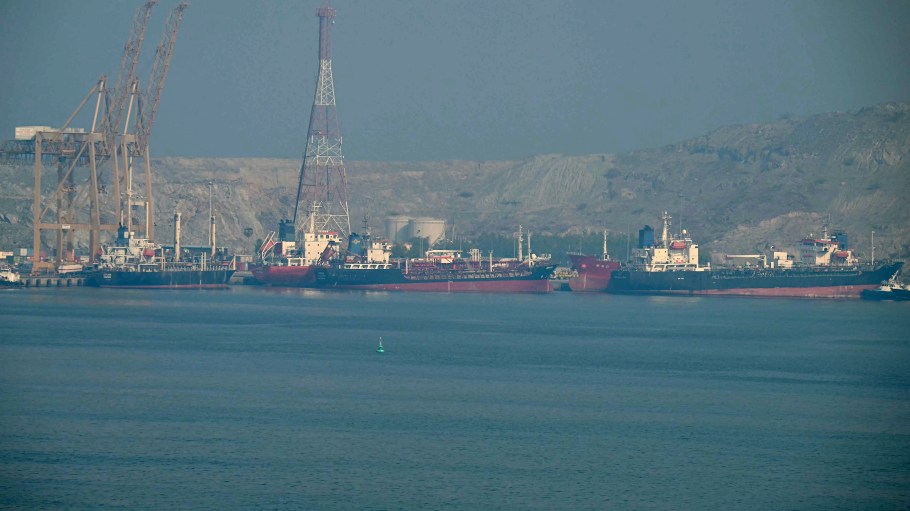
With Israel-Iran tensions being taken up another notch after direct U.S. military intervention on Saturday, global attention now shifts to whether Iran will close off the Strait of Hormuz.
In the wake of U.S. airstrikes on Iran’s nuclear facilities Saturday night, the country’s parliament backed a measure to close the waterway, according to Iran’s state-owned Press TV.
A final decision on any closure would still have to be made by Iran’s Supreme National Security Council and Supreme Leader Ali Khamenei.
Related Stories
If the Strait of Hormuz sees any type of blockade from Iranian forces, it would likely be a more targeted operation focused on U.S. and Israeli shipping, according to a threat circular distributed by maritime security firm Ambrey on Monday.
“A complete closure would be to the detriment of Iran’s relations with its neighbors and disruptive to the world’s economy, which would impact its partners,” the circular read. “It is assessed unnecessary to do this. There has been no designation of a combat area, which might disrupt shipping at large.”
A closure of the strait could lead to oil price volatility, analysts say, that would cause another spike in global freight rates for container shipping. West Texas Intermediate crude oil futures, a leading benchmark for oil prices, spiked more than 6 percent above $75 per barrel after the U.S. airstrikes over the weekend, before edging back lower below $72 shortly after noon on Monday.
Analysts at Goldman Sachs modeled a scenario where a 50-percent decline in oil flows through the Strait of Hormuz results in a 30-percent increase in crude oil prices.
The Strait of Hormuz is a vital chokepoint in the oil supply chain, with an estimated 20 percent of the world’s oil supply passing through, according to data from the U.S. Energy Information Administration.
Thus far, container shipping has largely kept the status quo. Maersk and Hapag-Lloyd have stated that they will continue to transit the Strait of Hormuz as they continue to monitor developments in the region. Both carriers said they were evaluating the security risks to vessels and crews in the region, and are ready to change course if needed.
CMA CGM is also staying the course for now, saying shipping is “proceeding as normal in the area,” as “logistics chains remain unchanged.”
Japan’s Nippon Yusen and Mitsui O.S.K. Lines have instructed their vessels to keep their time in the Persian Gulf as brief as possible.
Although just 2 to 3 percent of container traffic passes through the Strait of Hormuz, which connects the Gulf of Oman and the Persian Gulf, there are multiple transshipment hubs in the U.A.E. like the Port of Jebel Ali and Khalifa Port that facilitate movement of cargo throughout the Middle East, as well as the Indian subcontinent and Africa. These ports would see significant traffic declines in the event of a blockade.
China stands to be impacted the most of any country if the Strait of Hormuz gets closed off, as it is the recipient of 90 percent of Iran’s oil exports, according to data from commodities, energy and maritime intelligence provider Kpler. As such, the country could have more sway in whether Iran’s government approves a blockade of the trade artery, or to what extent a blockade would cover.
U.S. Secretary of State Marco Rubio urged China on Sunday to intervene to prevent Iran from closing the strait, and warned Tehran that such a move would be “economic suicide” for Iran.
Two large Chinese-operated crude carriers were among six tankers that shifted course on the way to the Strait of Hormuz over the weekend. Both ships, along with a third Norway-flagged vessel, ended up changing direction again to the Strait.
Amid reports of electronic interference impacting vessels’ GPS systems in the area, China has ordered its merchant fleet to report transits through the Strate of Hormuz back to Beijing. In a notice posted online Monday, the China Shipowners’ Association (CSA) said it requires companies to report the vessel names, unique IMO numbers, type, flags, capacities, departure and destination ports, planned voyage times, crew sizes and daily movements through that region.
The concerns related to the Strait of Hormuz also puts the safety of the Red Sea again in the spotlight, with Houthi spokesperson Yahya Saree indicating the Yemeni militant group is “officially entering the war” against the U.S. and Israel.
The Houthis had been in a ceasefire with the U.S. since early May after repeated American airstrikes in the months prior. The Yemeni faction has not attempted to attack any commercial vessels in the Red Sea in 2025, but most ocean carriers have been noncommittal about returning to the waterway
In response to the statement, the Joint Maritime Information Center said Sunday in an advisory note that there is a “high” threat to U.S.-associated commercial shipping in both the Red Sea and the Gulf of Aden.
Ambrey assessed that since targets in the Red Sea and the Gulf of Aden have not been available to the Houthis, that “this explains the lack of incidents.”
“It is assessed likely that they will resume the targeting of U.S.-affiliated shipping in the region when the opportunity arises,” the security firm said.