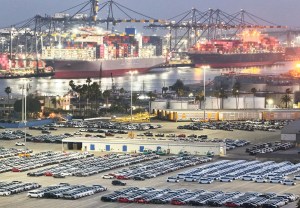
South Korea will be lending a helping hand to U.S. maritime ambitions with a $150 billion commitment to help revitalize a stagnating shipbuilding industry.
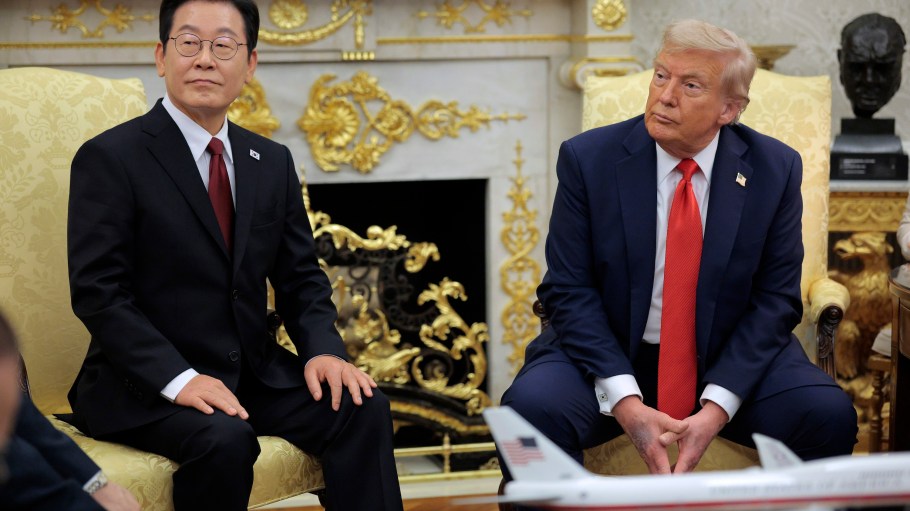
Presidents Donald Trump and Lee Jae Myung held a bilateral meeting Monday where it appeared both heads of state made inroads on the former’s goals to cut the country’s massive shipbuilding gap with China.
Full details of the $150 billion pledge, first made in July amid trade talks between the two nations, still have not been revealed. The “Make American Shipbuilding Great Again” initiative is designed to help modernize U.S. shipyards, but the U.S. president suggested that for now, vessels will be built in South Korea.
Related Stories
“We’re going to be buying ships from South Korea,” said President Trump Monday. “We’re also going to have them make ships here with our people, using our people, and we’re going to go back into the shipbuilding business again.”
Once the dominant shipbuilding powerhouse worldwide, the U.S. built just five commercial ships in 2022, according to data cited by the U.S. Trade Representative from BRS Shipbrokers. On the other hand, China built 1,794 that year.
The U.S. is signing up the world’s second-largest producer of ships to help turn its fortunes around. South Korea built 734 ships in 2022.
On Tuesday, President Lee is visiting one of the largest shipyards in the U.S, the Hanwha Philly Shipyard. South Korea’s Hanwha Group acquired the facility in 2024 for $100 million and plans to spend as much as $5 billion to expand its annual shipbuilding pace from less than two vessels a year to as many as 20, according to Lee’s office.
Hanwha said it plans to arrange to use idle docks owned by others near the Philly Shipyard to expand shipbuilding capacity.
During Lee’s visit to the U.S., American and South Korean companies signed 11 non-binding agreements across shipbuilding, nuclear energy, aerospace, gas and critical minerals, according to South Korea’s industry ministry.
Aligning with the Trump-Lee meeting, South Korean shipbuilding and machinery conglomerate HD Hyundai announced a strategic partnership with Cerberus Capital Management Monday called Cerberus Maritime.
The partnership is aimed at identifying high-impact opportunities that strengthen strategic maritime infrastructure and supply chains, maritime logistics infrastructure, port modernization and advanced maritime technologies.
HD Hyundai will serve as an anchor investor, while also bringing expertise in shipbuilding, marine engineering and digital maritime solutions to the partnership. The South Korean firm will explore opportunities for collaboration related to U.S. shipyards, ports and maritime technology.
Another major shipbuilder, Samsung Heavy Industries, entered a partnership with U.S.-based shipbuilding firm Vigor Marine Group, also signed a preliminary deal covering maintenance and overhaul of U.S. Navy support ships, shipyard modernization and joint vessel construction.
The partnerships come as the U.S. has had difficulty effectively scaling its shipbuilding capabilities at home even as lawmakers scramble to introduce legislation aimed at solving the problem.
Multiple reports from the U.S. Government Accountability Office (GAO) have called out the inefficiencies involved in American shipbuilding, first saying in February that U.S. Navy shipbuilding is consistently over budget and behind schedule.
Estimated delays for some ships extend as long as three years, GAO says, with the primary reasons being the lack of physical space and workers to meet the Navy’s demands.
Another later report said the Department of Transportation’s Maritime Administration hasn’t established the goals required to properly assess the performance of the financial aid programs designed to encourage shipbuilding. This ultimately prevents the Maritime Administration from determining the effectiveness of the programs—a necessity in keeping costs down.
The office of shipbuilding that Trump touted in March has gotten off to a slow start, with the office already having been moved from the purview of the National Security Council (NSC) to the Office of Management and Budget (OMB). Along with the shift, NSC chief of staff Brian McCormack and Ian Bennitt, the senior director for maritime and industrial capacity first tasked by the administration to power the shipbuilding push, departed their posts.
Since the office was moved to the OMB in July, the administration has remained quiet over the status of the office, or overall progress made.
“It takes a while,” said President Trump during his Monday meeting with Lee. “Shipbuilding’s a tough one to start.”
Despite the shipbuilding pact, Trump said he was sticking to the terms of the countries’ tariff rate initially agreed upon in late July. That deal set a 15 percent tariff on South Korean goods entering the U.S., which will remain unchanged, Trump asserts.