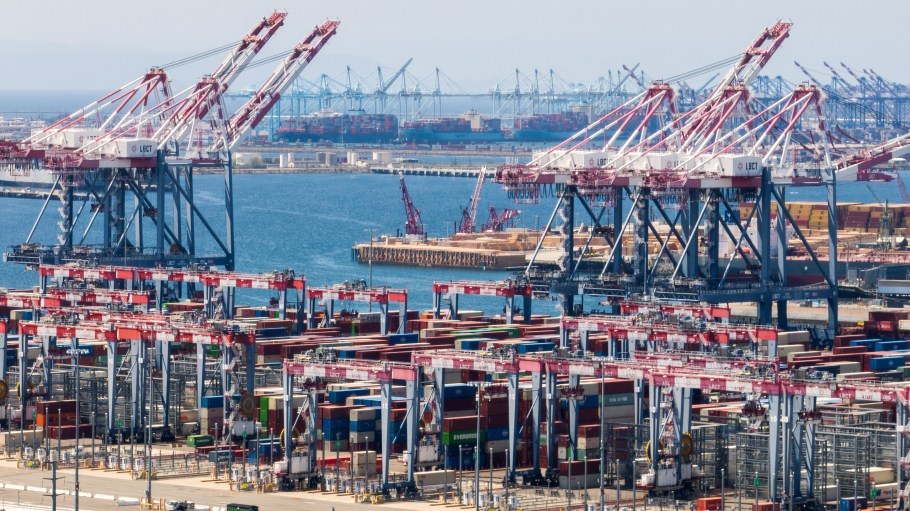
The Port of Long Beach saw its slowest May for inbound cargo volumes since before the Covid-19 pandemic as tariffs rattled trans-Pacific trade entering the U.S.
Imports at the San Pedro Bay port decreased 13.4 percent to 299,116 20-foot equivalent units (TEUs) in May, and are only 2.9 percent up over 2019 levels of 290,568 TEUs.
Total cargo handled, when including exports and empties, dipped 8.2 percent to 639,160 TEUs. This marked the lowest monthly number handled since the 578,249 containers moved at the port in July 2023.
Related Stories
A series of country-specific tariffs levied by President Donald, including duties that had went up to 145 percent on Chinese goods, put importers in a bind throughout April, resulting in mass cancellations of bookings and a decline in sailings of cargo across the Pacific Ocean.
The low import numbers were largely in line with the “more than 10 percent drop-off” in inbound cargo forecasted by Port of Long Beach CEO Mario Cordero last month. The month followed a record April for the L.B. port as shippers front-loaded goods ahead of the tariffs, as well as 11 consecutive months of increases in cargo.
The Long Beach port saw a bigger impact from the tariffs than its sister gateway, the Port of Los Angeles, which had a 9 percent decline in imports in May.
“We remain cautiously optimistic that import cargo will rebound at the end of June and into July just in time for the peak shipping season, when retailers stock the shelves with back-to-school supplies and begin preparations for the winter holidays,” said Cordero, in a statement. Port of Los Angeles executive director Gene Seroka already said there would likely be higher prices and fewer selections for both the back-to-school and Halloween seasons.
In June and July, analysts are expecting a bounce back in West Coast cargo as import bookings again accelerated in the wake of the 90-day tariff rollback the U.S. and China agreed to in May. The temporary tariff relief was followed up in June with an assertion between the countries that they agreed on a new deal. That agreement consists of a 55 percent tariff on goods from China, and a 10 percent duty on goods out of the U.S.
It’s still under debate as to whether the coming import surge will overwhelm the West Coast ports. Across the U.S., ports are still expected to see inbound cargo declines of 6.2 percent and 8.1 percent in June and July, according to Global Port Tracker projections released earlier this month.
While Cordero didn’t go into expectations for the coming months, his L.A. counterpart, Seroka, said import projections for the second and third weeks of June were “pretty average for where we should be.”
According to the Port of Long Beach, 19 vessels are expected to arrive at the port for the week of June 15-21, up from 17 in the same week last year. Over the next two weeks, 44 ships are projected to dock in Long Beach, up from last year’s 38.
The upcoming increase in cargo into would at least help dockworkers at the ports collect regular payments. While the Los Angeles port saw half of its longshoremen go without work for a two-week stretch, Long Beach dockworkers had similar issues since it had a larger import drop in May.
Long Beach Harbor Commission president Bonnie Lowenthal said the group is monitoring the development of the new trade policies and the effects on dockworkers and others across the supply chain.
“We are staying in close contact with our customers and other port stakeholders as they work to handle the ongoing changes in trade,” said Lowenthal in a statement.
Cordero also pointed out that although uncertainty remains for the business sector, “the Port of Long Beach is continuing to invest in rail and terminal improvements to move cargo efficiently, safely and sustainably,” referring to the port’s Pier B on-dock rail support facility project.
That $1.6 billion project is designed to help the port move more containers by on-dock rail and aims to reduce truck traffic. The plan, which began construction in 2024, is expected to more than triple the volume of on-dock rail cargo the port can handle annually, from 1.5 million TEUs to 4.7 million TEUs.
Exported containers exiting the Port of Long Beach in May decreased 18.6 percent to 82,149 TEUs. Empty containers moving through the port rose 3.2 percent to 257,895 TEUs.
The port has moved 4,042,228 TEUs during the first five months of 2025, still up 17.2 percent from the same period in 2024.