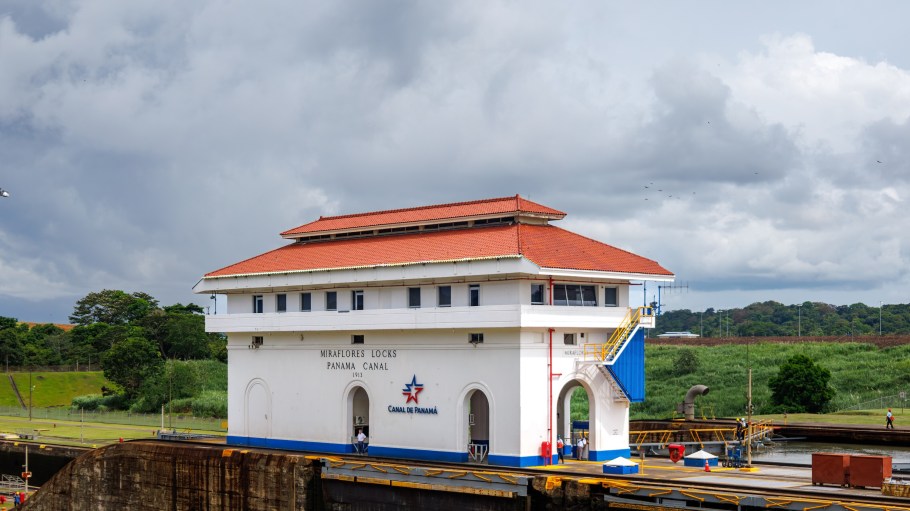
China is among the parties interested in bidding to build new port terminals on each side of the Panama Canal, marking another potential flashpoint in the geopolitical tug-of-war surrounding the trade artery.
In a briefing with reporters Tuesday, Panama Canal administrator Ricaurte Vásquez Morales reiterated that the waterway’s operators seek to ensure that the Panama Canal maintains its neutrality by allowing all parties to bid on equal footing.
“Under the Neutrality Treaty, we have to be open to participation of all interested parties,” Vásquez said.
Related Stories
The canal, and Panama itself, have been under an intense microscope since a consortium including Mediterranean Shipping Company (MSC) and U.S. hedge fund BlackRock made a $22.8 million bid to acquire more than 40 ports from Hong Kong-based port operator CK Hutchison in March.
Two of Panama’s ports operating on each side of the canal, Balboa and Cristóbal, would change hands in the deal, in what was considered a win for U.S. interests that reportedly outraged China. That transaction has since been held up due to a Chinese antitrust probe, as well as government lawsuits in Panama that challenge CK Hutchison’s current ownership rights of the ports.
By putting the rights to two new terminals up for sale, the Panama Canal Authority (ACP) wants to drive competition across global port operators and ocean carriers alike.
When asked about the potential geopolitical conflict with the U.S. if a Chinese state-owned company like Cosco Shipping were to obtain the port concession, Vásquez indicated the ACP had more pressing concerns.
“You cross the bridge when you reach the river,” Vásquez said. “First, we need to see how we get to the river, and then we’ll discuss that matter. For now, we must proceed with the broadest possible competition, receive proposals and develop the criteria in the best interests of the Panama Canal and the country.”
The ACP will begin meeting with interested parties ahead of the bidding process starting Monday. The authority plans to award contracts for the two terminals in late 2026 and begin operations in 2029.
On top of acquiring the rights to build the port facilities, the winning bidders would get to operate them for 20 years. The total expected investment in the port construction is $2.6 billion, but it is unclear how much would be individually contributed by the Panamanian government, and the winning bidders.
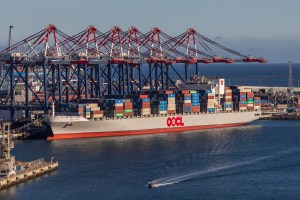
The planned transshipment terminals would be located on both sides of the Panama Canal, with Corozal set for construction to serve ships in the Pacific Ocean and Telfers being built on the Atlantic Ocean. As proposed, those two terminals would expand Panama’s total container-handling capacity from 9.5 million 20-foot equivalent units (TEUs) to 15 million TEUs per year.
Vásquez indicated that the CK Hutchison ports controversy drove the ACP to explore the terminal idea, which revived the long-stalled Corozal project that had been on ice since 2017.
“We’ve never had so much global publicity. Let’s see if we can take advantage of this and make a proposal for the port terminals,” said Vásquez. “We decided to dust off everything we had worked on with Corozal. And now we’re proposing a slightly more aggressive idea: Corozal and Telfers at the same time. Because it’s systemic, not just a one-off. It’s about systems for moving containerized cargo.”
The ACP’s selection process will include a pre-qualification phase, a one-on-one dialogue stage with pre-qualified participants, and finally, the awarding of the concession contracts.
Vásquez said that the authority expects to have application documents to pre-qualify for the port terminals project ready between the end of December of this year and January 2026.
The final phase of the selection is expected to conclude in next year’s fourth quarter.
According to Vásquez, the final selection criteria are “something we still need to determine.”
Those terminals would be part of the Panama Canal’s larger $8.5 billion modernization plan, which includes several other significant construction projects including the planned Indio Rio reservoir and a liquefied gas pipeline that would stretch across the country.
The reservoir project is designed to guarantee the canal gets additional water supply in the event of another drought, like the one that occurred in 2023. The ACP head said the authority is still in discussions with local communities near the Indio Rio basin that will be impacted by the construction. Those residents must sign off on the project for it to go forward.
“We delivered approximately 200 property titles about two weeks ago. The canal’s watershed does not belong to the canal. It belongs to the residents,” said Vásquez. “First, they have to have the property title, even if it’s a possessory title; and we are going to respect that property. It is with them that we have to talk.”
Vásquez said that between 17 and 20 companies have thus far expressed interest in participating in the gas pipeline project.