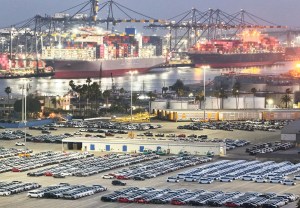
Retailers and brands are starting to worry again over the possibility of another port strike on the East and Gulf Coasts.
On Friday, the National Retail Federation (NRF) led a coalition of 267 trade associations urging the International Longshoremen’s Association (ILA) and the United States Maritime Alliance (USMX) to return to the negotiating table and agree to a new deal before their contract expires Jan. 15.
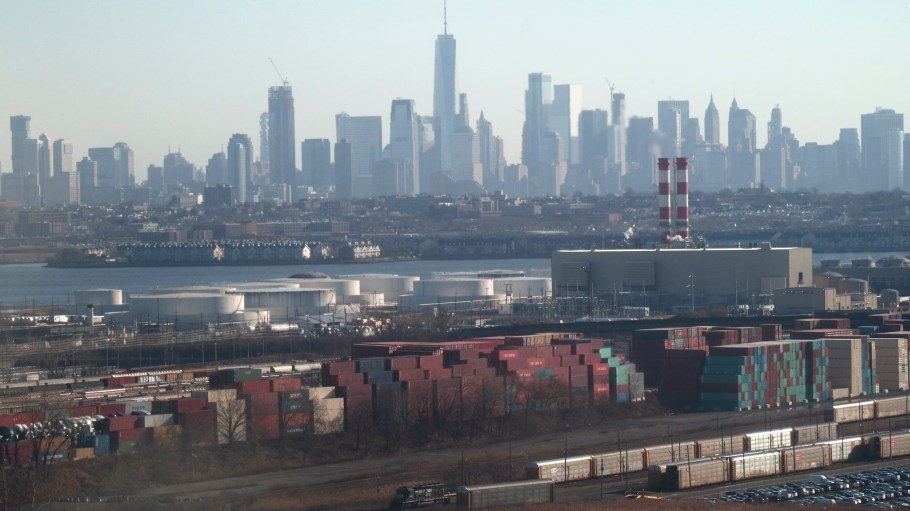
The ILA walked off the job at ports from Maine to Texas on Oct. 1 after failing to come to terms on a contract with the USMX, but agreed to go back to work after three days of strike action. The union suspended the strike when it negotiated a 61.5 percent pay increase for dockworkers spread over six years. In the wake of the work stoppage, container backlog took days to alleviate at ports like New York and New Jersey, Savannah and Charleston.
Related Stories
“The additional costs from mitigation efforts as well as post-strike resumption are still being felt,” the NRF-led letter to ILA president Harold Daggett and USMX chairman and CEO David Adam wrote. “Companies have continued to implement mitigation strategies because of the ongoing threat of another strike in mid-January if a new contract is not achieved.”
Jon Gold, NRF’s vice president for supply chain and customs policy, has already said that retailers are pulling forward more goods into the U.S. ahead of the possible second strike and potential new tariffs expected to be implemented by President-elect Donald Trump.
Co-signees of the letter included the American Apparel & Footwear Association (AAFA), the Retail Industry Leaders Association (RILA) and the U.S. Chamber of Commerce, as well as representatives of other industries across manufacturing, farming and agriculture, restaurants, distribution, transportation and logistics. The AAFA already wrote its own letter to Daggett and Adam in November calling on both parties to start negotiating again.
The fact that a strike has already taken place is a clear sign of the disparity between the ILA and USMX—a gap that wasn’t felt on nearly the same level on the West Coast in 2023, when dockworkers at the International Longshore and Warehouse Union worked for months without a new contract before agreeing to a new six-year deal with their employers, the Pacific Maritime Association.
While the ILA’s tentative agreement has already been put in place for wages, the use of automation at the East and Gulf Coast ports led the union to break off contract talks again.
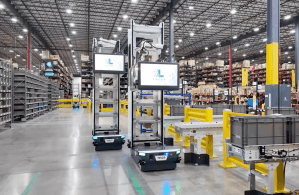
The union is seeking a total ban on technologies like semi-automated rail-mounted gantry cranes (RMGs), which the ILA contends are fully automated for 95 percent of the work they perform. The USMX insists that they have not sought to cut union jobs, and that the RMGs can help bring in and handle more cargo—and therefore more money for more workers.
“Agreements can usually be reached regarding protections for the existing workforce—and, even, some degree of growth in workforce while allowing for the introduction or advancement of technology,” said Dr. Tom Goldsby, professor and Haslam Chair of Logistics at the University of Tennessee. “The union’s hardline approach is getting in the way of that, it seems.”
The NRF-led letter acknowledged the disparity between the ILA and the USMX, but appeared to support the maritime alliance’s advances to better automate the ports.
“It is critical that our ports and terminals have the ability to modernize their systems and processes in order to remain globally competitive and be able to handle the continuing rise of trade volumes, both imports and exports, through our ports,” the letter said. “Modernization can only happen through true partnership between labor and management, as well as the other supply chain stakeholders that rely on these ports. Modernization efforts will benefit all parties and are essential to address current and future throughput issues.”
While the October strike took place in the weeks ahead of the 2024 presidential election, with President Joe Biden pledging not to intervene, the return of Trump to the Oval Office in January brings an added element of uncertainty to how the labor negotiations will play out.
“The Trump administration could face a walkout that is approaching a week old by the time they assume their roles. If that were to be the case, U.S. industry would view it as a test case for the administration’s position on labor-management relations,” Goldsby told Sourcing Journal. “Given the criticality of keeping the economy steaming along, I would expect the administration toward resolution, but I could be very wrong about that. I could also anticipate some intense overtures by the Biden administration to resolve the dispute before inauguration day.”
The ILA has backed Trump’s Labor Secretary appointee, Lori Chavez-DeRemer, who co-sponsored multiple pieces of pro-union legislation in her one year as a House representative.
If a strike were to occur after the Jan. 15 negotiation deadline and last into Trump’s inauguration five days later, Chavez-DeRemer would be thrust into the negotiations on the first day of her term.