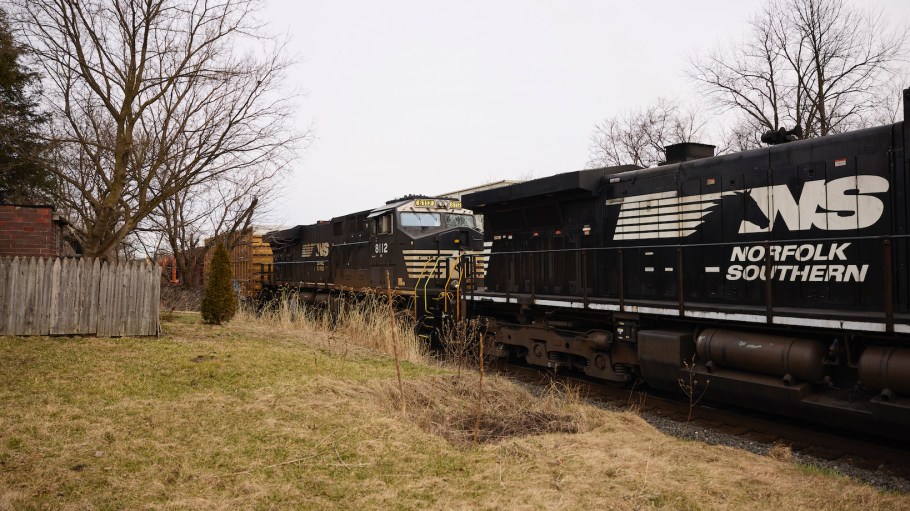
The activist investor that put the heat on Kohl’s and Pitney Bowes to replace their CEOs last year is setting plans in motion to install a new head at Norfolk Southern via sweeping changes to the company’s board.
Ancora Holdings Group, which owns approximately 1.75 percent of total shares at the Class I railroad operator, leads an investor group that has nominated a majority slate of eight candidates for Norfolk Southern’s board of directors.
Confirming a prior report from the Wall Street Journal, Ancora also wants to replace current CEO Alan Shaw with a new chief exec of its choosing—former UPS chief operating officer Jim Barber. Along with the wider board overhaul, the wealth advisory firm is also looking to replace chief operating officer Paul Duncan with Jamie Boychuk, a former executive vice president of operations at CSX.
Related Stories
Barber is also one of Ancora’s eight board nominees. The nominees include names like Sameh Fahmy, a former executive vice president at Class I railroad operator Kansas City Southern, and former Ohio governor and presidential candidate John Kasich.
The rail operator was in the headlines for all the wrong reasons in 2023, largely stemming from a toxic train derailment in East Palestine, Ohio last February. The derailment and subsequent handling garnered plenty of negative attention for Norfolk Southern, including scrutiny from President Joe Biden. The commander-in-chief visited East Palestine earlier this month for the first time and called the accident “an act of cruelty that was 100 percent preventable.”
But one year after the derailment, Ancora and its investor group appear to be just as concerned with Norfolk Southern’s lagging financial results behind Class I peers like CSX.
In a statement, the group said “Norfolk Southern’s status as the worst Class I railroad has been solidified” since the appointment of Shaw as CEO in May 2022, calling out the company out for “industry-worst operating results, sustained share price underperformance and a tone-deaf response” to the East Palestine incident.
Ancora called out Norfolk Southern’s poor operating ratio, which is a major driver in the profitability of a railroad company. The metric indicated that operating expenses represented 67.4 percent of overall revenue in 2023, far off the Class I average of 61.1 percent and further off the CSX average of 59.6 percent.
The activist investor criticized Norfolk Southern for being the only publicly traded rail company that does not use the precision scheduled railroading (PSR) system, a controversial strategy that involves consolidating rail networks through the use of point-to-point delivery tactics and consistent departure schedules.
PSR aims to reduce operating ratio to build longer, heavier trains, while eliminating shorter, less efficient lanes and excess staff—but is often cited by workers and customers as a major detriment to service quality. Norfolk Southern was set to implement PSR prior to Shaw’s tenure as CEO, but instead pivoted to a “resiliency model” that emphasized more resources and costs in down freight periods, with the objective of picking up extra market share from under-resourced trucks and rail competitors when market conditions get better.
Ancora and co. argue that the resiliency model is flawed, in that Norfolk Southern “is unable to handle current trough volumes” despite the excess resources in place. In fact, the investor group said the ratio of carloads to cars online is still 20 percent worse than CSX.
“The bottom line is that it is time to actually move Norfolk Southern forward,” the investor group said. “Moving ahead starts with identifying the right destination.”
Norfolk Southern acknowledged Ancora’s nomination of the board candidates, but did not refer to the calls to replace Shaw or Duncan. The rail operator said the board’s governance and nominating committee evaluated and interviewed all the Ancora nominees.
In its defense of the board, Norfolk Southern highlighted that it cut its mainline accident rate 42 percent year-over-year in 2023, and is continuing to implement its six-point safety plan. The company also emphasized some of its positives, including 5 percent volume growth in its “most service-sensitive” intermodal business in the 2023 fourth quarter, as well as improvements in train velocity and dwell.
“While there is more work to do to recover from the short-term impacts to margins, customers are seeing our progress,” Norfolk Southern asserted. “They recognize our commitment to delivering consistent, reliable service and are awarding us new business. We are now implementing the same Scheduled Railroading operating principles that improved velocity and resilience in our intermodal network across our merchandise network, which accounts for 2/3 of our train starts. As we do so, we will reduce variability, complexity and cost. That is our strategy in action.”
The activist investor group says it will release a second presentation in the coming weeks that will outline a 100-day transition plan and elaborate on more details of its turnaround strategy.