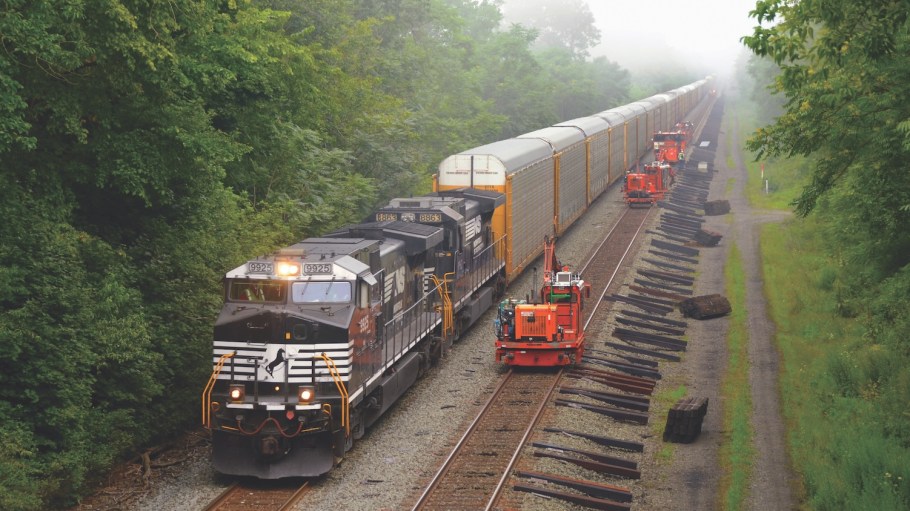
Norfolk Southern has agreed to pay more than $310 million to the federal government to settle claims and cover costs stemming from a February 2023 train derailment in East Palestine, Ohio that caused a massive chemical-fueled fire and forced residents to evacuate for several days.
The biggest part of the settlement, which was announced by the Environmental Protection Agency and Justice Department Thursday, is an estimated $235 million to cover past and future costs relating to the environmental cleanup. Roughly $15 million is a civil penalty related to claims that the railroad violated the Clean Water Act—the largest fine allotted under the Clean Water Act.
Related Stories
Norfolk Southern will also reimburse the EPA for its full response expenses, which are approximately $57 million through Nov. 30, 2023, as well as subsequent response costs. Another $7 million will go to remediation projects to curb pre-existing pollution and improve the region’s water quality.
As part of the agreement, the railroad set up a $25 million health care fund to pay for 20 years of medical exams in the community. The railroad will also pay $25 million to $30 million for long-term monitoring of drinking water and groundwater.
“The human cost from the Norfolk Southern train derailment disaster was high and continues today,” said assistant attorney general Todd Kim of the Justice Department’s Environment and Natural Resources Division. “That is why we worked to include funding in this agreement for a community health program. Notably, this settlement also secures significant resources to complete cleanup in and around East Palestine as well as measures to detect and address potential rail safety risks.”
Norfolk Southern has already paid up substantially, forking over $780 million in environmental response and cleanup costs. This new settlement also comes two days after a federal judge officially signed off on the railroad’s $600 million class-action settlement with residents whose lives were disrupted.
On top of those figures, the rail operator is providing $107 million in direct aid to affected residents and their communities.
All combined, the totals stack up to more than $1.8 billion in expenses stemming from last year’s train derailment.
The final payment represents a move forward for the rail operator, which has been trying to put the accident in rear view amid the cleanup. The entire cleanup effort is currently anticipated to conclude on or around November 2024, but that may change, according to the EPA.
Going ahead, Norfolk Southern will be focused on safety improvements. For example, the railroad promised to follow through on adding roughly 200 more trackside detectors to spot overheating bearings. It has also promised to invest in more than a dozen advanced inspection portals that use an array of cameras to take hundreds of pictures of every passing railcar.
“From day one, it was important for Norfolk Southern to make things right for the residents of East Palestine and the surrounding areas,” said Alan Shaw, president and CEO of Norfolk Southern. “We are pleased we were able to reach a timely resolution of these investigations that recognizes our comprehensive response to the community’s needs and our mission to be the gold standard of safety in the rail industry. We will continue keeping our promises and are invested in the community’s future for the long-haul.”
The derailment had put both Shaw and Norfolk Southern under the national microscope, and played a role in a proxy fight the next year that sought to oust the CEO and overhaul the company’s board of directors. Much of that fight was over the financial performance of the railroad, as well as the desire to implement a precision scheduled railroading (PSR) system. PSR involves consolidating rail networks through the use of point-to-point delivery tactics and more consistent departure schedules.
Shaw managed to stave off the proxy fight, with shareholders voting to retain him as CEO. But three new members recommended by activist investor Ancora Holdings were voted to the board, indicating the company may pivot to implement more of the changes suggested by the hedge fund.