Mexico’s air cargo volumes for the first 10 months of year have contracted 3.9 percent to 1.01 million tons as the country has dealt with impacts from tariffs and some structural supply chain shifts.
International cargo volumes have seen a prolonged impact. From January to October 2025, cargo volumes from other countries dropped 4.7 percent year over year to 693,078 tons. Comparatively, domestic air cargo only saw a 2.1 percent dip, reaching 317,939 tons.
According to the country’s Federal Civil Aviation Agency, Felipe Ángeles International Airport in Mexico City saw a 12.2 percent drop in total cargo throughout the year-to-October to 329,970 tons.
Related Stories
This weighed down the wider total as the hub is Mexico’s largest air cargo airport by volume, taking in a 32.6 percent market share of tonnage throughout the country. That share gets even bigger when accounting exclusively for international cargo at 46.4 percent.
But the major dip throughout the year also marks a bit of normalization stemming from the relocation of cargo-only flights to Felipe Ángeles from Mexico City International Airport (MEX) starting in late 2022, which had been done to relieve congestion at the latter.
MEX showed continued recovery within its restricted operating framework by October, handling 22,606 tons in October, up 3 percent year over year. For the first 10 months of 2025, the airport posted 4.8 percent growth to 206,863 tons.
Across all major airports highlighted by the agency October saw a 1.4 percent bump in cargo volumes from the year-ago month to 113,642 tons, with the Felipe Ángeles airport’s declines coming in at 4 percent.
For both the full year and the month, Toluca International Airport had the biggest drop off in cargo at 21 percent.
Guadalajara International Airport showed significant strength with a 3.9 percent increase in cargo to 151,303 tons in the first 10 months of the year. In October, the airport had the second largest recorded year-over-year jump across Mexico’s major hubs, with cargo soaring 15.9 percent to 17,432 tons for the month.
Mexico’s recent decision to slap tariffs as high as 50 percent on more than 1,400 China-originated products could further impact volumes entering the country. That decision is part of President Claudia Sheinbaum’s goal to protect Mexican manufacturing industry from being undercut by foreign goods, and comes ahead of next summer’s review of the United States-Mexico-Canada Agreement (USMCA).
Those tariffs are also expected to impact goods coming from other Asian countries including South Korea and India, in an indicator that demand for air cargo could remain rocky as wider spread duties kick in.
In August, Mexico raised duties for low-value shipments entering the country from 19 percent to 33.5 percent. These tariffs will apply to countries that have no trade agreement with Mexico.
The declines also endured as tensions mounted between Mexico and the U.S. over the relocation of air cargo flights from MEX to Felipe Ángeles. The Trump administration had accused the Mexican government of violating their 2015 bilateral aviation agreement when it conducted the relocation and rescinded some other flights.
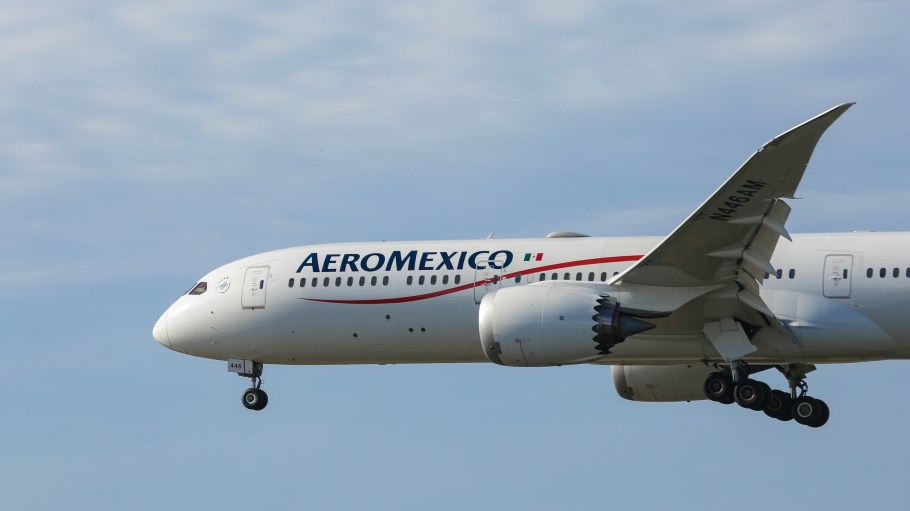
In response, the Department of Transportation revoked approval for 13 flight routes operated by Mexican airlines between the two countries, and also issued an order to terminate the joint venture between Delta and Aeroméxico by Jan. 1. An appeals court temporarily halted the order in November.
The wider issue was largely resolved that month, with Mexico returning some slots to American air cargo carriers at MEX. Sheinbaum did not say how many slots U.S. airlines were granted back, but she said the Mexican airlines ceded some slots “in a framework of competitiveness.”
Felipe Ángeles is considered less desirable for carriers since it further away from Mexico City than MEX, but the airport is gaining an outsized role due to its continued expansion efforts.
According to the airport’s 2025-2030 development program, Felipe Ángeles’ cargo area— which originally consisted of 16 warehouses and processing facilities with the ability to handle 570,000 tons per year—has since added six new warehouses. This expansion has increased the airport’s total capacity to 810,000 tons annually.
Currently, the airport can accommodate five large freighter aircraft at once, but by early 2026, the number will rise to nine, allowing the airport to handle heavy cargo aircraft such as the Boeing 747-8F more efficiently.