The upward trend in East Coast port traffic will continue to increase in the coming years, according to John D. McCown, non-resident senior fellow at the Center for Maritime Strategy, a non-profit think tank based in Arlington, Va.
McCown spoke to the West-to-East Coast shift, as well as the evolving nature of logistics strategy and global trade, at Sourcing Journal’s Fall Summit in New York last week. In a conversation with logistics editor Glenn Taylor, the ocean freight expert said he expects to see East Coast port traffic grow by 60 to 70 basis points annually.
Related Stories
“Freight goes where the people are—if you’re simply going through the math of where people live, you can easily conclude that 75 percent of America’s mainline population is closer to the East Coast,” McCown said. The Port of Savannah in Georgia and South Carolina’s Port of Charleston have recently announced new terminal development projects and extensions in anticipation of demand growth.
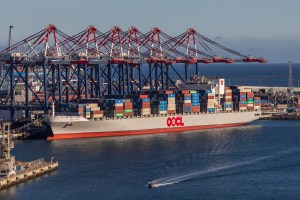
The West Coast ports, including the Port of Los Angeles and the Port of Long Beach, “still have a clear speed advantage” when shipping from Asia, and have bounced back to 57 percent of overall port traffic in September after concluding protracted labor negotiations over the summer. But traffic to the West Coast “has been coming down, and it will continue to come down,” he said.
McCown also spoke to the decline in freight rates, which began falling after their peak in late 2021. “I see them starting to stabilize even now,” he said, warning against looking at spot pricing as a barometer for global trends. “Spot rates have some credibility issues, and they really don’t move as much freight as folks think,” he added, noting that most shippers are moving volume under established contracts.
Consumer demand remains in flux, with imports declining since March, according to CMS’ data and account report. But McCown said September represented a “turning point” in that narrative, with import volumes increasing by a fraction of a percentage point over the same period last year. The most recent 14 months saw significant declines, most in the double digits. Those import volumes represented “the flip side of the roller coaster that we had when volume was going up” during the pandemic.
“Through a series of events—a big part of it being that congestion [at the ports]—pricing shot through the roof and earnings went into overdrive.” In 2022, container shipping saw a net income of $225 billion, with a net income-to-revenue margin of 46 percent. “Obviously, those results are not sustainable,” he said. Today, lower demand and easing port congestion make way for a period of normalization.
But after nearly four years of disruption, importers, exporters and freight forwarders have their eyes peeled for the next problem. Restrictions at the Panama Canal through February hint at a passageway pileup. As of this week, 24 ships will be allowed to sail through the 50-mile waterway each day due to drought and declining water levels, down from the requisite 34 to 36. By February, the number will decline to just 18. But McCown said he does not believe the development represents a “meaningful issue” for shippers. Calling initial reporting about vessels waiting to pass through the canal “a bit overdone,” he said more refined data now shows that the issue will mostly impact smaller vessels. Large ocean cargo carriers will still receive booking priority.
“You’re starting to see—and it’s a subtle shift—the center of gravity of where freight is coming out of Asia slowly moving south and moving west,” he added. “You get to a certain point where all of a sudden the Suez Canal is a quicker way, or a shorter way, to get to the East Coast.” McCown said offshore factors will contribute to this subtle transition, but ultimately, “containers go where people are.”