East and Gulf Coast port contract talks may no longer be in limbo.
According to various news reports, the International Longshoremen’s Association (ILA) and the United States Maritime Alliance (USMX) will return to the negotiating table on Jan. 7 as the deadline for the port dockworkers’ contract expiration nears.
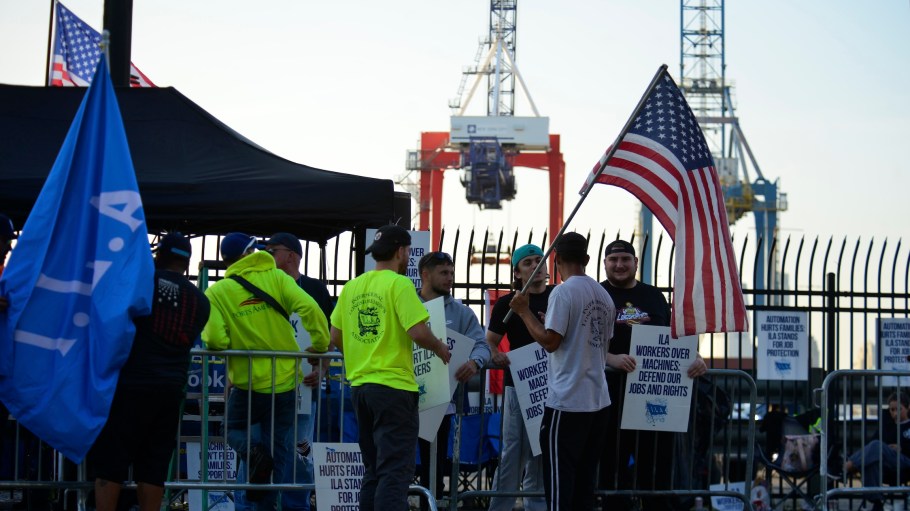
The parties agreed to extend their current contract to Jan. 15 after the ILA went on strike for three days to start October, with the union threatening to walk off the job again if a deal is not struck by then. A second strike would stall activity at major ports from Maine to Texas, potentially snarling supply chains ahead of a presidential transition and the Lunar New Year, when Chinese factories have off for two weeks starting in late January.
Related Stories
Just two days after master contract talks resumed in November, the ILA walked away from the negotiations due to differences on automation at the ports.
Throughout the holiday season, the negotiations have remained at an impasse.
Logistics and supply chain publication Journal of Commerce first reported the news Tuesday evening. The ILA declined to comment further on the reports.
Sourcing Journal reached out to the USMX.
Retailers and other supply chain stakeholders have been hopeful a new deal will be ironed out. Like the months ahead of the Oct. 1 port strike, importers are front-loading goods into the U.S. due to the possibility of a work stoppage. December is anticipated to eclipse the 2020 monthly record for inbound cargo volume into U.S. ports, at 2.14 million 20-foot equivalent units (TEUs), a 14.4 percent increase over the year prior, according to the Global Port Tracker from the National Retail Federation (NRF) and Hackett Associates.
Academy Sports + Outdoors is one such retailer that accelerated some spring inventory, with the company saying in a December earnings call that it wanted to avoid “key elements of our spring set getting caught up in a potential East Coast port strike.” The sporting goods retailer also wanted to ship ahead of Lunar New Year and avoid a potential increase in tariffs levied by the income Trump administration.
Costco said in its own call last month that the wholesale warehouse club was already pulling forward inventory buying due to the strike risks, both on the East Coast and previously in India.
“The predictability of on-time shipping delivery remains below pre-Covid levels, and items are generally spending more time on the water,” said Costco chief financial officer Gary Millerchip during the call.
“Let’s hope the parties can actually get a deal. If not, they must do another extension to avoid a strike!” said Jonathan Gold, vice president of supply chain and customs policy at the NRF, in a post on X Wednesday.
The rush of cargo into the U.S. has kept driving up ocean spot freight rates out of China. As of Thursday, Drewry’s World Container Index (WCI) indicates Shanghai-to-New York TEUs cost $6,445 per container on average, up 6 percent from the two weeks prior. The trade lane has seen rates pop up 25 percent since Dec. 5.
Containers carried from Shanghai to Los Angeles are seeing a slightly higher jump in average price, up 7 percent from Dec. 19 to $4,829 per TEU. On a four-week basis, average rates jumped 30 percent.
Drewry expects rates on the trans-Pacific trade to rise in the coming week, driven by the front-loading ahead of the possible mid-January strike and the anticipated tariff hikes. President-elect Donald Trump has publicly backed the ILA in the contract negotiations, namely siding with the union on its fight against automation.
The union’s staunch anti-automation platform has been the central point of contention in the talks, with ILA president Harold Daggett insisting that he won’t go for a deal that allows for any form of automation.
Daggett and his son, ILA executive vice president Dennis Daggett, have railed against the USMX’s push to expand use of semi-automated rail-mounted gantry cranes (RMGs) across the East and Gulf Coast ports. The younger Daggett says 95 percent of the work performed by the cranes is automated, and shared concerns that the remaining processes would soon follow suit, putting potential jobs at stake.
The USMX has maintained that its terminal operators can handle more volume in denser spaces with the RMGs in place, and that it only wants to implement and use equipment already allowed under the current contract. The alliance argues that the added capacity means an increase in hours worked, leading to more union jobs—as well as more cargo moved and ensuing wage increases.
Both parties already agreed on a 61.5 percent wage hike for dockworkers spread over six years.
In the preparation for the possible strike, USMX members Hapag-Lloyd, ZIM and most recently CMA CGM are commanding extra surcharges for imports entering the East and Gulf Coast ports. Ahead of the Jan. 15 contract expiration date, Maersk encouraged customers to retrieve their loaded containers from the ports and return all empty containers to the gateways.