Air cargo demand increased globally for the sixth straight month in August, although its strength weakened relative to July’s 5.5 percent growth.
According to data from the International Air Transport Association (IATA), total cargo tonne-kilometers (CTKs) rose by 4.1 percent compared to year-ago levels, and 5.1 percent for international operations.
Seasonally adjusted CTKs registered growth of 3.9 percent year-over-year in August, down from 5 percent YoY in July.
Related Stories
“Volumes continue to grow even as global trade patterns change. Air cargo has benefitted from a shift from sea for some high-value goods as shippers try to minimize the risk of tariff changes,” said Willie Walsh, director general of IATA in a statement. “And growth patterns indicate some being diverted away from North America, fueling stronger growth for the Europe-Asia, within Asia, Africa-Asia and Middle East-Asia trade lanes. This adaptability is vital as shippers navigate the evolving landscape of U.S. tariff policy.”
As has been the case in recent months due to heavy tariffs placed on countries including China and India, Asia-to-North America demand continued to slide. CTKs on the trade lane declined 2.2 percent from the year prior, which is the largest dip across the routes tracked by the IATA.
This marks the fourth straight month of declines between the regions, although both July (a 1 percent dip) and August numbers were an improvement over May and June (10.7 percent and 4.7 percent, respectively). The improvement across the latter two summer months was propped up by front-loading in July ahead of U.S. trade negotiation deadlines in early August, as well as the scrapping of the de minimis provision at August’s end.
With August concluded, air freight has entered its September-to-November peak season again, but cargo headed to the U.S. is expected to see descent from all markets as international postal operators paused deliveries over the de minimis ban.
Air freight out of China and India have contributed to this in the first half of September.
Tonnages headed from China and Hong Kong to the U.S. dipped roughly 5 percent and 8 percent below their equivalent level in the first two weeks of the month, according to air cargo market intelligence provider WorldACD. As for India-to-U.S. flights, tonnages decreased 10 percent and 13 percent.
In the third week of September, China-to-U.S. volumes declined 1 percent year over year, but other adjacent markets have picked up the slack. Volumes from Taiwan (51 percent), Vietnam (44 percent), Thailand (43 percent), Malaysia (28 percent) and Singapore (12 percent) all saw strong annual increases during the month, said the WorldACD data.
“September to November is always the peak season for air freight. This year, demand growth is more focused on Southeast Asia, particularly Thailand, Vietnam, Malaysia and Singapore,” said Kathy Liu, vice president of global sales and marketing, Dimerco Express Group in a statement. “With high-tech, AI and semiconductor production increasing in these countries, more finished goods are being shipped out. As a result, we expect capacity pressure at major transit hubs including Singapore, Taiwan, Hong Kong and Korea.”
Backlogs out of Hong Kong, which houses the largest cargo airport on earth, are expected to persist through mid-October after Typhoon Ragasa caused widespread flight cancellations across the region and South China.
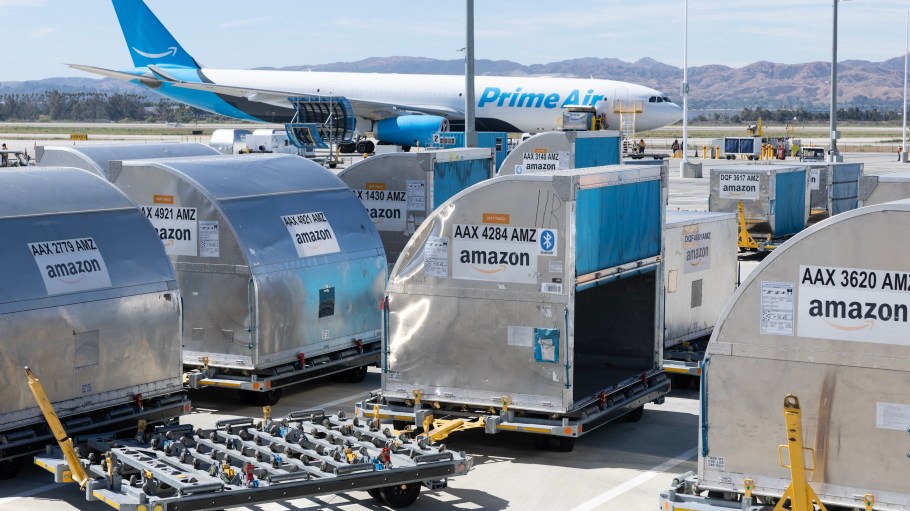
According to Dimerco’s Asia Pacific Monthly Freight Report, capacity out of Hong Kong remains tight on routes to Singapore and Vietnam, while space and rates to other destinations remain stable. And for cargo out of South China, rates to the U.S. may increase as Amazon Prime Big Deal Days in October drives a rebound in demand while airlines reduce capacity during Golden Week.
U.S. air freight forwarders “deeply concerned” about government shutdown
While capacity crunches in the Asia Pacific region have become more of a concern for air freight, the government shutdown that began Wednesday in the U.S. has the Airforwarders Association “deeply concerned” about the impacts on the country’s air cargo system.
“With air traffic control operations under pressure and federal aviation staff affected, there is a real risk of delays, disruptions and added costs across the supply chain,” said Brandon Fried, executive director at the Airforwarders Association, in a statement. “Freight forwarders depend on safe, predictable, and fully resourced aviation infrastructure to keep goods moving for businesses and consumers alike.”
Fried urged policymakers to resolve the impasse quickly.