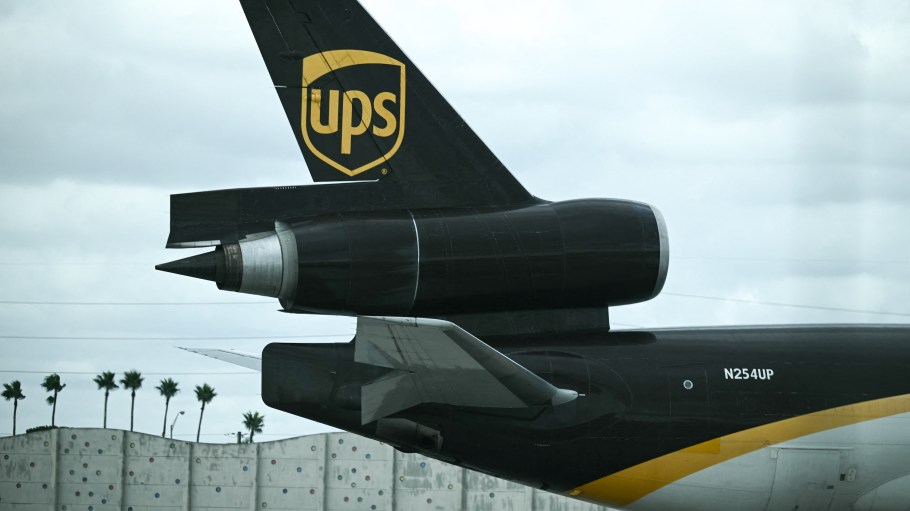
The Federal Aviation Administration (FAA) has ordered a temporary grounding of all McDonnell Douglas MD-11 aircraft following the deadly crash of a UPS cargo plane at its Worldport global air hub last Tuesday.
That crash killed at least 14 people including three crew members, with UPS briefly closing the 5.2-million-square-foot Louisville, Ky. sorting and handling facility the day after.
The FAA’s directive prohibits further flights of the model until each airplane is inspected and “all applicable corrective actions are performed.” The agency determined the unsafe condition of the plane is “likely to exist or develop in other products of the same type design.”
Related Stories
According to the agency, the condition could result in “loss of continued safe flight and landing.”
The move came after UPS said Friday it would ground all its 26 MD-11 planes “out of an abundance of caution and in the interest of safety.” The aircraft represent approximately 9 percent of the company’s air cargo fleet.
The logistics giant said it grounded the freighters proactively at the recommendation of its aircraft manufacturer, Boeing.
In response to the FAA’s recommendation, FedEx also grounded its 28 MD-11 planes, which comprise roughly 4 percent of its wider fleet.
In a Saturday statement, Boeing said it supported the FAA’s directive and confirmed it made recommendations to the carriers to suspend operations of the planes while additional engineering analysis is performed.
Both couriers said contingency plans are in place to minimize disruptions in the UPS and FedEx air and ground networks.
Western Global Airlines is the only other U.S. cargo airline that flies MD-11s, according to aviation analytics firm Cirium. The airline has 16 MD-11s in its fleet, but 12 of them have already been put in storage. Germany’s Lufthansa Cargo phased out the aircraft in late 2021.
The FAA and National Transportation Safety Board (NTSB) are currently investigating the Louisville incident, with the latter leading the probe. A preliminary report is likely to be released within 30 days, but the larger investigation could take one to two years before its conclusion.
Thus far, the NTSB has determined that the freighter’s left-wing engine and pylon detached during takeoff. The cause of the detachment is currently under investigation. Various videos indicated that the left wing was on fire briefly before the attempted takeoff.
The agency also recovered the two “black boxes”—the cockpit voice recorder and the flight data recorder—that carry pivotal information about the crash.
During a Friday briefing, NTSB board member Todd Inman said an alarm in the plane began to sound about 37 seconds after the flight crew called for takeoff thrust. Investigators have not determined why the alarm rang.
The alarm sounded off for 25 seconds as the pilots tried to control the aircraft, with the audio cutting out after. The jet only elevated roughly 100 feet before crashing.
According to Inman, the NTSB is forming a group comprised of technical experts on the MD-11 to review the recording and produce a written transcript. That transcript will be made public several months from now, only when a majority of the other reports are placed in the agency’s public docket, Inman said.
The UPS cargo plane was built in 1991, and recent underwent a maintenance repair in San Antonio, where it was grounded from Sept. 3 through at least Oct. 18. The NTSB said it was probing the maintenance history of the plane.
Air traffic reduction order still in place
The FAA’s “emergency airworthiness directive” came briefly after the agency ordered nationwide flight reductions in the wake of the government shutdown.
Across 40 high-traffic airports, the FAA enforced a ruling to cut 4 percent of flights last Friday as air traffic controllers continue to work without pay throughout the cessation of government activities. Airports have also been dealing with staff shortages as a portion of employees are not showing up for work.
The reduction plan is occurring in phases, with cuts expected to increase to 6 percent of total flights on Tuesday, before rising to 8 percent on Thursday and again to 10 percent on Friday.
It is unclear when the FAA would lift the order as of Monday afternoon, despite the U.S. Senate coming to a tentative bipartisan agreement to end the shutdown late Sunday.
Transportation Secretary Sean Duffy has said the agency will rescind the order only when safety data indicates it’s appropriate.