A coordinated raid by the European Public Prosecutor’s Office (EPPO) across four major cities earlier this week saw the arrest of 10 suspects—including two customs officers—for fraudulently importing goods from China as part of a wider crime ring responsible for 700 million euros ($820 million) in total damages.
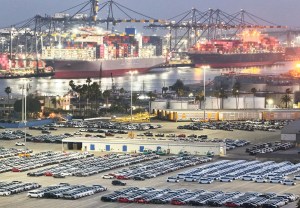
The customs fraud scheme was allegedly conducted mainly through Greece’s Port of Piraeus, and enabled the perpetrators to evade customs duties and the E.U.’s value-added tax (VAT).
Related Stories
Textiles, footwear, e-scooters and e-bikes are among the goods flooding the E.U. market that have been seized as part of the raid, called “Calypso” by the authorities.
Identities of the suspects have not been released.
The raids took place across Athens; Madrid; Paris; and Sofia, Bulgaria; and encompassed 101 searches at the offices of customs brokers, companies controlled by the organized criminal groups under investigation and the premises of the suspects. The bust extended to offices of tax advisors, lawyers, accounts and transportation companies.
As part of the raids, law enforcement agents seized 5.8 million euros ($6.8 million) in different currencies, including Hong Kong dollars, euros in digital wallets and cryptocurrencies.
Greek authorities have conducted more than 20 raids, including the home of the alleged ringleader, a Chinese national, according to a report from Athens-based publication eKathimerini. Freezing orders were also issued in the country to seize real estate, boats and bank accounts.
And in Spain, 11 real estate assets were also seized, as well as 27 vehicles and luxury items such as bags, watches and jewelry.
Across the four major cities, law enforcement also confiscated 7,133 e-bikes and 3,696 e-scooters, as well as 480 containers for further checks and verification in the Port of Piraeus. Firearms and cold weapons were found and seized in the houses of three of the suspects.
According to the EPPO, the alleged criminal enterprise is mainly controlled by Chinese nationals, with several separate organizations handling different links of the scheme, including distribution to the market’s different member states, as well as sales to end customers.
The criminal activity focused on exploiting Customs Procedure 42 (CP42), a mechanism designed to simplify cross-border trade by exempting importers from paying VAT in the country of import, if the imported goods are subsequently transported to another E.U. country.
A network of professional enablers including customs brokers, service providers and accounting firms helped facilitate the initial clearance at the Piraeus customs entry point.
To evade customs duties, the actors would use false documents to either undervalue or misclassify the goods, and produce false invoices and transport documents to conceal the real destination of the goods.
This enabled the actors to evade CP42, as the goods were not forwarded to the declared destinations. Instead, they stored the imports in secret warehouses controlled by the separate criminal organizations and distributed them via illicit channels.
From there, the organizations recruited a large network of sham companies used for the fake sales and deliveries to hide the fraudulent chain. This allowed the groups to sell the products at a competitive price—and for cash—since the VAT remained unpaid and customs duties and anti-dumping fees are largely evaded.
When the final sale is made, the groups launder the money and send the profits back to China.
The investigation was carried out across 14 countries: Bulgaria, China, Czechia, Denmark, France, Germany, Greece, Hungary, Italy, Poland, Portugal, Slovakia, Slovenia and Spain.
Of the 700 million euros ($820 million) in total estimated damages, more than 250 million euros ($292.5 million) came from evaded customs duties—which contribute directly to the E.U. budget. Another nearly 450 million euros ($526.5 million) came from the unpaid VAT.
The total damage caused by the fraudulent scheme under investigation is likely much higher, the EPPO says.
The Port of Piraeus is majority owned and operated by China-based Cosco Shipping. EPPO did not indicate whether there were any ties to the Chinese national suspect arrested in Greece.