Air cargo demand for 2025 is tapering off further than initially forecast as the Trump administration’s tariffs and the removal of the de minimis provision for Chinese goods entering the U.S. take their toll on trade.
According to the International Air Transport Association (IATA), total demand will inch up just 0.7 percent this year to 275.7 billion cargo tonne-kilometers (CTKs), down from the 6 percent CTK growth first projected in December. In total, volumes carried via air are now projected to reach 68.6 million metric tons, up 0.5 percent from 2024, instead of the previously calculated 72.5 million metric tons.
Related Stories
IATA had teased last month that the lobbying group was set to scale back its projections, citing the downside risks that have increased throughout the year.
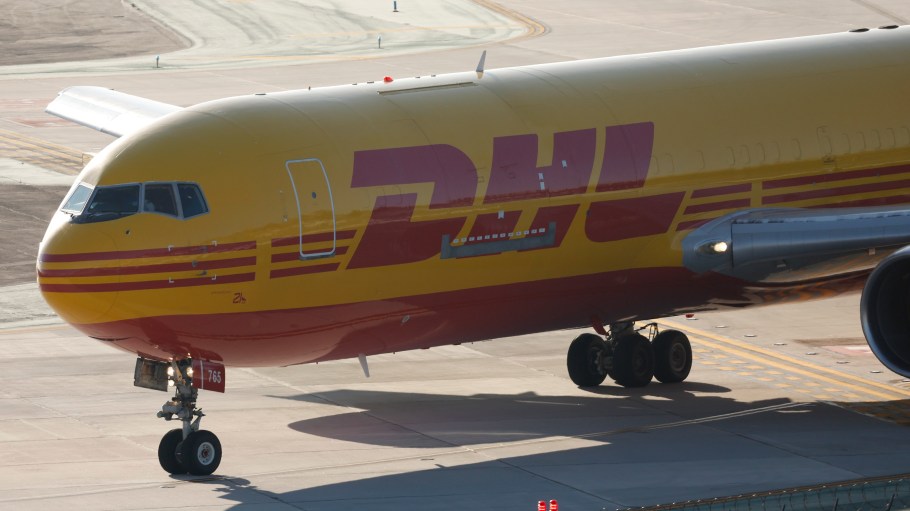
DHL has felt the lessening demand thus far to kick off 2025. Its DHL Express division saw time-definite international parcel volumes sink 7.1 percent to 975,000 items per day in the first quarter. The decline came as the company ended some third-party air cargo partnerships in the early months to cut excess capacity, including one joint venture with Atlas Air.
The logistics giant has sought to focus more on profitability amid the dampened demand, and unveiled Monday it is raising costs to ship certain private customer parcels and small packages via air out of Germany.
The “moderate” price hikes will begin July 1, and will vary depending on the destination country. For example, sending an “extra-small” package to North and South America will soon cost 16 euros ($18.30), rather than the current 12 euros ($13.70). A medium-sized package sent to the same region would jump to 22.49 euros ($25.70) from 18.49 euros ($21.15).
“Reasons for the necessary price adjustments starting in July include significantly increased labor, transportation, and delivery costs,” said DHL in a statement. “Additionally, there are higher requirements and thus a greater effort for handling international shipments transported by air.”
Announced alongside the price changes, DHL is expanding the use of the mobile parcel label, which allows customers to ship parcels and small packages to non-E.U. countries without the need to print shipping labels.
As DHL aims to simplify some experiences, the air cargo demand equation remains impacted mostly by factors well out of carriers’ control.
In April, air cargo had its highest demand numbers for the year at 5.8 percent CTK growth, IATA said, surpassing the first quarter’s 2.4 percent annual increase. But that April rush came in largely due to the May 2 closure of the de minimis provision as businesses sought to avoid the extra import tax now charged on parcels worth more than $800.
According to the IATA, the de minimis trade accounts for 7 percent of Asian CTKs and nearly 3 percent of global air cargo traffic. With that in mind, demand growth is likely to decelerate further going forward, said the report.
“This trade is likely to drop significantly, which will have a considerable impact on freight rates to the U.S. from China,” the updated outlook report read. “However, Chinese e-commerce brands may shift their focus from the U.S. to other markets, or even ship their products from other countries.”
For 2025, the association also expects a decline in air cargo yields of 5.2 percent from last year due to the reduction in anticipated traffic and lower jet fuel prices—a far cry from the previous outlook that rates would be stable year over year.
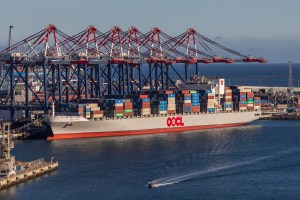
As air freight rates continue their descent, the easing of ocean freight rates throughout 2025 compared to the year prior has played a role in keeping more cargo out at sea.
The Red Sea crisis effectively gave air freight a rare comparative pricing advantage, according to the IATA, as average container prices spiked to nearly $6,000 last summer due to the mass rerouting of vessels around southern Africa’s Cape of Good Hope.
Although ocean carriers have still mostly been sailing around Africa, ocean spot freight rates are now $2,508 on average, according to Drewry’s World Container Index, mirroring rates seen at the start of the crisis.
With ocean rates back to a more manageable level in recent months, air freight costs look less attractive for shippers in comparison, albeit less expensive than 2024.
Despite the industrywide headwinds, IATA’s director general Willie Walsh acknowledged “it will still be a better year for airlines than 2024,” although slightly below previous projections.
“We anticipate airlines flying more people and more cargo in 2025 than they did in 2024, even if previous demand projections have been dented by trade tensions and falls in consumer confidence,” Walsh said in a statement. “The result is an improvement of net margins from 3.4 percent in 2024 to 3.7 percent in 2025. That’s still about half the average profitability across all industries. But considering the headwinds, it’s a strong result that demonstrates the resilience that airlines have worked hard to fortify.”