Global air cargo demand is still going strong into the holiday season, although growth rates are thinning compared to the summer months.
According to the International Air Transport Association (IATA), total demand, measured in cargo tonne-kilometers (CTKs), rose by 9.4 percent compared to September 2023 levels. On a seasonally adjusted basis, industry CTKs fell for the second consecutive month by 0.4 percent.
The month broke a streak of nine straight months of double-digit annual demand growth that started in December 2023.
Related Stories
International routes keep pushing up global cargo demand, with a 10.5 percent year-over-year increase in CTKs in September. Airlines are benefiting from rising e-commerce demand in the U.S. and Europe amid ongoing capacity limits in ocean shipping, the association said.
For the sixth consecutive month, the largest contributors to the annual demand surge were carriers from Asia Pacific and Europe, which contributed 42 percent and 26 percent to the global increase in CTKs.
Although retailers had pulled cargo orders forward during the summer ahead of the East and Gulf Coast port dockworkers strike, resulting in an earlier peak shipping season, the work stoppage didn’t appear to spur a major shift to air freight in the weeks prior.
However, air freight and ocean freight benchmarking platform Xeneta pointed out that the strike impacted volumes during and after the strike took place.
“Europe to North America saw the largest month-on-month volume increase of 11 percent [in October.] The return leg also saw a 10 percent month-on-month increase as shippers and forwarders took precautionary measures to lessen the impact of the three-day strike by dockworkers at U.S. East Coast and Gulf Coast ports,” according to Thursday press release from Xeneta. “A quicker-than-expected resolution to this industrial action, however, saw the positive impact of the strike on air cargo volumes ebb away after reaching a peak in the week ending Oct. 20. Nonetheless, the rise in this corridor’s air cargo rates is likely to continue after airlines reduced cargo capacity at the end of the month to mark the start of winter schedules.”
The IATA said limited ocean carrier capacity and rising ocean freight costs, both brought on by ongoing container ship diversions away from the Red Sea, were two likely drivers of companies transitioning from sea to air.
Between the sea-to-air shift and an influx of demand from new e-commerce businesses like Temu and Shein, air cargo rates are up 11.7 percent year over year and 3.6 percent month over month. By the end of September, air freight rates stood at 50 percent above 2019 levels.
“September performance brought continued good news for air cargo markets. With 9.4 percent year-on-year growth, cargo volumes continued to mark all-time highs for demand,” said Willie Walsh, IATA’s director general, in a statement. “All this points to a strong finish for this year. For longer-term trends, the air cargo world will be closely following the outcome of the U.S. election for indications of how U.S. trade policy will evolve.”
Xeneta shares the IATA’s confidence, saying that air cargo volumes spiked 11 percent in October. Xeneta sees a larger jump in spot rates, up 19 percent year over year to $2.68 per kg.
According to the IATA, air cargo capacity increased by 6.4 percent compared to a year ago, with seasonally adjusted capacity inching up 0.2 percent. This continued to be largely related to the growth in international belly capacity, which rose 10.3 percent, extending the trend of double-digit annual capacity growth to 41 consecutive months.
Overall, international air cargo capacity reached its highest volumes for any September on record despite decelerating growth rates, the IATA said.
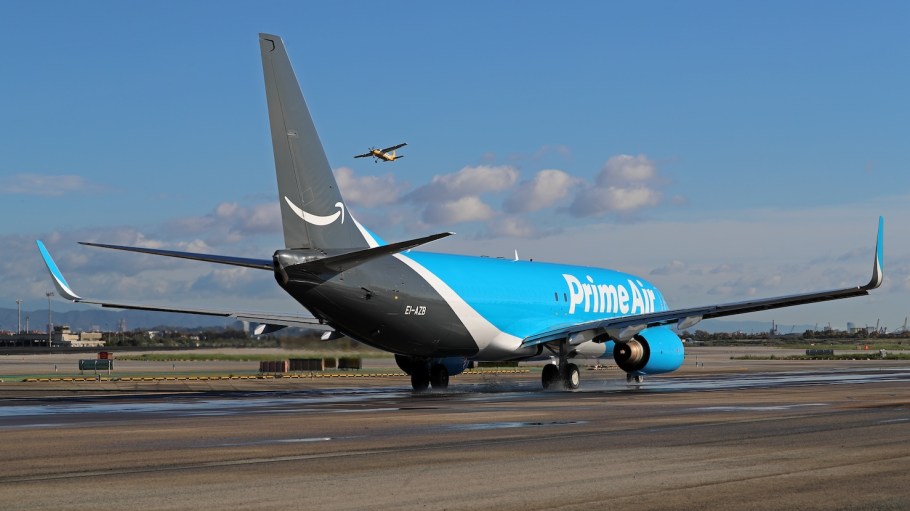
Amazon appears to be taking advantage of the high-demand environment with its recent revelation that it is making its fleet of aircraft available to more third parties.
In September, the e-commerce giant launched a dedicated website unveiling Amazon Air Cargo, with the company offering dedicated charters, ad hoc capacity or blocked space services to third-party logistics (3PL) firms and freight forwarders.
The airline said it would be able to carry general cargo, pharmaceuticals, perishables, dangerous goods and parcels with its fleet of Boeing 737, Boeing 767 and Airbus A330 aircraft.