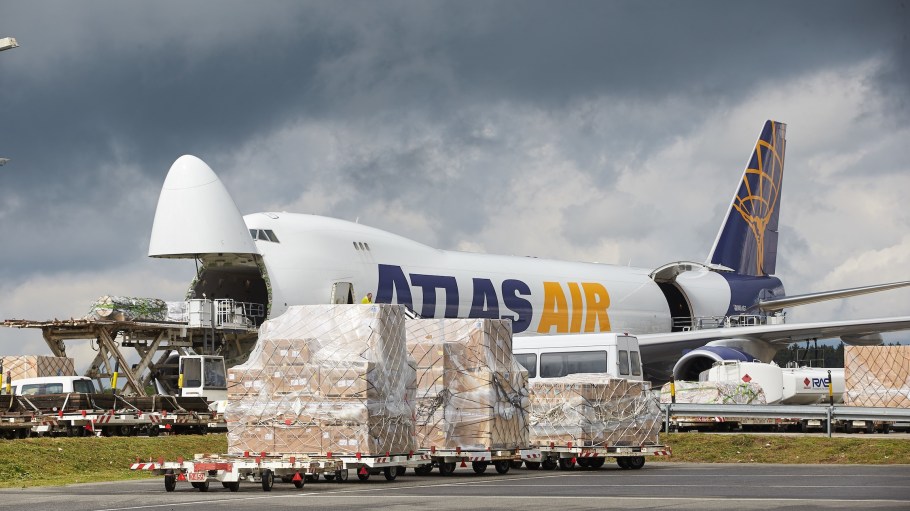
Air cargo demand cooled down to kick off 2025 after a hot 2024 that saw double-digit growth.
January demand rose by 3.2 percent compared to year-ago levels, according to the International Air Transport Association (IATA). The percentage is a step down from the 6.1 percent year-over-year increase seen in December, and off the projected 6 percent growth in cargo tonne-kilometers (CTK) for all of 2025.
“While external factors such as trade growth, declining fuel costs and expanding e-commerce remain positive for air cargo, it is important to closely watch the evolution of market conditions at this time,” said Willie Walsh, IATA’s director general. “In particular, the wild card is the potential for tariff-driven trade policies from the U.S. Trump administration. Fortunately, the air cargo industry is well practiced at dealing with shifts in the operating environment.”
Related Stories
An earlier Lunar New Year that reduced volumes at the end of the month likely played a role in January’s more tepid growth, as well as uncertainty regarding many of the new administration’s trade policies. The start to 2025 also contended with a difficult comparison from the year prior, when CTKs increased 18.4 percent—then the highest annual growth in air cargo demand since the summer of 2021.
In the short term, analysts had expected global air cargo demand to soften due to the current geopolitical climate, particularly on the China-to-North America route. The duty-free de minimis provision remains up in the air for air freight-using companies like Shein and Temu, and President Donald Trump unveiled Thursday that he would double the 10 percent tariff he already slapped on Chinese imports.
Breaking from 2024 trends, capacity growth outpaced demand, with available cargo tonne-kilometers (ACTK) increasing by 6.8 percent from the prior-year period. Thomas Kempf, senior director of global air freight development at Flexport, told Sourcing Journal in early February that shippers were expected to reduce volumes for small parcel air cargo, or even shift to alternative distribution models like sea-to-air services.
As capacity on airlines surpasses demand, costs to ship goods should sink in the near term. Global air cargo yields, while still 7 percent above January 2024 levels, saw a 9.9 percent decline from December, the IATA data said.
But in the time since, rates have been volatile depending on the trade lane.
Air freight spot rates into the U.S. throughout February escalated 7 percent month over month on the trans-Pacific route and declined 14 percent on the trans-Atlantic trade, according to Xeneta.
Under such a complex trade environment, the freight benchmarking platform is advising shippers to sit tight on securing a long-term contract with a cargo partner.
“The combination of factors including the [potential] removal of de minimis exemptions, potential return of Red Sea container shipping and airlines’ seasonal capacity adjustments mean shippers could benefit from postponing negotiations for new contracts until Q2,” said Wenwen Zhang, air freight analyst at Xeneta, in a blog post. “Doing so could secure more competitive rates if the geopolitical situation and markets turn in their favor.”
Zhang also recommended companies to use real-time benchmarking data to renegotiate terms, and consider shifting from fixed-rate to index-linked contracts to better handle market volatility.
“Locking in contracts without built-in contingency plans or flexible terms can lead to missed opportunities for securing lower air freight rates,” said Zhang.
Lufthansa halts cargo operations at Munich Airport during two-day strike
The unpredictability has hit Munich Airport, where union workers began a two-day “warning strike” at midnight Thursday.
Ahead of the strike, held by members of the Ver.di trade union (United Services Union), Lufthansa Cargo told customers it would not move cargo in and out of Munich Airport for the two-day stretch.
The airport operator said airlines had canceled about 80 percent of their flights to and from Munich. Further cancellations were not ruled out.
Through Friday, Lufthansa also slapped an embargo on acceptance of inbound land shipments, temperature-sensitive products, live animals and perishables.
With the strike, Ver.di is demanding improved working conditions for workers in Germany’s public sector, both on the local and national level. The union also seeks an 8 percent increase in pay or at least 350 euros ($364) more per month, as well as three extra paid holiday days.
Airport workers, including maintenance staff, IT services, airport security and baggage transport staff, are taking part in the work stoppage. Those included some workers at Hamburg Airport, though the airport said the only flights canceled were those to and from Munich.