Victoria’s Secret & Co. is sourcing cotton from four American family farms, diversifying its supplier portfolio while promoting responsible sourcing with U.S. partners.
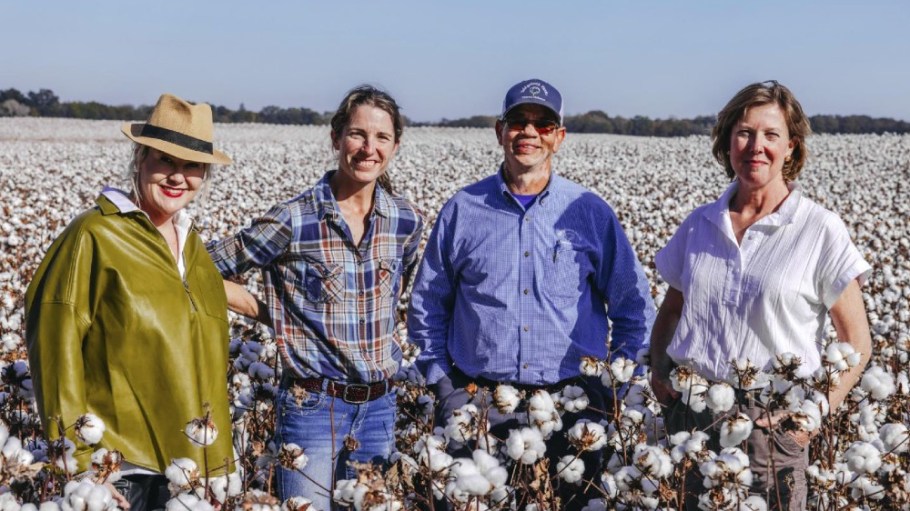
Earlier this month, Victoria’s Secret revealed details about its work with three women-owned and one Black-owned farm in Alabama during the past two harvests. This approach cuts out intermediaries so that farmers receive all the profits from their crops.
The intimates brand, which buys between 50,000 and 65,000 bales of cotton annually, said it purchased 13 percent of its cotton from these partners in 2022—and it’s on track to double that figure this year. All cotton Modal panties in the brand’s spring 2024 collection will be made of 57 percent cotton from Alabama.
Related Stories
Bridgeforth Farms in Tanner, Ala., a fifth-generation family-run farming operation, is one of the company’s suppliers. With 10,000 acres of land in four counties, Bridgeforth is Alabama’s largest cotton producer, and also cultivates corn, soybeans, wheat, sorghum and canola using modern agronomic techniques and land conservation practices.
In addition to the supplier-buyer relationship, Victoria’s Secret and Bridgeforth Farms launched a three-year scholarship and internship program for students attending Alabama A&M University and Tuskegee University—a $150,000 investment supporting diverse agriculture professionals. National Agricultural Statistics Service data shows that less than 1 percent of American cotton farms are owned and operated by Black people.
“Our dedication to shaping a new cotton supply chain is driven by our commitment to operating with respect and responsibility, while also fostering economic empowerment within the Black community,” Victoria’s Secret said. “Ultimately, this work enables us to have greater visibility into who is growing our cotton and how it is grown—ensuring the raw materials we source are contributing to our strategy of empowering women, supporting human rights as well as diversity, equity and inclusion, and addressing our environmental impact.”
“We know partnering with diverse suppliers is important to our success and our role as a leader in the retail industry,” it added. “We intentionally seek relationships with suppliers who mirror our values and reflect the diverse communities in which we live and work.”
Billy Bridgeforth, Bridgeforth Farms owner and chairman of the National Black Growers Council, is the great-grandson of a “freed slave who started a farm when it wasn’t easy for a Black man to buy land or own a business.”
“That started a five-generation legacy of farming, so I guess you could say it’s in my blood,” he said. “I knew I wanted to be a farmer from the age of 11 years old, and it’s the only job I’ve ever had, thanks to the courage of so many in my family before me who overcame tremendous obstacles for us to do what we do today.”
Bridgeforth Farms was honored at a Nov. 8 event hosted at Victoria’s Secret’s Fifth Avenue store in New York City in collaboration with the Fifteen Percent Pledge. The brand joined the organization, which asks retailers to dedicate 15 percent of their shelf space for Black-owned brands, in 2022.
Three women-owned Alabama farms, including Martin Farm in Courtland, Spruell Farms in Mount Hope and Blythe Cotton Co. in Town Creek, are also growing cotton for Victoria’s Secret.
Martin Farm specializes in regenerative farming techniques including low- or no-till plowing to support carbon sequestration and reduce soil erosion, according to owner Larkin Martin. The farm tests and evaluates processes and methods to enrich soil without fossil-fuel derived fertilizers, like using cover crops and compost teas. The farm was certified by Regenagri earlier this year. Martin serves on the board of directors of the Soil Health Institute and the American Farmland Trust.
“Our farm is excited to partner with VS&Co because they are working to build a new supply chain model that gives us some assurance of demand for our cotton and the ability to focus on our investment in regenerative agricultural practices,” she said. “In turn, we can offer identity-preserved fiber so VS&Co and their customers can know where and how their fiber was grown.”
Spruell Farms partner Liz Spruell said she decided to end her commercial banking career after her father died in 2021, returning to the family farm to follow in his footsteps. “It is with great honor that I work side-by-side with my daughter and family, continuing the legacy of Spruell Farms,” she said. “The innovation, the beautiful land and most importantly, my family, have all kept me on this journey.”
Fifth-generation farmer Jamie Blythe said Blythe Cotton Co. has worked to introduce crop rotation, including corn, wheat and soybeans, to maintain soil health and biodiversity, and has begun grazing livestock to recycle nutrients. “As a single working mother, I want to provide an example of what women can accomplish through our inner strength and determination,” she said. “I feel that VS&Co can showcase the diversity of women’s strengths in all aspects of life.”